Choosing a cruise cabin feels straightforward until you’re actually looking at the booking page. Inside cabin, outside cabin, obstructed view, balcony, suite — and a price difference that can run to several hundred euros between categories.
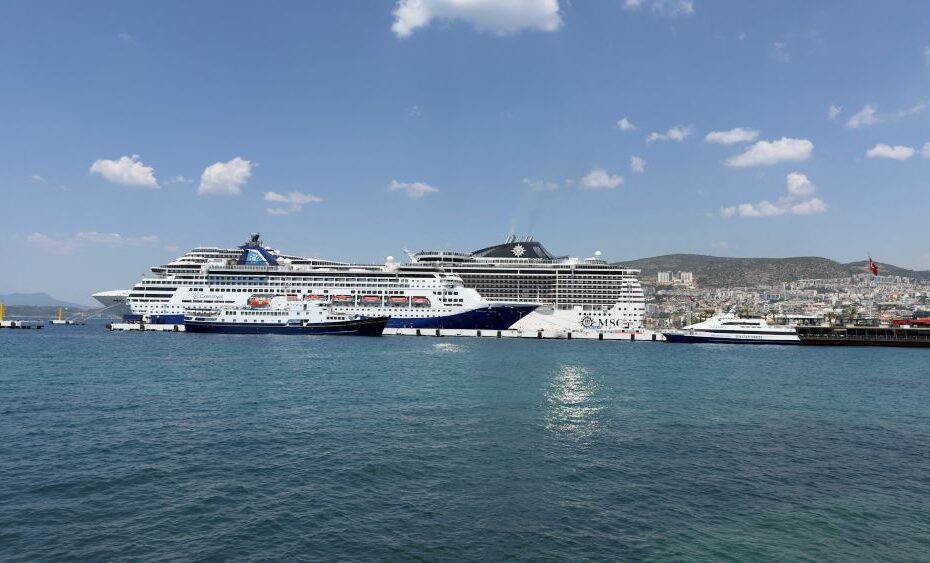
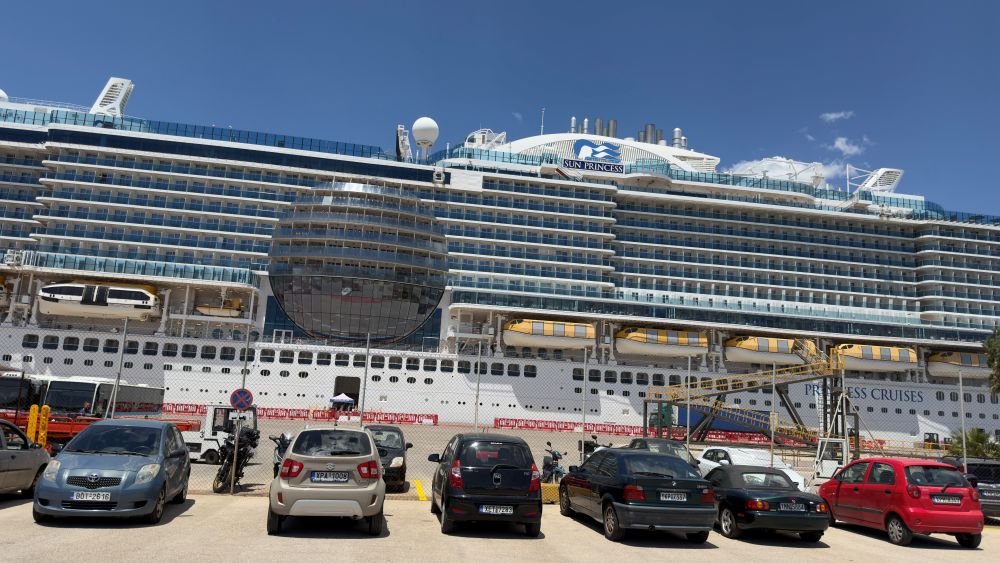
We’ve now stayed in four different cabin types across five cruises: an inside cabin on MSC Seashore, a balcony on MSC Fantasia and Discovery Princess, an obstructed view cabin on MSC Sinfonia, and an exterior window cabin on Celestyal Journey. Here’s what we actually learned from each one.
The Four Main Cabin Types: What You’re Actually Choosing Between
| Cabin type | Inside | Outside (window) | Obstructed view | Balcony |
|---|---|---|---|---|
| Natural light | None | Yes | Some | Full |
| Price | Lowest | Low–mid | Low–mid | Higher |
| Space | Compact | Compact | Compact | + outdoor area |
| Best for | Budget, short cruises | Best value overall | Compromise option | Long cruises, couples |
| Our verdict | Manageable, not ideal | Recommend | Better than nothing | Worth it if gap is small |
Inside Cabin: The Honest Experience
An inside cabin has no window and no natural light. That’s the only thing that really matters when deciding whether to book one.
We stayed in an inside cabin for 17 days on the transatlantic crossing from Barcelona to Miami on MSC Seashore. The saving compared to a balcony was significant — around $1,000 for two people — and on a trip where most of your waking hours are spent on deck, in restaurants, or at ports, the cabin is mainly for sleeping.
That said, the absence of natural light is genuinely uncomfortable over time. Waking up with no idea whether it’s day or night, calm or stormy, 7 a.m. or noon — it wears on you more than you’d expect. By the end of 17 days, we missed even a small window.
Our honest verdict: manageable for a short cruise of 7 days or less. For anything longer, or if you’re sensitive to light and enclosed spaces, pay the difference for at least an outside cabin.
Outside Cabin (Window): The Best Value Option
An outside cabin gives you a fixed window — no opening, no balcony, just natural light and a view of the sea. It costs more than inside but significantly less than a balcony.
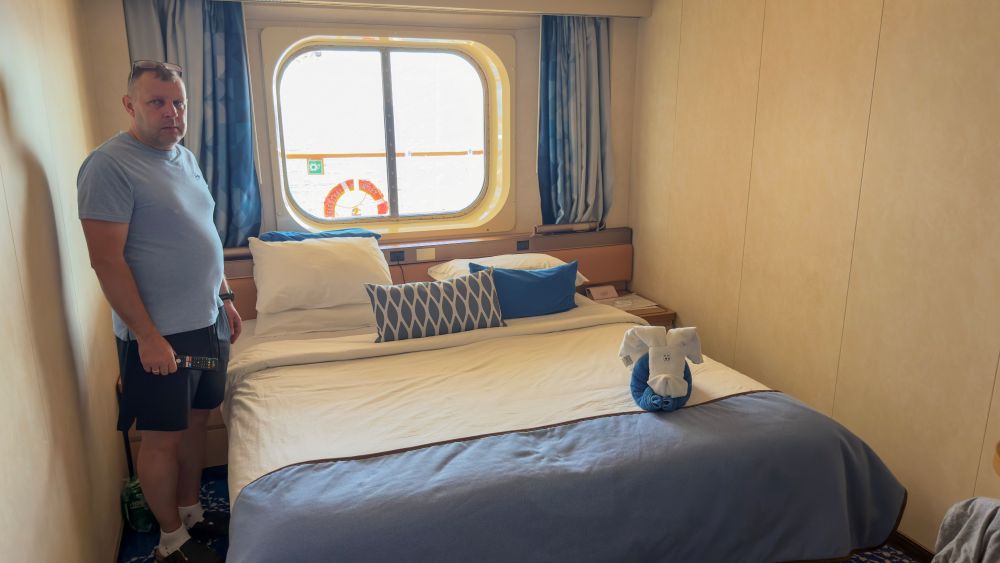
We had exactly this on Celestyal Journey: a window cabin, booked because the balcony was outside our budget on that sailing. The view itself was nothing special, but having daylight and a sense of where we were made a real difference across the week — especially remembering our 17 windowless days on the Seashore. It’s the category we’d recommend most for value: you get the one thing an inside cabin lacks without paying the full balcony premium.
If the price gap between inside and outside is under $200 for two people, the outside cabin is almost always worth it.
Obstructed View Cabin: A Useful Middle Ground
An obstructed view cabin has a window, but something is partially blocking it — usually a lifeboat or structural element. It’s priced between an inside cabin and a standard outside cabin.
We had this cabin type on MSC Sinfonia. The lifeboat sat directly in front of our window, which meant we could see only a narrow strip of sea and sky. Not much of a view — but enough. Waking up and being able to tell whether it was light or dark, calm or rough, made a real difference to how the day started.
It’s not glamorous, but it does the job. If the price is right and the alternatives are too expensive, an obstructed view cabin is a reasonable compromise.
Balcony Cabin: When It’s Worth the Extra Cost
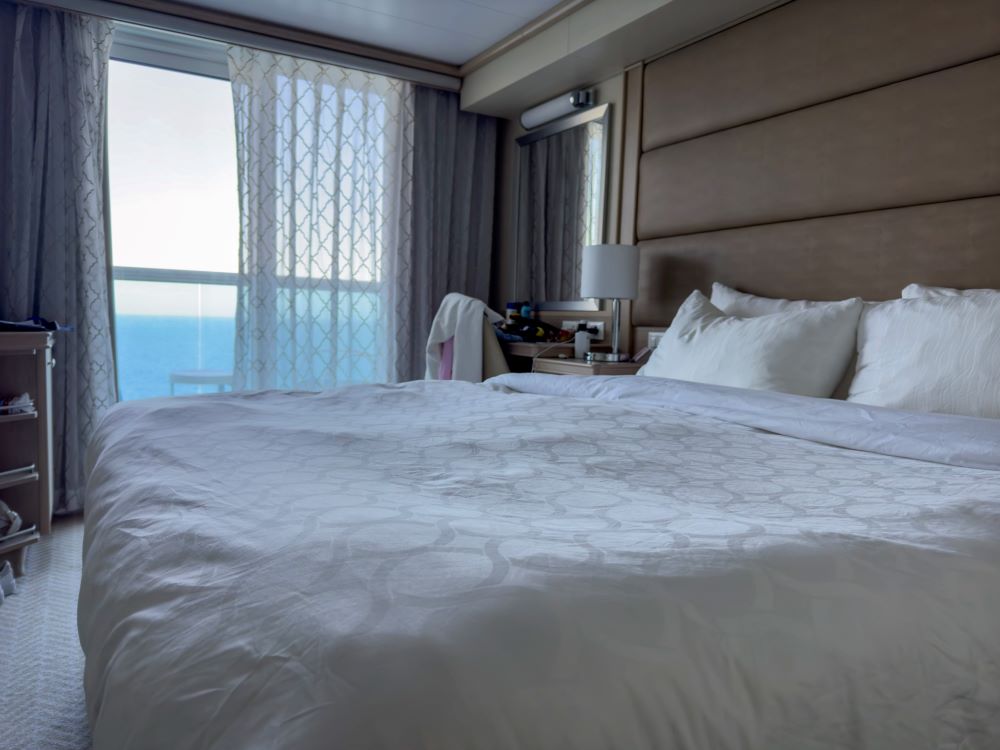
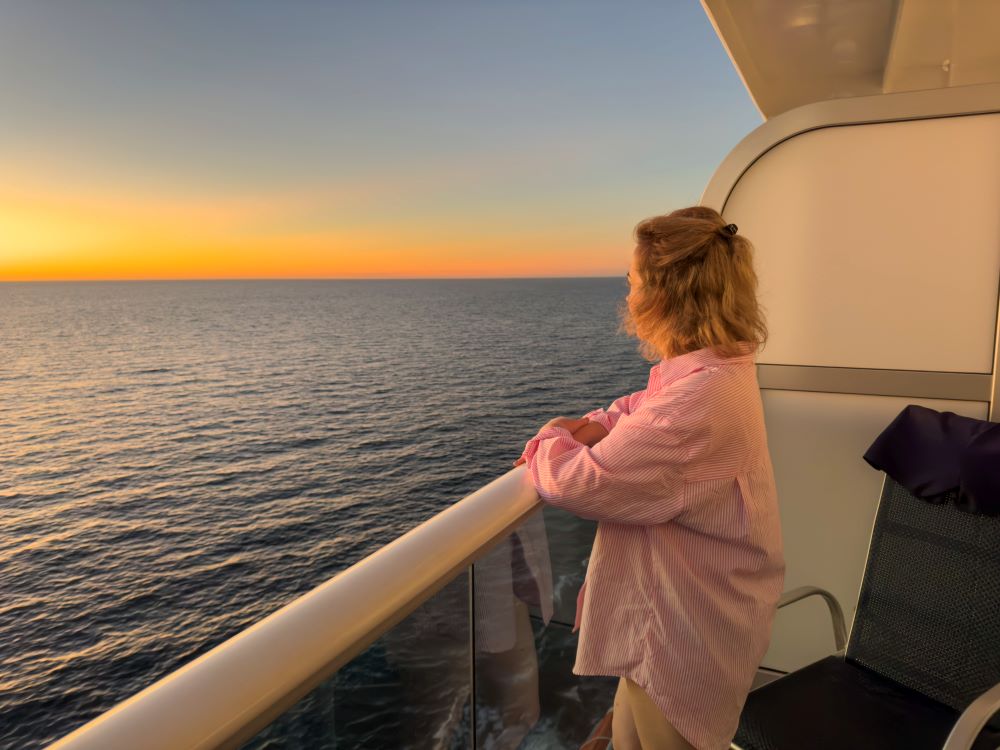
A balcony cabin gives you a private outdoor space — your own slice of fresh air, sea views, and somewhere to sit with a coffee in the morning. We’ve had balcony cabins on MSC Fantasia and Discovery Princess, and the difference in comfort is real.
The question isn’t whether a balcony is nicer. It always is. The question is whether the price gap justifies it.
Our rule: if the difference between an inside or outside cabin and a balcony is up to around $300 for two people, pay it. You’ll use the balcony more than you think — morning coffee, watching ports approach, evenings at sea. Beyond $300–400, it depends on the length of the cruise and how much time you’re likely to spend onboard versus ashore.
For a transatlantic crossing with 10 sea days, a balcony makes more sense than for a 7-day Mediterranean cruise where you’re in port most of the time.
Cabin Location: Does It Matter?
Beyond the cabin type, where the cabin sits on the ship affects your experience in a few practical ways.
High decks vs. low decks
Higher decks mean better views and a shorter walk to the pool and sun deck — most ships keep the pools, buffet, and outdoor areas on the upper decks. Lower decks are closer to the waterline — useful if you’re prone to seasickness, since movement is less pronounced there.
Forward, midship, or aft
Midship cabins experience the least motion in rough seas and are usually the most convenient for getting around the ship. Forward cabins can feel more movement in heavy weather. Aft cabins sometimes have the best views — looking back over the ship’s wake — but can be noisier if there’s engine vibration.
Near the elevator vs. at the end of the corridor
Cabins close to the elevator are convenient but can be noisier. Cabins at the far end of a corridor are quieter but involve a longer walk multiple times a day. On a large ship like MSC Seashore with 19 decks and up to 6,000 passengers, this actually matters.
What We’d Do Differently
After five cruises and four cabin types, here’s what we’ve settled on:
For a short cruise (up to 7 days): inside cabin is fine if the saving is significant. Spend the difference on excursions — Caribbean ports, for example, are best explored with a local guide rather than a ship tour, and the savings add up fast.
For a long cruise or transatlantic crossing: at minimum an outside cabin for the natural light. A balcony if the price gap is reasonable — on a crossing with many sea days, you’ll use it every morning.
For a honeymoon or special occasion: balcony without question. The private outdoor space changes the feel of the trip entirely.
The one thing we’d avoid booking again without thinking carefully: an inside cabin for more than 10 days. The saving is real, but so is the effect of spending nearly two weeks without natural light in your room.
What We Paid: Cabin Types Across Our Sailings
| Cabin type | Ship | Fare for two | Notes |
|---|---|---|---|
| Inside | MSC Seashore (17 nights) | $2,155 | Transatlantic; ~$63 pp/night |
| Balcony | MSC Fantasia (Mediterranean) | €1,888 | 7-person family group |
| Obstructed view | MSC Sinfonia (7 nights) | €1,200 | Lifeboat in front of window |
| Balcony | Discovery Princess (7 nights) | $1,605 | ~$100 pp/night |
| Outside (window) | Celestyal Journey (7 nights) | €1,693 | Plus €60 pp port taxes |
Fares as paid at booking — different seasons, routes, and group sizes, so compare the per-night rates rather than the totals.
FAQ: Choosing a Cruise Cabin
Is a balcony cabin worth it on a cruise?
It depends on the price gap and the length of the cruise. If the difference is under $300 for two people, we’d say yes — you’ll use the balcony more than you expect. For a short cruise where you’re in port most days, an outside cabin offers better value.
What is an obstructed view cabin on a cruise ship?
An obstructed view cabin has a window that’s partially blocked — usually by a lifeboat or structural element. You won’t have a clear sea view, but you do get natural light. We had one on MSC Sinfonia: the lifeboat covered most of the window, but being able to tell day from night made a genuine difference.
Is an inside cabin okay for a long cruise?
Manageable, but not comfortable over time. The complete absence of natural light becomes noticeable after several days. For a transatlantic crossing or any cruise longer than 10 days, we’d recommend at least an outside cabin.
What’s the difference between inside and outside cruise cabins?
An inside cabin has no window and no natural light — it’s the most affordable option. An outside cabin has a fixed window with a sea view and natural light. The price difference is usually modest, and the comfort difference is significant, especially on longer sailings.
Where is the best cabin location on a cruise ship?
Midship on a middle deck is the most practical choice: least motion in rough seas, convenient for getting around, and usually good value. Avoid cabins directly above or below busy venues (pools, nightclubs, kitchens) if noise is a concern.
How much more does a balcony cabin cost on a cruise?
It varies widely — on our sailings the gap ranged from $300 to over $1,000 for two people. Under $300 we’d pay it; above $500, an outside cabin is the sensible compromise. Worth knowing: newer ships carry far more balcony cabins, so the premium is often surprisingly small — on older ships balconies are scarce and priced accordingly.