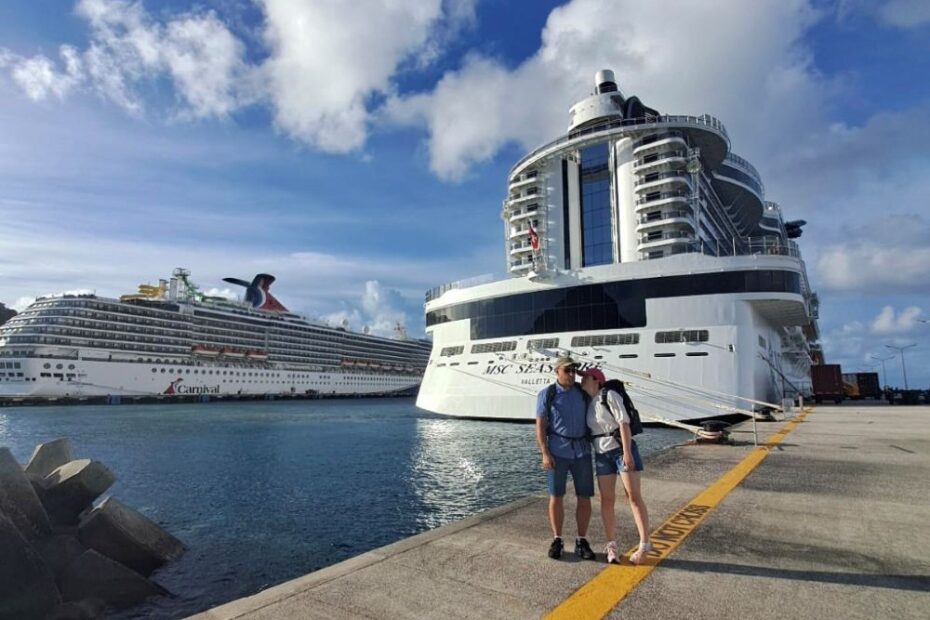
Crossing the Atlantic by ship had been on our list for years — and in November 2023 we finally did it aboard the MSC Seashore, 17 days from Barcelona to Miami. It’s a long time to be at sea, and before we booked we struggled to find honest, detailed reviews that answered the questions we actually had: What’s an interior cabin really like for two weeks? How does the ship handle 6,000 passengers without feeling like a sardine tin? Is the water park worth the hype?
This is the review we wished we’d found. We’ll cover everything — the route, the cabin, the food, the entertainment, the ports — along with the honest lows, because there were a couple. By the end, you’ll know exactly whether an MSC Seashore transatlantic crossing belongs on your own list.
MSC Seashore — Quick Facts
- Route: Barcelona → Tenerife → Lanzarote → Saint Martin → British Virgin Islands → Puerto Rico → Miami
- Duration: 17 days
- Ship capacity: ~6,000 passengers, 19 decks
- Our cabin: Interior cabin (no window)
- Travel month: November
- Who we are: Couple, two adults
- Sea days: 10 out of 17 (2 before the Canaries + 6 Atlantic crossing + 2 before Miami)
What Is the MSC Seashore Transatlantic Route Like?
The 17-day itinerary is better balanced than it might look on paper. It’s not 17 days of open ocean — it breaks naturally into four distinct phases, each with a different character.
Days 1–5 cover Barcelona departure and two sea days before reaching the Canary Islands — Tenerife and Lanzarote. These are proper island stops with enough time to explore independently.
Days 6–11 are the Atlantic crossing proper: six consecutive sea days as the ship moves southwest toward the Caribbean. This is where you either fall in love with sea days or start climbing the walls — more on that below.
Days 12–14 bring the Caribbean highlights: Saint Martin, the British Virgin Islands, and Puerto Rico, three very different stops in quick succession.
Days 15–17 are two final sea days before arriving in Miami.
We disembarked at every single port stop, which we’d strongly recommend. Each island has its own personality and the contrast between the Canary Islands and the Caribbean — even within a single voyage — is part of what makes a transatlantic crossing special.
MSC Seashore Ship Overview: Size, Design, and First Impressions
MSC Seashore is a large ship — very large. Around 6,000 passengers across 19 decks — and the difference a newer ship makes compared to MSC’s older fleet is visible from the first step into the atrium. Our honest first impression stepping aboard in Barcelona was mild overwhelm: the atrium is genuinely dramatic, the Swarovski crystal staircase is striking and absolutely worth seeing, and the scale of everything takes a moment to adjust to.
What impressed us more over time was how well the ship manages its own size. Despite the passenger count, we rarely felt truly crowded outside of peak dining hours and the water park on warmer days. The layout routes people naturally through different areas, and finding a quiet spot — a deck chair away from the pool, a lounge in the evening — was never difficult if you were willing to walk a few extra minutes. November was a good month for this crossing. The ship skewed older and quieter than we imagine it does in summer — fewer families with young children, more couples and retirees. The Atlantic crossing days felt genuinely peaceful rather than chaotic.
Interior Cabin Review: Is It Worth Saving the Money?
We booked an interior cabin — 14 square metres, no window, no natural light — and we’d make the same choice again for a transatlantic itinerary.
Here’s our honest reasoning: on a 17-day voyage with 10 sea days, you spend almost no time in the cabin during daylight hours. We were up for breakfast, out on deck or at activities all day, and only back in the cabin late in the evening. The absence of a window stopped mattering within 48 hours. What mattered was the bed quality (good), the storage (genuinely clever — large suitcases slide under the bed, everything has a place), and the housekeeping.
The housekeeping was the cabin highlight. The cabin was serviced twice daily, every day for 17 days — properly cleaned, towels replaced, bed made. After two and a half weeks at sea, the cabin felt as fresh on day 17 as it did on day one. That consistency, at no extra charge, is one of the things cruise travel does better than almost any hotel.
One genuine negative: the air conditioning. Even in November, the cabin ran cold — noticeably, uncomfortably cold at times. The controls help but don’t fully solve it. Pack a light layer for sleeping, regardless of your sailing season.
Dining on MSC Seashore: Buffet, Main Restaurant, and What to Expect
The buffet
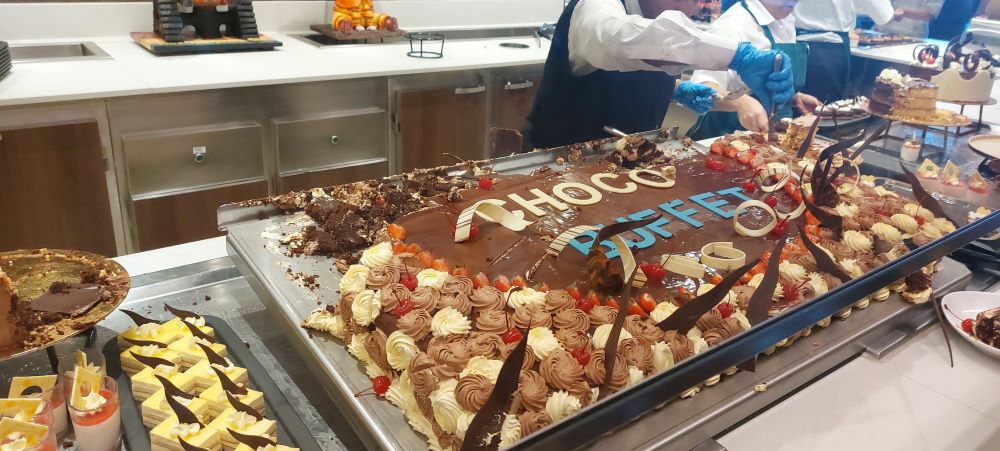
The buffet runs from 6 AM to 1 AM and was our go-to for breakfast and most lunches. The range is broad — Mediterranean staples, Asian options, fresh fruit, pastries, hot mains — and the quality is consistently decent rather than exceptional. Water, tea, and coffee are included at the buffet at all times; soft drinks and alcohol are charged separately.
Peak hours (roughly 8–9 AM for breakfast, 12:30–1:30 PM for lunch) get busy and seating near the windows fills fast. Our approach was to go slightly earlier or later than the rush — arriving at 7:30 AM for breakfast meant we always got a window table without any wait.
The main dining room
Dinner in the main restaurant was a proper event each evening. You’re assigned a fixed table and a fixed time (either 7 PM or 9 PM, selected at booking), and the same waiter serves you for the entire voyage — which means the service improves noticeably over the first few days as they learn your preferences. Menus change nightly and there are no prices listed because it’s all included.
The food quality is good — multi-course meals with varied international menus, well presented and hot. Our one honest criticism matches what we’d heard before sailing: the portions in the main restaurant are on the smaller side. The quality is there; the quantity sometimes isn’t. Our solution was to order two starters if a main looked light, which the waiters accommodate without any issue.
Entertainment: the Water Park, the Shows, and Sea Day Life
The water park
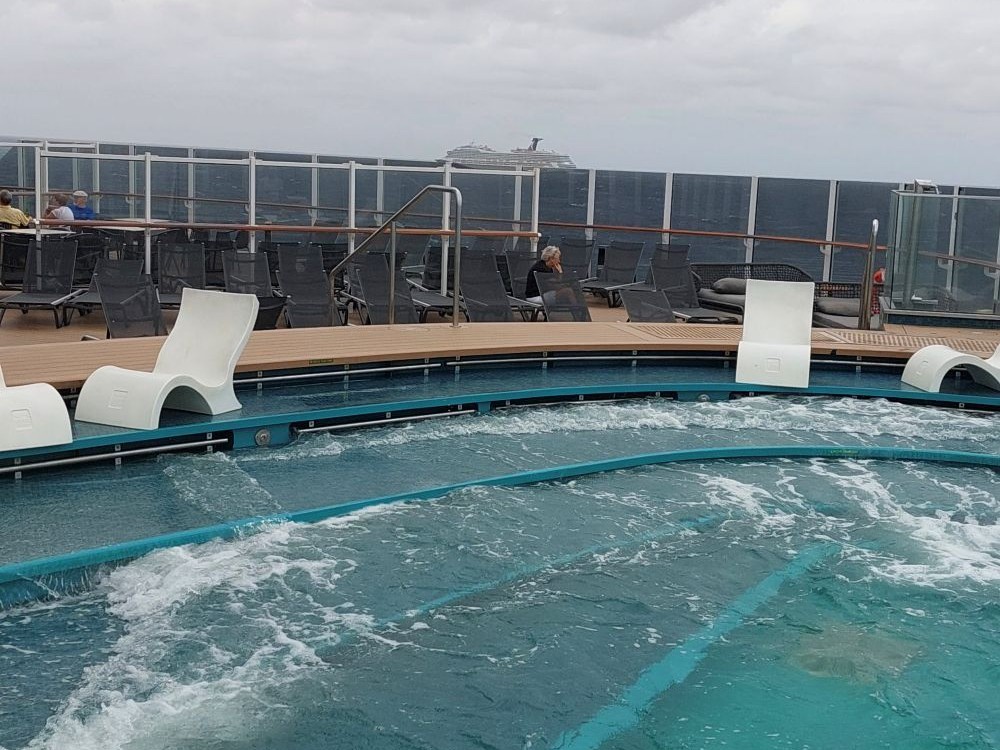
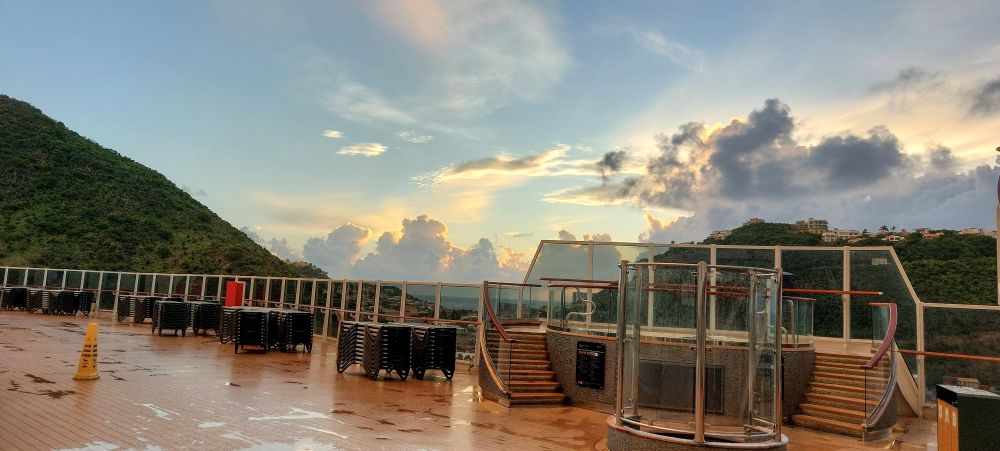
The water park was genuinely one of the highlights of the voyage — and we say that as adults without children. Four slides of varying intensity, the inflatable tube slide in particular, and minimal queuing outside of the warmest Caribbean days. In the Canary Islands and early Atlantic days the weather was mild enough for the slides, and the crowds were manageable. By the time we hit Saint Martin and Puerto Rico, the pool areas were busier — but even then, waiting times were short compared to a land-based water park.
The evening shows
The theater productions were the other consistent highlight — and the reason we were glad we’d packed for formal and themed evenings. Shows run twice nightly to accommodate both dinner seatings, and the quality is higher than we expected — properly staged productions with full casts, live music, and choreography that would hold its own at a mid-sized land venue.
We went most evenings and only skipped when we were genuinely tired from a port day. Our strong advice: go early for seats. The theater fills quickly and the difference between front-third and back-third seating is noticeable.
Sea days
Ten sea days sounds like a lot — and it is, if you approach them passively. The ship runs a full daily activity schedule: trivia, dance classes, cooking demonstrations, deck sports, live music throughout the day, movies on the outdoor screen. We treated sea days as the main event rather than waiting for the next port, and they became our favourite part of the crossing. The Atlantic in November is grey and dramatic and genuinely beautiful from the deck — there’s something about six consecutive days of open ocean that resets something in you.
The one sea day warning: the Atlantic crossing days can be rough. We had one night of significant swell that made walking the corridors interesting. Nothing dangerous, but if you’re susceptible to motion sickness, have medication ready before day six.
The Port Stops: What We Did and What We’d Recommend
Barcelona (embarkation)
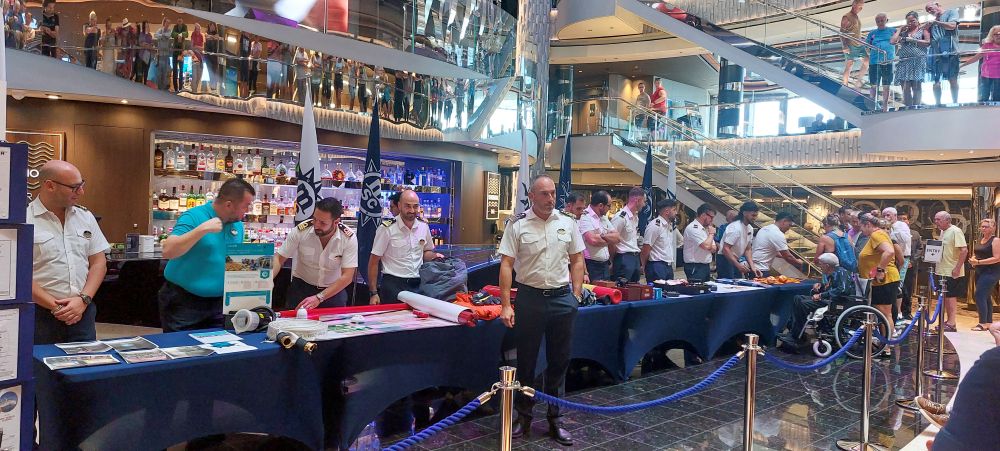
We arrived a day early and spent a full day in the city before boarding — which we’d strongly recommend for anyone flying in. The boarding process itself was the smoothest we’ve experienced: designated time slots, a 20-minute check-in from arrival to cabin, and the MSC app does most of the paperwork if you complete it before arrival. Download it and fill everything in at least 48 hours before boarding.
Tenerife and Lanzarote (Canary Islands)
Both islands reward independent exploration more than ship excursions. In Tenerife we took a local bus up toward Teide — straightforward, cheap, and the volcanic landscape is unlike anything in the Caribbean. Lanzarote’s dramatic lava fields are worth seeing even from a taxi circuit of the island. Neither stop needs a ship-organised tour unless you specifically want a guided commentary.
Saint Martin
The split-island nature of Saint Martin — French side and Dutch side — makes it one of the more interesting Caribbean stops. We walked from the port to Marigot on the French side, which takes about 20 minutes and costs nothing.
The beaches on both sides are genuinely excellent. This was one of our favourite port days of the entire voyage — enough that we’ve written a separate Saint Martin cruise port guide covering everything we did ashore.
British Virgin Islands
The ship docks at Road Town on Tortola, and minibus operators wait right outside the port — no advance booking needed. This stop is entirely about the beaches: the island tour with a beach stop was $30 per person, and the beach itself was the finest of the whole crossing — fine white sand, shallow clear water, and almost nobody on it.
If you’re travelling as a couple, this is the port you’ll remember — Tortola earned its own guide.
Puerto Rico
Old San Juan is one of the best cruise port cities in the Caribbean — colourful colonial architecture, excellent food, walkable from the pier. We spent the full day there without a tour and covered more ground than any organised excursion would have managed — here’s everything we did in Old San Juan and beyond. If you do one independent port day on this itinerary, make it Puerto Rico.
Miami (disembarkation)
Miami is the final stop for most passengers, which means disembarkation is the busiest process of the voyage. The ship uses a deck-based time slot system — pack large bags the night before and leave them outside your cabin door by midnight.
The process is organised but slower than boarding; allow two to three hours from your assigned slot to being clear of the terminal. If you’re not flying out the same day, Miami is worth a few extra days after the cruise.
MSC Seashore Transatlantic Cost Breakdown
Here’s what to realistically budget for a 17-day transatlantic sailing for two people in an interior cabin, based on our November crossing:
| Cost items | Included/Extra | Typical cost (2 people) |
|---|---|---|
| Interior cabin (17 nights, 2 people) | Base fare | $2,155 (our November price) |
| All meals (buffet + main dining) | Included | — |
| Entertainment, pools, water park | Included | — |
| Gratuities | Extra — auto-added | ~$400–500 |
| Wi-Fi (basic package) | Extra | ~$200–300 each |
| Beverage package (optional) | Extra | $600–900 each |
| Shore excursions (6 ports) | Extra | $300–800+ (independent cheaper) |
| Specialty dining | Extra | $80–160 per visit |
| Travel insurance | Extra — essential | $150–300 (pre-trip) |
| Total extras budget (2 people) | — | $1,500–2,500+ above fare |
We paid $2,155 for two people in an interior cabin for the full 17 nights — which works out to roughly $63 per person per night once you count everything that’s actually included in the fare: all meals, entertainment, and the water park. For a November sailing that’s a strong price.
Transatlantic crossings in shoulder season are consistently among the better-value MSC bookings, and interior cabins on long itineraries represent the best fare-to-value ratio on the ship. Book early for the best cabin selection and watch for MSC’s pre-cruise package sales on Wi-Fi and beverages, which are consistently cheaper than onboard prices.
Our Tips for MSC Seashore First-Timers
Complete the MSC app before you board
Download the app and fill in all passenger details at least 48 hours before departure. It cut our Barcelona boarding time to about 20 minutes — one of the smoothest embarkations we’ve had on any cruise, and the app is the first item on our step-by-step preparation checklist.
Pack a light layer for the cabin
The air conditioning in interior cabins runs cold. This is the one complaint we heard most consistently from fellow passengers, and it matched our own experience. A thin fleece or cardigan for sleeping makes a real difference over 17 nights.
For the water park, go early or late
The slides are genuinely excellent and the queues are short outside peak hours. On Canary Islands and early Atlantic days, mid-morning works well. Once you hit the Caribbean ports, go before 10 AM or after 4 PM to avoid the longest waits.
Choose your dining time strategically
The 7 PM sitting suits most people and fills first — book it early. The 9 PM sitting works well if you spend evenings at the show first and eat after, which is a pleasant way to structure the evening. Both sittings have the same menu and service quality.
Go to the shows early
The theater fills quickly, and the difference between front-third and back-third seating is real.
Budget for port days independently
Ship excursions are convenient but expensive. For this particular itinerary — Tenerife, Lanzarote, Saint Martin, Puerto Rico — independent exploration is straightforward and saves significant money. None of the ports on this route need a ship excursion — local operators at every pier offered the same tours cheaper.
Frequently Asked Questions
Is the MSC Seashore transatlantic cruise worth it?
Yes — with one condition: you need to genuinely enjoy sea days. Ten of the 17 days are spent at sea, and if open-ocean sailing sounds like dead time rather than an experience in itself, a transatlantic crossing isn’t the right itinerary regardless of the ship. If the idea of days at sea appeals, the MSC Seashore does it well — strong entertainment, good food, and an excellent water park.
How many sea days are on the Barcelona to Miami route?
Ten sea days out of 17, including six consecutive Atlantic crossing days — the longest stretch without a port. The six consecutive Atlantic crossing days (days 6–11) are the longest stretch without a port stop. These are the days that define whether you enjoy a transatlantic cruise — we found them the best part of the voyage.
Is an interior cabin worth it on a 17-day cruise?
We think yes, particularly for a transatlantic itinerary. The savings over a balcony or ocean view cabin can be substantial — often $500–900 per person — and the reality of cabin time on a sea-heavy itinerary is that you use it almost exclusively for sleeping. The 14-square-metre MSC interior cabin is compact but well-designed with smart storage. The one real downside is the cold air conditioning, which a light layer solves.
How rough is the Atlantic crossing on MSC Seashore?
In November, we had one notably rough night mid-Atlantic. The ship handles swell well given its size — there’s minimal rocking compared to smaller vessels — but Atlantic weather in autumn can be unpredictable. Pack seasickness medication as a precaution and don’t assume the large ship means a smooth crossing every night.
What are the best ports on the Barcelona to Miami transatlantic route?
Saint Martin and Puerto Rico were our standouts. Saint Martin offers two distinct experiences on one island and excellent beaches. Old San Juan in Puerto Rico is one of the most rewarding cruise port cities in the Caribbean — walkable, colourful, with great food. Tenerife and Lanzarote in the Canary Islands are also excellent, particularly if you’ve not been to the islands before.
Does MSC Seashore have a water park?
Yes — a proper water park with four slides, including an inflatable tube slide that gets consistently good reviews from passengers of all ages. It’s included in the cruise fare with no extra charge. Queue times are short outside peak hours; expect longer waits on warm Caribbean port days when more passengers are onboard mid-morning.
What’s the best time of year for a transatlantic cruise?
November worked very well for us. The ship was quieter than summer sailings, the Canary Islands weather was mild (low-to-mid 20s°C), and the Caribbean stops were warm without being peak-season crowded. Eastbound crossings (Miami to Barcelona) typically run in spring. If you want a quieter ship and reasonable weather across both regions, November is a strong choice.
MSC Seashore Transatlantic: Is It Worth Booking?
After 17 days and six port stops, our verdict is straightforwardly positive — but with honest caveats. The MSC Seashore is a well-run, well-maintained large ship that handles its passenger count better than most ships its size. The water park is genuinely excellent, the evening shows are stronger than we expected, and the cabin housekeeping was consistent and impressive throughout. For two adults who enjoy sea days and independent port exploration, it was close to ideal.
The weaknesses are real but manageable: the air conditioning is too cold for many people, the main restaurant portions are on the small side, and the buffet at peak hours shows what 6,000 passengers feels like. None of these are dealbreakers — just things to know before you board.
The itinerary itself is the main reason to choose this crossing over a standard Caribbean sailing. Watching the Atlantic from the deck for six consecutive days, stopping in the Canary Islands before the Caribbean, arriving into Miami after 17 days at sea — that’s a genuinely different experience from a 7-night loop. If crossing an ocean by ship sounds compelling to you, the MSC Seashore does it well.