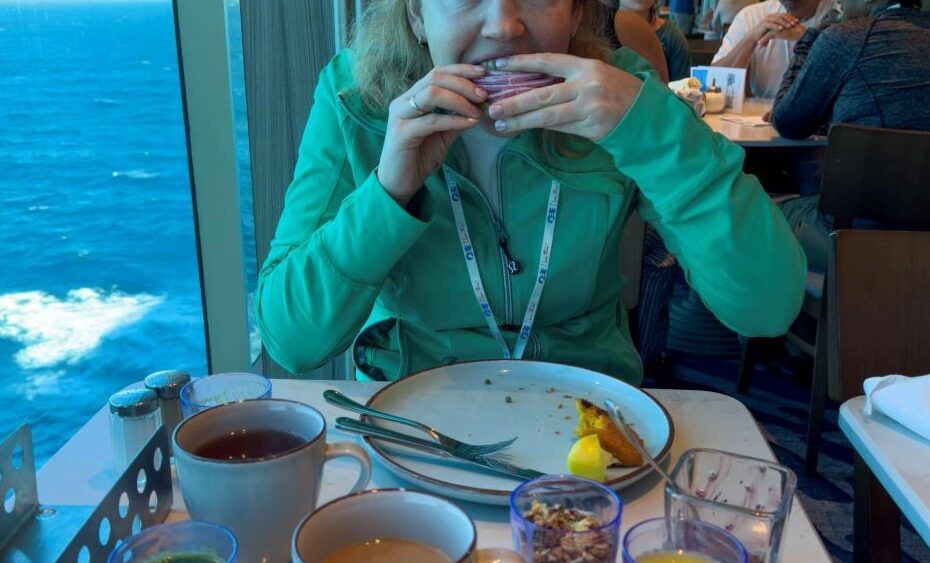
Here’s the honest problem with cruise ships: the food never stops. Breakfast rolls into the late-morning buffet, lunch into afternoon pizza, dinner into the midnight snack — on our MSC sailings, something was available close to twenty hours a day, all of it already paid for. Nobody plans to overdo it. The ship just makes it remarkably easy.
We know exactly how easy, because we once boarded with a plan — and watched it collapse within a day. This is the story of that plan, and the ten habits we’ve built since, across five sailings, that let us enjoy every meal without stepping off the ship feeling like cargo.
Our Diet Lasted Exactly One Day
Before our first cruise — the 17-day transatlantic crossing — we were on a diet at home. No sweets, no pastries, the whole discipline. We boarded with every intention of continuing it at sea.
We lasted, by our honest count, one day. Then the cakes started — because on a ship it is simply impossible to hold the line. The desserts, the little pastries, everything so good and so endless, all of it included, all of it ten metres away at any hour. By day three the diet was a memory and we were sharing tortes like everyone else.
So let us save you the experiment: forget dieting on a cruise. It doesn’t survive contact with the buffet, and fighting it just makes the holiday worse. The realistic goal is different — not to restrict, but not to overeat: to feel good every day, enjoy the food properly, and come home without regret. Everything below serves that goal, not a diet.
The 10 Habits That Actually Work at Sea
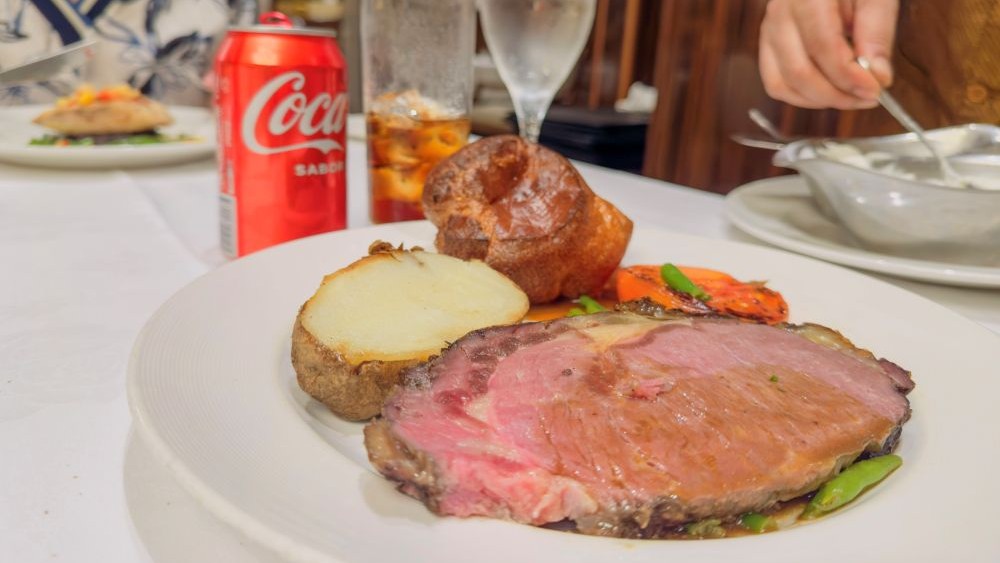
1. Make dinner a restaurant dinner — every night
This became our standing rule: evenings, we always eat in the main restaurant, never the buffet. Two reasons. First, portion control happens by itself — you don’t pile your own plate; the kitchen decides, and plated courses have a beginning and an end the buffet never offers. Second, it’s simply a beautiful way to close the day: proper service, a set table, courses arriving one at a time. On MSC Sinfonia the restaurant was also far better than the buffet in quality — the easiest decision on the ship.
2. Keep the cabin food-free
Our second standing rule: we never take food back to the cabin. No plate of snacks for later, no just-in-case pastries. If hunger arrives, the buffet is a short walk away and always will be — so the walk itself becomes the test. Genuinely hungry? You’ll happily go. Just bored? You won’t bother. A food-free cabin quietly removes the most mindless eating of the day.
3. Walk the whole buffet before taking a plate
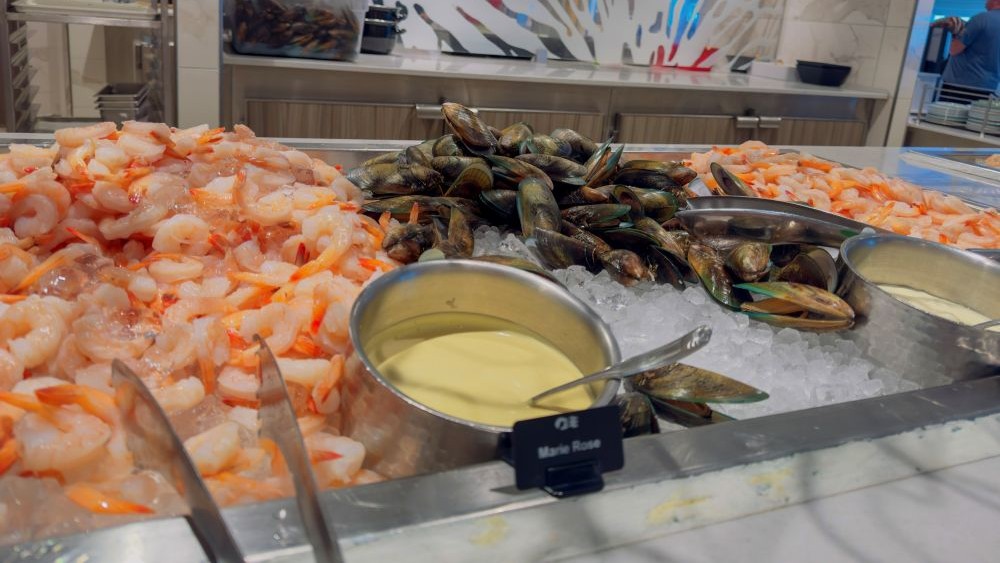
When you do eat at the buffet, do a full lap empty-handed first. Buffet overeating happens by accumulation — a bit from every station because you didn’t know what was ahead. See everything, then go back for the two or three things actually worth the plate space.
4. The shared dessert plate
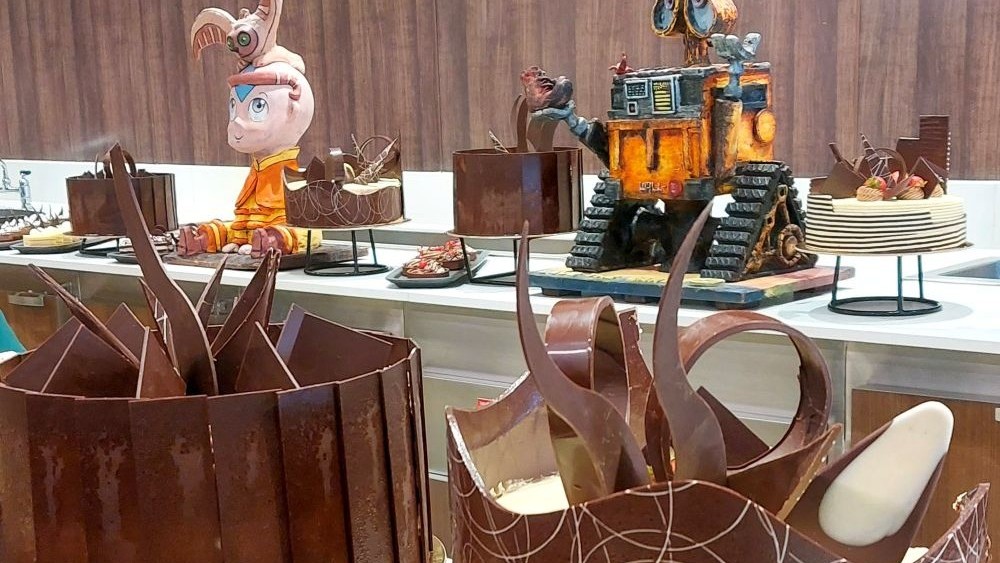
Let’s be honest: nobody can resist the little cakes at the buffet, and we stopped pretending we could. Our solution instead: we take a few different ones on a single plate — and share it. You never know which will actually taste good and which only looks the part, so sharing means tasting everything while eating half. It’s the difference between trying five desserts and eating five desserts.
5. Order for appetite, not availability
The multi-course dinner menu is an invitation, not an obligation. You can order a starter and a main and stop; nobody is counting. The trap is treating five available courses as a challenge.
6. Give the evening a closing time
Celestyal taught us this one by force: on the Journey, food service ends at 9 PM sharp — and honestly, we didn’t miss the late-night eating once. On MSC, where pizza runs towards midnight, the temptation stands nightly. Borrow the rule voluntarily on any ship: dinner is the last meal, full stop. The 11 PM slice eaten out of boredom rather than hunger is the purest overeating at sea.
7. Take one piece of fruit ashore — and nothing else
Our port-day trick: on the way out, we grab a single piece of fruit from the buffet, and that’s the day’s provisions. It’s enough to keep you going through a morning of walking — and it means that by the time you’re back on board, you’ve built up that pleasant, genuine hunger that makes the next meal actually enjoyable. Appetite, it turns out, is something the ship’s constant food quietly steals from you; a long port day on one apple gives it back.
8. Let the ports do the work
A proper port day is the great equaliser: exploring Corfu’s old town, walking Valencia end to end, or climbing around a Greek island covers many kilometres before you’ve thought about exercise once. Walk the ports instead of bussing between sights where possible — better sightseeing, and it quietly balances the dinners.
9. Move on the ship: stairs and the promenade
A cruise ship is a 12-storey building you live in for a week — make the stairs your default and you’ll out-climb most gym sessions without noticing. And most ships have a deck made for walking: on Celestyal Journey, the deck 6 promenade wrapped the whole ship, steps from our cabin, and a few laps with the sea beside you is the most pleasant exercise cruising offers. The gym works too — ours came with ocean views from the treadmills — but the promenade needs no motivation at all.
10. Remember that drinks are food
The quietest source of cruise excess isn’t the buffet — it’s the glasses: the cocktail by the pool, wine with dinner, the nightcap. Nobody needs to skip them, but counting them as part of the day’s eating changes decisions naturally. Bonus: it’s the same maths that protects your onboard budget.
Quick Reference: Ship Temptation vs Simple Fix
| The ship’s setup | The habit that counters it |
|---|---|
| Buffet open most of the day | Restaurant dinners; buffet with a plan |
| Unlimited portions | Full lap first, then one intentional plate |
| Irresistible dessert display | A few cakes on one shared plate |
| Snacks easy to hoard | Keep the cabin food-free |
| Late-night pizza and snacks | Dinner is the closing time |
| Appetite never gets a chance | One fruit ashore, nothing more |
| Lifts everywhere | Stairs as the default |
| Drinks flowing all day | Count the glasses as part of the meal |
A Word About the Waste: What We Noticed — and Where It All Goes
One more honest observation from five sailings: the amount of food waste on a cruise ship is enormous. And we noticed a real difference between markets — on our US sailing, plates piled high and left half-eaten were a common sight; in Europe it happens noticeably less. Watching full plates head back to the galley, we started wondering where it all actually ends up.
The short answer: it’s collected and processed, out of sight, on every major cruise line. Leftover food goes to dedicated waste stations behind the scenes, where it’s separated and ground down or dehydrated — many ships now use biodigesters that break food waste down around the clock. What happens next depends on the ship and the rules: finely processed food waste may be legally discharged far out at sea under international regulations, part is offloaded in ports to certified waste companies, and the newest ships go a step further and convert food waste into energy on board. What never happens: it isn’t served again, and it isn’t given to the crew — once it leaves your plate, it leaves the menu for good.
The practical takeaway for us as passengers is the simplest one: take what you’ll eat, go back if you want more. It’s the same habit that protects your waistline — the plate you didn’t pile is also the plate that doesn’t end up in the grinder.
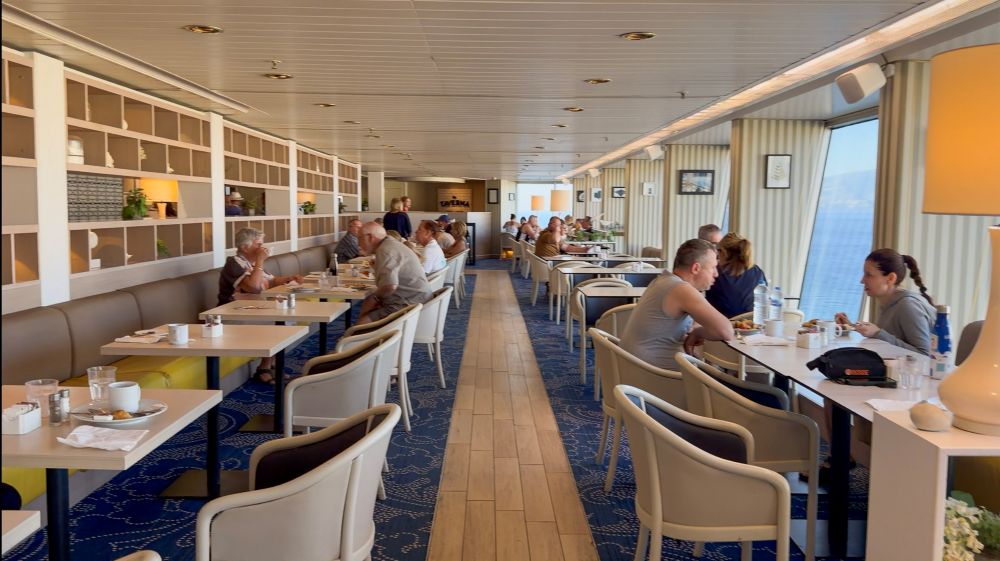
FAQ: Cruise Food Without the Regret
Do people gain weight on cruises?
Many do — with food included and available most of the day, it’s the default outcome without a few habits in place. It’s far from inevitable though: active port days, taking the stairs, and eating dinners in the restaurant rather than grazing the buffet balance most of it naturally.
Can you keep a diet on a cruise ship?
Honestly? We tried — and lasted one day before the desserts won. With unlimited included food available around the clock, strict dieting rarely survives a cruise. A more realistic goal is not overeating: restaurant dinners, no food in the cabin, and active port days keep the week enjoyable without restriction.
Is cruise ship food really unlimited?
Effectively yes — the buffet, main restaurant, and included venues let you eat as much and as often as you like at no extra cost. That’s exactly why a strategy helps: the ship never signals when to stop, so the habit has to come from you.
What happens to leftover food on cruise ships?
It’s collected at dedicated waste stations, ground down or processed in onboard biodigesters, and then either discharged far out at sea under international regulations, offloaded to certified waste companies in port, or — on the newest ships — converted into energy on board. It is never reused in the kitchens or served again.
How do I avoid overeating at the cruise buffet?
Walk the entire buffet once before picking up a plate, then return only for the few things genuinely worth it. For desserts, put a few different ones on a single plate and share — you taste everything while eating half. And treat the buffet as one meal, not an open grazing session.
Enjoy the Food — That’s What It’s There For
We want to end where we started: cruise food is one of the genuine pleasures of this kind of travel, and approaching it with guilt would waste it. We gave up the diet on day one and never looked back — what we kept instead were the habits: restaurant dinners as the beautiful end of each day, a food-free cabin, one fruit for the port, and the shared plate of little cakes.
Eat the special dinners with both hands, walk the beautiful islands, take the stairs, and let the midnight pizza sail on without you. You’ll come home with the memories of the meals — and only the meals.