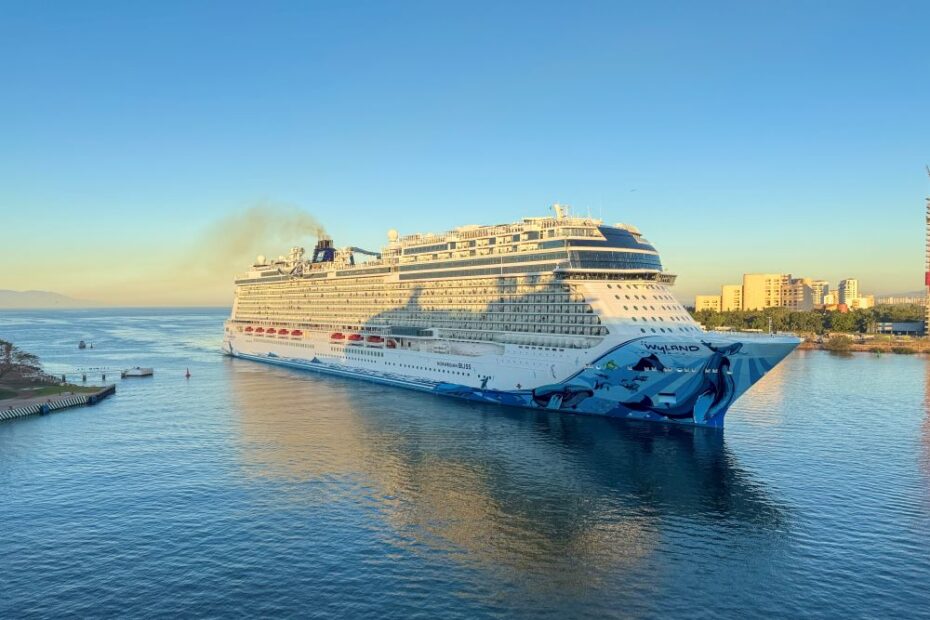
Cruise ships are marketed as the perfect holiday — comfort, entertainment, and multiple destinations all in one trip. And having sailed in the Mediterranean, the Atlantic, and the Pacific, I can say that overall, cruising is something I genuinely love. I’ve written about 6 reasons we keep booking cruises if you want the full picture from both sides. But I’ve also encountered things that surprised me, frustrated me, and that I think certain types of travellers would find genuinely difficult.
This isn’t a post to put you off cruising. It’s an honest look at six real reasons why a cruise might not be the right choice for you — based on my own experience across multiple sailings. If any of these resonate, it’s worth knowing before you book rather than after.
6 Reasons Cruises Might Not Be Your Dream Vacation
1. Seasickness Can Ruin the Whole Experience
This is the most common reason people avoid cruises, and it’s more unpredictable than most people realise. Even the largest modern ships still move — in strong winds or open ocean, the rocking is real, and for anyone with a sensitive vestibular system it can mean nausea, dizziness, or just a persistent low-level unpleasantness that colours the entire trip.
Medications and natural remedies help, but they don’t work for everyone. If you’ve never sailed before and you know you’re prone to motion sickness in cars or on planes, a cruise is a genuine risk.
From my own experience: larger and newer ships rock considerably less than older or smaller vessels, thanks to modern stabilisation systems — a difference I noticed immediately when comparing the MSC Seashore with the older Fantasia and Sinfonia.
The ocean also matters enormously. The Pacific was the roughest sailing I’ve done — noticeably higher waves and more persistent movement. On the Atlantic crossing and throughout the Mediterranean, I felt no rocking at all during long stretches. If you’re nervous about seasickness, a Mediterranean itinerary on a large modern ship is a much safer first test than a Pacific or North Atlantic route.
2. Small Cabins and the Feeling of Being Trapped
When you’re in the middle of the ocean, you can’t leave. That sounds obvious, but the psychological reality of it catches some people off guard — particularly independent travellers who are used to going wherever they want, whenever they want. The ship is your world for the duration of the sailing, and not everyone finds that liberating.
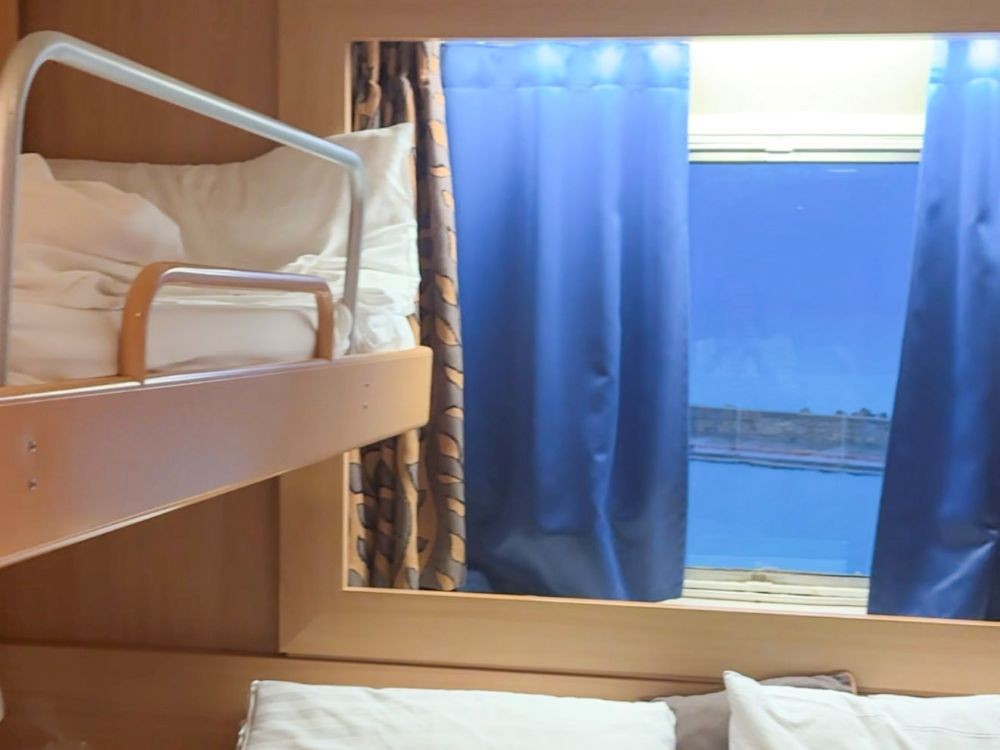
The cabins reinforce this. Standard interior cabins on most ships are smaller than a typical hotel room — no window, limited floor space, clever storage but not much of it. For people used to spacious accommodation, it can feel claustrophobic, especially on longer voyages.
A balcony cabin made a significant difference for me. Being able to step outside into the fresh air, sit with a coffee and watch the sea, and have that private outdoor space — it made the cabin feel larger and the whole holiday more relaxed. If you’re considering a longer sailing and the cost difference is manageable, the balcony upgrade is worth it for exactly this reason.
One thing that surprised me: the first day onboard always feels overwhelmingly busy. Everyone boards at once, everyone heads to the buffet to explore, and the ship feels packed. By day two, people have spread out across activities and areas, and finding a quiet corner becomes easy. The bigger the ship, the more options there are for genuine solitude when you want it.
3. Crowds and Queues Are Part of the Deal
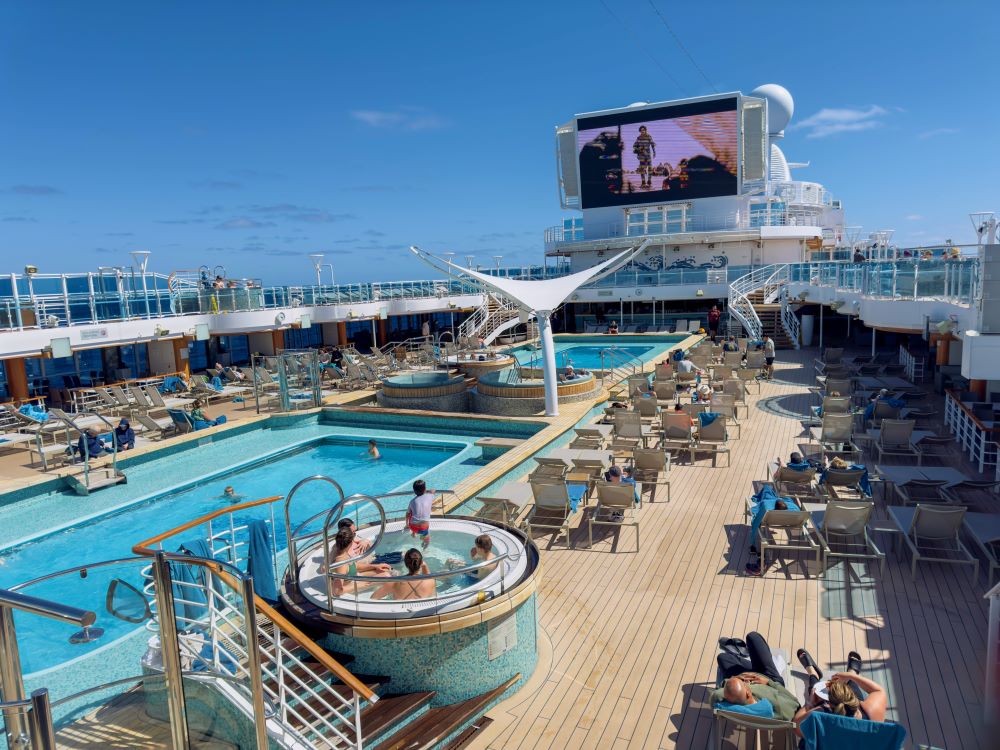
A large cruise ship carries five to six thousand passengers. That’s a small city, and it behaves like one — with peak hours, busy areas, and queues. At the buffet during lunch, at the gangway when docking, at the most popular pool on a sunny sea day. For travellers who find crowds stressful, this is a real consideration.
Planning around the crowds helps considerably. I’m a morning person, so I was at the pool early — often the only one there. When the main pool filled up later in the day, the second pool was still quiet. Almost every large ship has an adults-only area with its own pool and hot tub that runs noticeably quieter than the main deck throughout the day.
The honest reality is that crowds on a cruise are manageable with a little timing awareness, but they never fully disappear. If you need genuine solitude as a baseline rather than a treat, a cruise ship is probably not the right environment.
4. You Never Have Enough Time in Port
Ships typically dock around 7 AM and leave in the afternoon — giving you roughly seven hours ashore. Some ports offer longer stops of up to 14 hours, but seven is the standard. For a Mediterranean city like Valencia or Marseille, seven hours is enough to cover the highlights. For a complex, layered city like Naples or Barcelona, it genuinely isn’t.
The deeper issue is the pace. Cruise travel moves on a schedule — the ship leaves whether you’re ready or not — and that rhythm doesn’t suit travellers who want to sit in a local café for two hours, get genuinely lost in a neighbourhood, or follow an unexpected recommendation from someone they met. That kind of slow, immersive travel isn’t compatible with being back at the gangway by 4 PM.
That said, the trade-off is real value in the other direction — seeing Barcelona, Rome, Marseille, and Valencia in a single trip is exactly why Mediterranean itineraries work so well despite the time limits. I particularly love cruise itineraries that include islands: Caribbean or Mediterranean islands that I simply wouldn’t have prioritised as standalone destinations become genuine discoveries. For breadth of experience, cruising is hard to beat. For depth, it has real limits.
Planning ahead helps enormously. I always decide in advance what one or two things I most want to see in each port, and I focus on those rather than trying to cover everything. That way the seven hours feels like enough rather than a frustration.

5. The Food Can Feel Repetitive Over Time
Cruise ships offer a lot of food — buffets running from early morning until late at night, main dining rooms with changing menus, specialty restaurants, snack stations. The variety is genuinely impressive for the first few days. On longer voyages, some travellers find it starts to feel repetitive, particularly in the buffet where the core selection stays largely the same throughout the sailing.
For travellers with specific dietary needs — vegetarians, vegans, or those with food allergies — the options can be more limited than they appear. Most ships accommodate dietary requirements on request, but the spontaneous variety you’d find at good restaurants on land isn’t always there.
My own experience varies by cruise line. Princess Cruises stood out — the food selection was genuinely wide, the quality was consistently good, and I always felt that the menus were designed with real care. Other lines have been more variable. If food matters to you, it’s worth researching the specific cruise line’s dining reputation before booking rather than assuming all ships are equivalent.
If you travel specifically to eat local food — to find the best bowl of pasta in Naples or the best bouillabaisse in Marseille — a cruise will always disappoint you slightly, because the most memorable meals will be ashore rather than onboard.
6. The “All-Inclusive” Label Is Misleading
Cruises are marketed as all-inclusive, and many first-time cruisers board expecting that the fare covers everything. It doesn’t. Alcoholic drinks, specialty restaurants, Wi-Fi, shore excursions, spa treatments, and gratuities are all charged separately on most mainstream cruise lines — and these extras add up quickly.
The lack of upfront clarity about these costs creates a specific kind of disappointment: the feeling, mid-voyage, that every enjoyable thing has a price attached. For travellers who budgeted based on the advertised fare, the onboard bill can be a genuine shock.
The basics are genuinely included — your cabin, all main meals, evening shows, live music, pools, gym, and daily housekeeping. That’s real value. But “all-inclusive” it isn’t — anyone booking should budget explicitly for the extras beyond the fare, which add up faster than the brochures suggest.

Frequently Asked Questions
Can you go on a cruise if you get seasick?
It depends on the severity — mild motion sickness is usually manageable with medication or ginger, and larger modern ships stabilise far better than smaller ones. Route matters too: the Mediterranean and Caribbean are much calmer than the Pacific or North Atlantic. If you’re prone to it, start with a short Med itinerary on a big ship.
Are cruise ship cabins really that small?
Interior cabins run 14–16 square metres — smaller than a standard hotel room, with no window. Balcony cabins add space and daily outdoor access, which is worth the upgrade on longer sailings. If you’re claustrophobic, an interior cabin on a 14-day voyage is a real challenge.
How much time do you get in each port on a cruise?
Typically around seven hours — ships dock in the morning and leave in the afternoon. That’s enough for the highlights of most cities if you plan ahead, but not for deep exploration. If you want two or three days in one place, a cruise will feel rushed by design.
Is a cruise actually all-inclusive?
No — the fare covers accommodation, main meals, entertainment, and most onboard activities, but alcohol, Wi-Fi, gratuities, excursions, and specialty restaurants all cost extra. Budget an additional €25–50 per person per day for a realistic total — more if you add a drinks package and ship excursions at every port.
Who should not go on a cruise?
Cruising is a poor fit if you suffer from serious motion sickness, need complete freedom to come and go, travel mainly for deep local immersion, or find crowds genuinely stressful. None of that makes cruising bad — it just suits some travel styles better than others.
Should I take a cruise?
It depends on your travel style. If you want everything organised, a lot of ground covered in one trip, and don’t mind a fixed schedule, yes. If you need total freedom over your days, get seasick easily, or want deep immersion in one place rather than seven-hour stops, a cruise may frustrate you more than it delights you.
Are cruises overrated?
Not inherently — but they’re often marketed as flawless, which they aren’t. The value and convenience are real, but so are the small cabins, the crowds, and the extra costs beyond the fare. Whether a cruise is “overrated” comes down to whether your expectations match what a cruise actually delivers.
Is a Cruise Right for You?
Cruises are not for everyone — and that’s completely fine. Before booking, it’s worth asking yourself honestly what you want from a holiday. Do you want to explore a culturally rich city at your own pace? Spend a slow morning in a local café without watching the clock? Build an itinerary that belongs entirely to you? If so, a cruise’s fixed schedule and limited port time may leave you feeling constrained rather than free.
But if you want to cover a lot of ground without the logistics of moving between hotels, travel with a group where everyone has different interests, or simply have everything organised for you while you decide each day how much or how little to do — a cruise delivers that better than almost any other form of travel.
I’ve sailed the Mediterranean, the Atlantic, and the Pacific now, and I keep booking. But I go in knowing the limitations — the seasickness risk is real, the cabins are small, the port time is never quite enough, and the fare covers less than the marketing implies. Knowing that in advance makes the experience better — you plan around the constraints rather than being surprised by them.