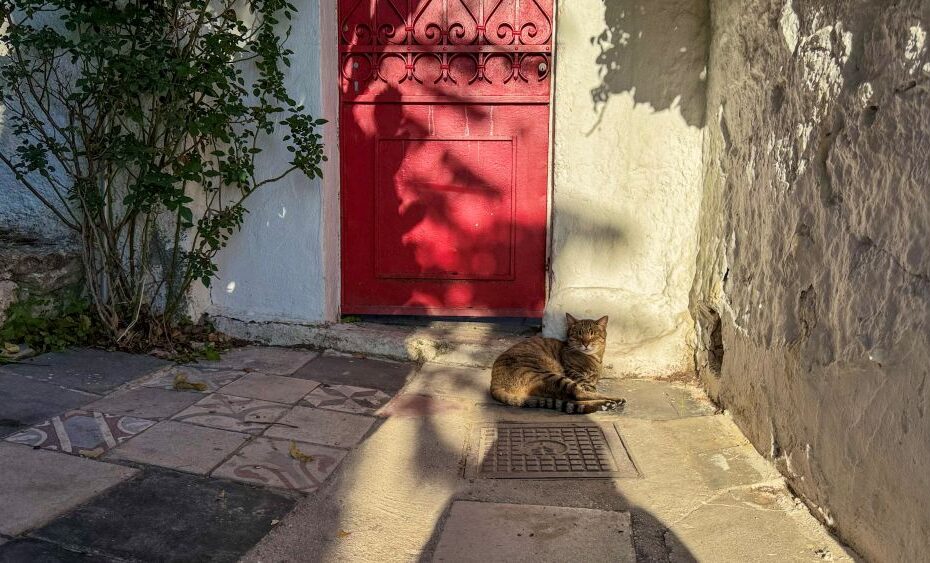
After eight days sailing the Greek Islands on MSC Sinfonia — Corfu, Kefalonia, Santorini — flying straight home from Piraeus felt like a waste. We’d been looking at the Athens skyline from the ship all week without setting foot in the city, so we stayed for two days. It turned out to be exactly the right call.
This guide covers what we did, where we stayed, what surprised us, and the one navigation mistake you can avoid. We stayed on as two families — four adults and two children aged 9 and 10 — while the rest of our cruise group of twelve flew home straight after the ship returned to Piraeus.
Getting from Piraeus Port to Athens City Centre
This is where we stumbled on day one. Before leaving the ship, we checked the route and an AI navigation tool told us the metro station was just around the corner from the port. It wasn’t — it was 2 km away on foot, uphill, with suitcases.
We walked it. It was fine in the end, but don’t repeat our mistake. The correct information: Piraeus metro station is about 2 km from the main cruise terminal — one of the quirks covered in our guide to ports that need a transfer. Either take a taxi (€20–30 to the city centre), or walk to the metro and take the green line directly into central Athens. The metro journey to Monastiraki takes about 25 minutes and costs €1.40 per person.
Our tip: book a taxi from the ship if you have significant luggage and children. The metro is excellent value once you’re at the station — but getting there with suitcases is the awkward part.
Where We Stayed: Hidesign Athens Plaka Apartment
We booked the Hidesign Athens Plaka Apartment in Acropolis — €507.40 for four adults and two children over two nights. Three bedrooms, a living room, a full kitchen, two bathrooms, and genuinely good design. The kind of apartment that makes you feel like you actually live somewhere rather than just passing through.
The location was the real advantage. The Plaka district sits at the foot of the Acropolis hill, which means everything we wanted to see was within walking distance. No taxis, no metro — just stepping outside and starting to walk. For a family group with two children, having a kitchen was a bonus — though in practice we barely used it — Athens is affordable enough that eating out every meal made more sense than cooking.
Day One: Arriving, Wandering, Eating
We arrived early afternoon, checked in, and spent the rest of the day doing very little — deliberately. After eight days of port stops and excursions on the cruise, an afternoon with no agenda was exactly what everyone needed.
In the evening, we walked through the Plaka neighbourhood. This is the oldest part of Athens — narrow streets, small squares, tavernas with tables outside, the Acropolis lit up on the hill above. It has a specific evening energy: warm air, the smell of food, Greek music from somewhere. We found a local restaurant and ate well. The food was genuinely good and the service was warm — exactly the kind of meal that makes a place feel welcoming.
Eating in Athens: What to Expect
Prices are reasonable by Western European standards. Breakfast at a local café came to around €15 per person — coffee, eggs, bread, juice. Dinner at a neighbourhood taverna was around €20 per person including wine. For a group of six, that’s manageable. The food quality was consistently good across both meals we ate out.
We didn’t research restaurants in advance — we simply followed Google Maps reviews, which didn’t let us down. Both places delivered on their ratings, and we never felt we were being charged a tourist premium despite being right in the Plaka district.
Day Two: National Garden and the Acropolis at Sunset
Morning: National Garden of Athens
We spent the morning at the National Garden — a large green park in the city centre, right next to the Greek Parliament. It’s free to enter and genuinely beautiful: old trees providing shade, winding paths, small ponds with turtles and colourful fish.
The children spent most of the time at the ponds. The turtles are close to the surface and easy to see, and the fish are bright enough that you notice them immediately from the path. Both kids were crouched at the water’s edge within minutes of arriving, and genuinely stayed there for most of the visit. We were in the park for about three hours, which sounds like a long time for a city park — but it didn’t feel like it.
For families visiting Athens, the National Garden is one of the best free hours you’ll spend. It’s peaceful, shaded, and significantly more interesting for children than most historical sites.
Afternoon: The Acropolis
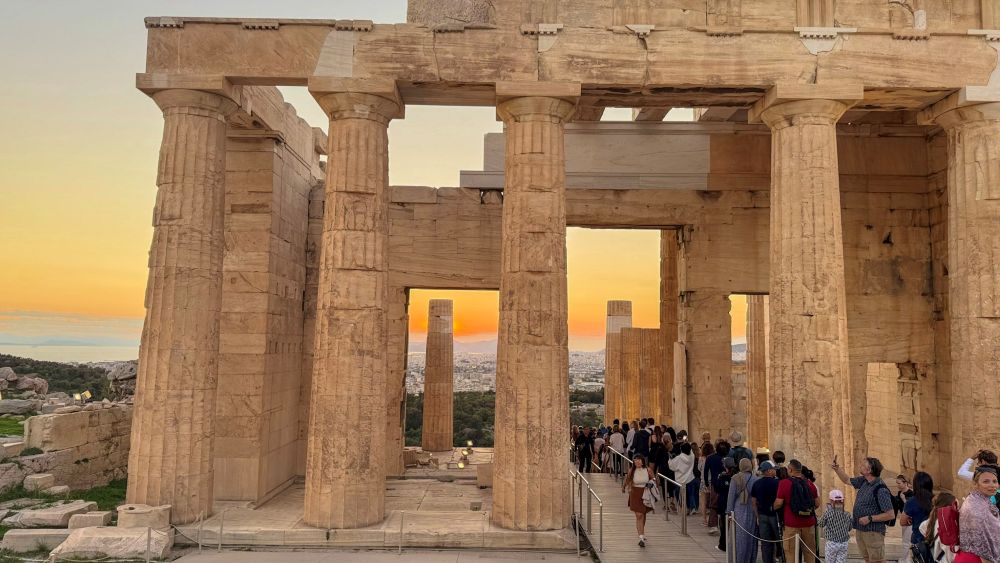
We timed the Acropolis visit carefully — arriving about an hour and a half before sunset. Entry is €30 per person, which is genuinely expensive. It’s also genuinely worth it.
The Acropolis is one of those historical sites where the reality matches the expectation. Standing on the hill above Athens, looking at the Parthenon with 2,500 years of history behind it and the whole city spread below — it’s the kind of place that earns its status. We watched the light change as the sun dropped and the city below gradually lit up. Nobody in our group wanted to leave.
Practical tip: the walk up is uneven and steep in places — wear proper shoes, not sandals. The site is large and takes about an hour and a half to cover properly. Arriving that early before sunset means you have time without rushing.
Day Three Morning: Old Streets Before the Airport
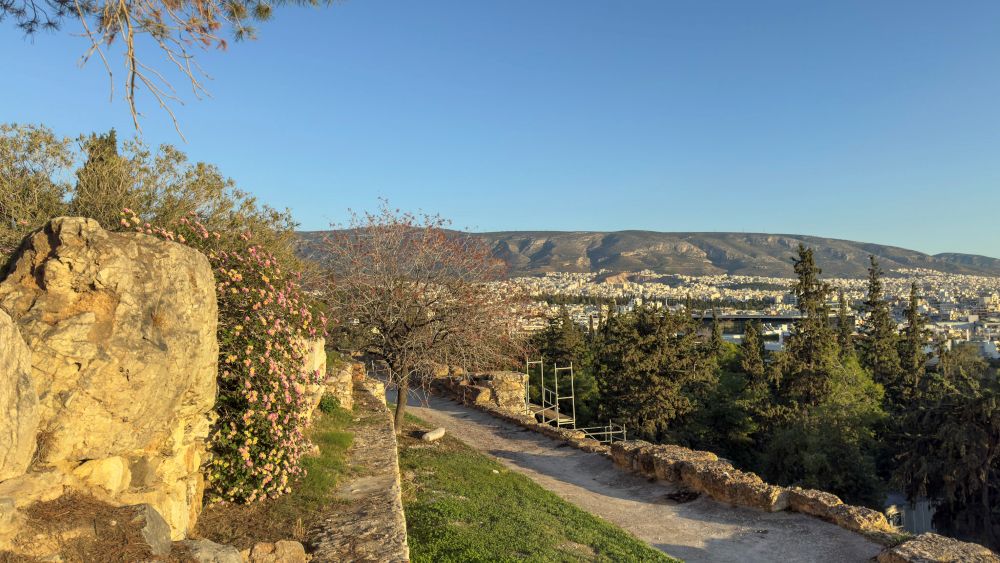
Before heading to the airport, I went out early for one last walk through the old city. The narrow streets of the Plaka and Monastiraki areas are best in the morning before the day heats up and the tourist groups arrive. The lanes wind uphill and downhill between old stone buildings, and at 8 AM it’s mostly locals heading to work and the occasional other early riser.
It’s the kind of walk that stays with you — the sense that the city has been doing this for thousands of years and your visit is just a brief interruption. Athens earns that feeling more than most European cities.
Getting to the Airport
We took the metro from Monastiraki to the airport — €9 per person, about 40 minutes. Clean, air-conditioned, and completely straightforward. The metro is genuinely one of the better things about Athens as a city to navigate.
Athens: Real Costs (October 2025)
| Expense | Cost | Notes |
|---|---|---|
| Apartment (2 nights, 4 adults + 2 children) | €507.40 | Hidesign Athens Plaka |
| Acropolis entry | €30 pp | Worth it |
| National Garden | Free | 3 hours well spent |
| Breakfast at local café | ~€15 pp | Good value |
| Dinner at local taverna | ~€20 pp | Incl. wine |
| Metro to airport | €9 pp | ~40 min, clean and reliable |
| Metro Piraeus → city centre | €1.40 pp | Walk 2 km to station first |
| Street shopping | Varies | Good prices |

FAQ: Athens After a Greek Islands Cruise
Is it worth staying in Athens after a cruise?
Yes — especially if you’ve never been. The Acropolis alone justifies an extra night, and the Plaka neighbourhood is one of the most atmospheric old towns in Europe. Two days is enough to see the main highlights without feeling rushed. If history is a priority, a third day would allow time for the National Archaeological Museum, which we didn’t get to.
How do you get from Piraeus cruise port to Athens?
Metro or taxi. The metro green line runs from Piraeus station to Monastiraki in about 25 minutes — €1.40 per person. The catch: Piraeus metro station is about 2 km from the main cruise terminal, so you’ll either walk or take a short taxi to the station. For groups with luggage, a direct taxi to your accommodation (€20–30) is the simpler option.
How much does the Acropolis cost?
€30 per person for standard entry as of October 2025 — expensive, but genuinely worth it. EU citizens under 25 enter free with ID; ticket prices and discount policies change periodically, so check the official site before you go.
Is Athens good for families with young children?
Yes, with some caveats. The National Garden is excellent for children — the turtles and fish were a genuine highlight for our 9 and 10-year-olds. The Acropolis involves a steep walk on uneven ground, which is manageable but requires proper footwear. The Plaka neighbourhood is easy to walk with children and has plenty of places to stop. October is a good month — warm enough without summer heat.
What is the best area to stay in Athens?
The Plaka district, which is what we chose. It sits at the foot of the Acropolis and is the oldest residential neighbourhood in Athens — walkable to most sights, atmospheric in the evenings, and well-connected to the rest of the city. For a short stay, being central and walkable saves significant time and money compared to staying further out.
Is October a good time to visit Athens?
One of the best. The summer crowds have thinned, the temperatures are warm (low-to-mid 20s°C during the day) but not oppressive, and the evening air is comfortable. The one caveat: October weather can vary day to day. We had one warm evening and one cooler one — pack a light layer for evenings just in case.
Is Athens Worth Two Days After a Cruise?
Without hesitation. We’d been looking at the city from the ship all week and almost flew home without stopping — which would have been a real missed opportunity. The Acropolis at sunset is one of the most genuinely impressive historical experiences we’ve had in Europe, the National Garden gave us three unexpectedly perfect hours, and the Plaka streets in the evening were exactly the kind of thing you remember long after the trip.
Two days is enough to see the main things properly — just as two days in Naples proved after our Mediterranean sailing. If you’re planning to arrive before your cruise rather than after, see our guide to 2 days in Athens before a cruise. It’s not enough to see everything Athens has to offer — but it’s the right amount for a post-cruise extension that doesn’t overstay its welcome. We’d go back.