Before our 17-day MSC Seashore transatlantic crossing, formal nights were the part of the cruise we’d thought least about. Seventeen days at sea meant more formal evenings than on any ordinary sailing — and by Miami, we had opinions.
I packed a cocktail dress, figured that would do, and didn’t give it much more consideration. What I didn’t anticipate was that formal evenings would become some of the most memorable nights of the entire voyage — not because of the dress code, but because of the atmosphere they create when 6,000 passengers all make the effort at the same time.
On our Barcelona to Miami sailing we had five special evenings in total: three gala dinners, one white night, and one flower evening. We went to all of them. This is what to expect, what to pack, and — honestly — what actually matters versus what you can relax about.
Cruise formal nights — quick facts
- 7-night cruise: typically 1 formal night
- 10–14 nights: usually 2 formal nights
- 17+ nights: 3 gala dinners + themed evenings (white night, flower night, etc.)
- When: almost always on sea days, never the first or last night
- Can you skip? Yes — the buffet is always open with no dress code
- Will you be turned away if underdressed? No — but you’ll feel it
How Many Formal Nights Are on a Cruise?
The number of formal evenings scales with the length of your voyage. On a standard 7-night cruise, expect one formal night — usually mid-voyage on a sea day. Longer sailings of 10–14 days typically include two. On our 17-day transatlantic we had three gala dinners plus two themed evenings, which meant roughly one special evening every three days once they started appearing in the second week.
Cruise lines schedule formal nights on sea days deliberately — when you’re not rushing back from a port stop, you have the afternoon to prepare properly. Your cabin steward will leave the next day’s programme on your bed each evening, which is how you’ll know what’s coming. On longer crossings, you get a feel for the rhythm quickly and start planning your outfits a day ahead without thinking about it.
Gala Dinners: What They’re Actually Like
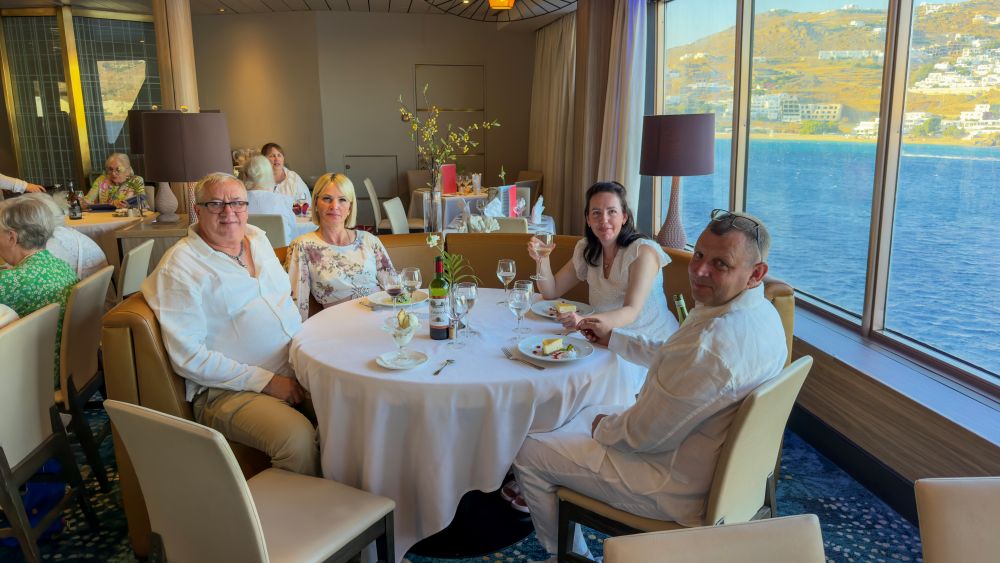
The three gala dinners on our MSC Seashore crossing were genuinely special evenings — and I say that as someone who wasn’t particularly excited about them beforehand. What makes them work isn’t the dress code itself but the collective effort: when hundreds of people in the main dining room all make the same effort on the same evening, it creates an atmosphere that an ordinary dinner simply doesn’t have.
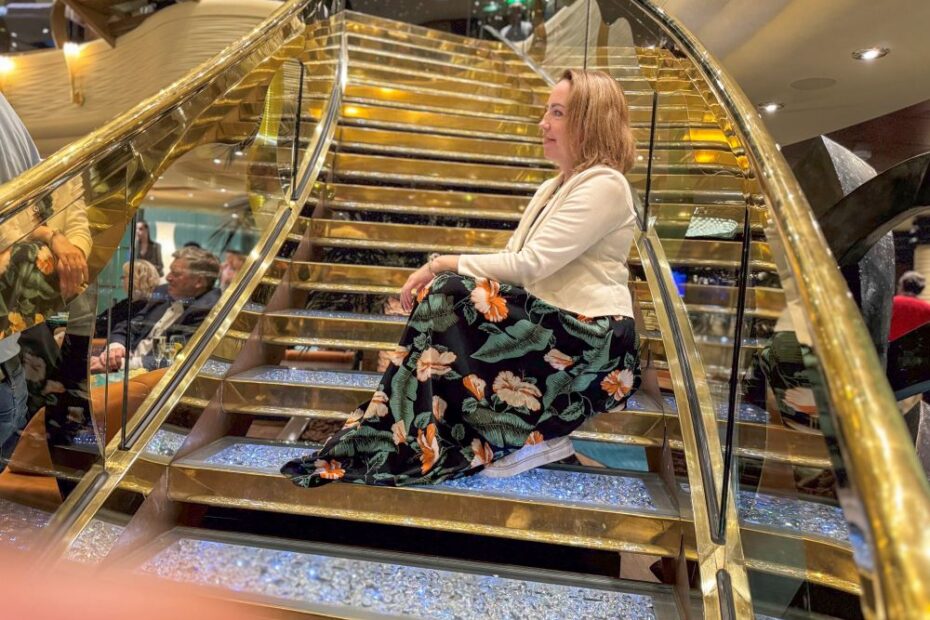
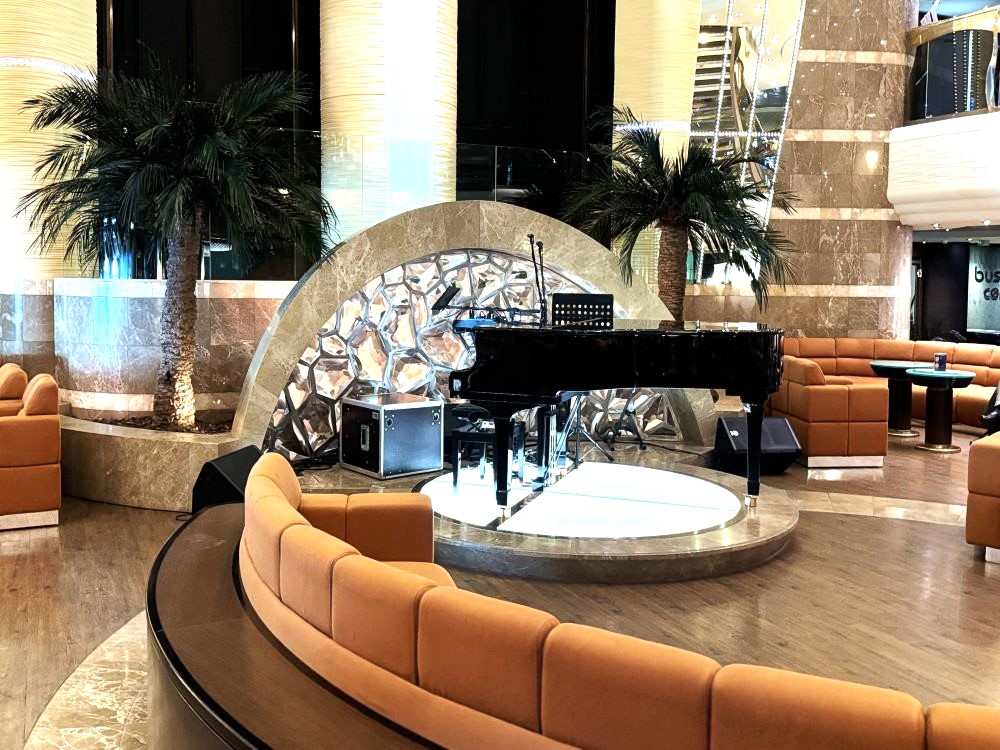
The dining room service steps up noticeably on formal nights. The menus are more elaborate, the presentation is more considered, and the waiters — who by gala night two already know your preferences — are at their best. Live music accompanies dinner on most ships. On the MSC Seashore, the Swarovski crystal staircase in the atrium becomes a backdrop for photographs before dinner, and the whole pre-dinner hour has a proper occasion feel to it.
Outside the themed evenings, dinner follows MSC’s usual rhythm — fixed times and your own table, a real contrast to Princess ships, where you simply turn up when you’re hungry.
Our honest advice: go to at least one, even if formal evenings aren’t usually your thing. The atmosphere is unlike anything else on the ship and it’s one of those cruise experiences that’s hard to replicate anywhere else.
What to Wear: Dress Code for Women
The official guidance is “formal attire” — which in practice means anything from a floor-length gown to a smart cocktail dress. I wore a cocktail dress to all three gala dinners and felt completely comfortable and appropriately dressed throughout. You don’t need to pack a ballgown unless you want to.
What works well
Cocktail dresses are the most practical choice for most women — versatile enough to wear to multiple evenings without looking like you’re repeating the same outfit, easy to pack without excessive wrinkling, and appropriate across all three gala nights without feeling overdressed. Floor-length evening gowns are beautiful, particularly on a ship like the MSC Seashore where the interior design gives you a genuinely dramatic backdrop — but they’re not necessary.
Elegant pantsuits and tailored separates work well too, especially for women who prefer not to wear dresses. The key is that the overall look reads as “occasion” rather than “day clothes.” Think fabric, fit, and finishing — a well-cut trouser with a silk or embellished top is entirely appropriate.
For accessories: comfortable heeled shoes or elegant flats are both fine — formal evenings often include dancing and you’ll be on your feet for two to three hours. A light wrap or shawl is genuinely useful given the air conditioning, which on the MSC Seashore ran noticeably cold.
What to avoid
Casual day clothes — jeans, shorts, t-shirts, sundresses, sandals — are out of place in the main dining room on formal nights. You won’t be turned away at the door, but the contrast with everyone else is uncomfortable enough that most people don’t repeat the mistake. The buffet is always open on formal nights with no dress code at all, which is the straightforward solution if you genuinely don’t want to dress up.
What to Wear: Dress Code for Men
Men have more flexibility than the official “formal” label suggests. The full range we saw across three gala dinners ran from proper tuxedos with bow ties at one end to well-fitted fabric trousers with a polo shirt or open-collar shirt at the other — and honestly, both worked. The men in tuxedos looked excellent. The men in smart-casual also looked fine and didn’t stand out awkwardly.
If you want to dress properly for formal nights, a dark suit — navy, charcoal, or black — with a dress shirt and tie is the most practical option for most people. It packs well, works for multiple evenings, and hits the right note without requiring you to travel with a tuxedo. Leather dress shoes complete the look.
If you’re a lighter packer or simply don’t own a suit, smart trousers with a collared shirt is genuinely fine on most mainstream cruise lines. The important thing is that it’s clearly an effort — the difference between “I made an attempt” and “I didn’t notice there was a dress code” is visible and felt.

Themed Evenings: White Night and Flower Night
Beyond the gala dinners, our MSC Seashore crossing included two themed evenings — a white night and a flower evening — and both were worth going to, in different ways.
White night
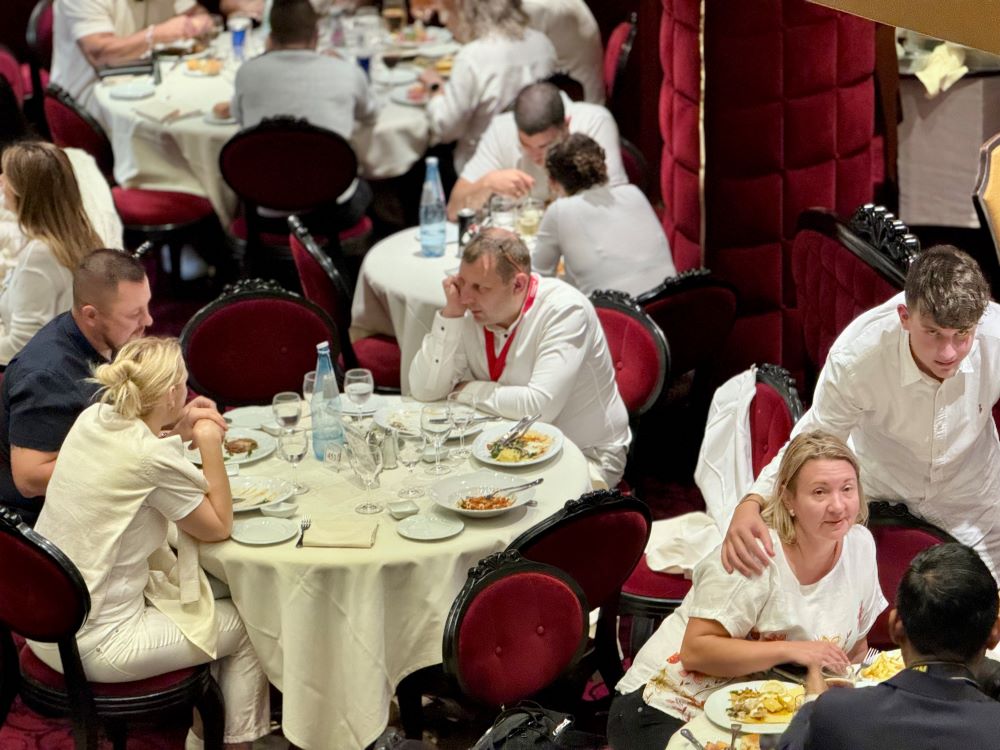
The white night was the bigger event of the two. The concept is simple: everyone wears white, and when it works — which it did on our crossing — the visual effect of hundreds of people in coordinating white outfits in the dining room and on the deck is genuinely striking. It extended beyond dinner into a deck party with music and dancing, which became one of the liveliest evenings of the voyage. How well these themed evenings land varies a lot by ship — something we noticed firsthand when comparing newer and older MSC ships.
Packing for a white night is straightforward if you know it’s coming: a white dress, white trousers with a white or pale top, or any predominantly white outfit works. We’d recommend checking your cruise itinerary before packing rather than trying to find white clothing in a port shop.
Flower evening
The flower evening was more relaxed — floral patterns and colours rather than a single strict theme. This one gave more room for creativity and felt less like a coordinated event and more like a cheerful, colourful dinner. If you already own something floral, it’s an easy evening to dress for without any special preparation.
Both themed evenings were genuine highlights of the crossing and worth planning for. On a 17-day voyage they add welcome variety to the evening rhythm.
Can You Skip Formal Nights?
Yes, entirely. The buffet operates its normal hours on formal evenings with no dress code, and many passengers choose this option. Specialty restaurants typically maintain their own dress standard (usually smart casual) rather than full formal wear.
Our honest take: skip the buffet on formal nights if you can. The main dining room atmosphere on gala evenings is one of the things that makes a longer cruise feel genuinely different from a resort holiday. Going once, even if formal dress isn’t your natural preference, is worth it. Going to all three — as we did — never felt repetitive because each evening had its own menu and atmosphere.
Practical Packing Tips for Formal Evenings
Check the number of formal nights before you pack
Your cruise line’s website lists the number of formal and themed evenings for your specific itinerary. On a 7-night sailing, one cocktail dress and one smart outfit for your partner covers everything. On a 17-night crossing with five special evenings, you’ll want either more options or a willingness to repeat — which is entirely fine and nobody notices.
Wrinkle-resistant fabrics save time
Interior cabin wardrobes are compact and clothes pack tightly on longer sailings — towel pegs, one of the 16 items we never board without, add hanging space on the metal cabin walls. Jersey fabrics, certain synthetic blends, and structured weaves travel far better than anything that needs careful folding. If something does wrinkle, most ships have guest laundry rooms with irons, and valet pressing is available for a fee.
Comfortable shoes matter more than you’d think
Formal evenings typically run two to three hours and often include dancing or extended socialising on deck. New dress shoes that haven’t been broken in are a genuine problem by hour two. Wear them around the cabin for a few days before the first formal night, or choose shoes you already know are comfortable.
A wrap or shawl is more useful than it sounds
Air conditioning in dining rooms and common areas can be aggressive — on the MSC Seashore it was notably cold, particularly in the evenings. A light wrap adds an elegant finishing touch and solves a practical problem at the same time.
Frequently Asked Questions
How many formal nights are on a 7-day cruise?
Most 7-night cruises include one formal night, typically scheduled mid-voyage on a sea day. Some cruise lines call these “gala nights” or “elegant evenings” — the dress expectation is the same regardless of the name. Longer sailings include more: two formal nights on 10–14 day cruises, and three or more on voyages of 17 days and above.
What happens if you’re underdressed on a cruise formal night?
You won’t be refused entry to the main dining room. However, most passengers find the contrast uncomfortable enough that they either make an effort the next formal evening or opt for the buffet instead. The main dining room on a gala night is genuinely dressy — it’s not a situation where smart-casual blends in.
Can you wear the same dress to multiple formal nights?
Absolutely. On a 17-night sailing with three gala dinners, I wore my cocktail dress to all three without any issue. Nobody keeps track, and the lighting and atmosphere change enough that the same outfit reads differently across evenings. Pack one outfit you’re comfortable in and wear it confidently.
Do you have to participate in themed evenings like white night?
No — themed evenings are optional and the buffet is always an alternative. That said, the white night on our MSC Seashore crossing was one of the most visually impressive evenings of the entire voyage. If you’re going to participate in any themed evening, that’s the one we’d prioritise — pack something white and join in.
What’s the dress code for men on cruise formal nights?
The official standard is formal — suit and tie or tuxedo. In practice, the range we observed ran from black tie at one end to smart trousers with a collared shirt at the other, and everything in between was accepted without issue. A dark suit is the most versatile and practical option for most men. If you prefer to dress more casually, smart trousers with a neat shirt is fine on mainstream cruise lines — you won’t be turned away.
Are themed nights (white night, flower night) worth packing for?
Yes, if you know they’re coming. Both the white night and the flower evening on our crossing were genuine highlights — the white night in particular extended into a deck party that was one of the liveliest evenings of the voyage. Check your itinerary before packing and bring at least one white outfit if your sailing includes a white night.
How can I find out about themed evenings and formal nights in advance?
Check your cruise line’s app or website a few weeks before departure — most publish the full programme, including which nights are formal and which are themed (like white night), once your sailing is close. Your cabin steward also leaves the next day’s programme on your bed each evening once you’re on board, so you’ll always know what’s coming with at least a day’s notice.
Are Cruise Formal Nights Worth the Effort?
Before our first transatlantic crossing, formal nights felt like an obligation — something to pack for and get through. After five special evenings across 17 days, they’d become the evenings we looked forward to most. The combination of a dressed-up dining room, an elevated menu, and the collective effort of hundreds of fellow passengers creates something that’s genuinely hard to find anywhere else.
Our honest advice: pack for at least one formal evening, go with reasonable expectations, and don’t stress about being perfectly turned out. A cocktail dress, a dark suit — that’s enough. The atmosphere does the rest. And if your sailing includes a white night, pack something white. You’ll thank yourself when the deck fills up after dinner.
Formal nights were just one of the things we got wrong before our first sailing — the rest of our classic first-cruise mistakes are a separate story.