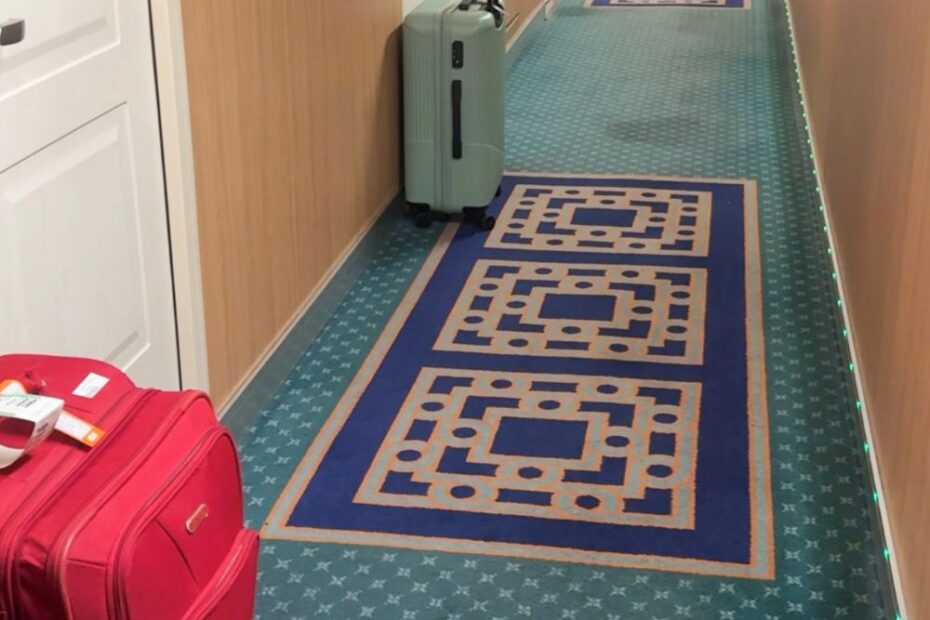
Before our transatlantic cruise from Barcelona to Miami, I spent more time thinking about what to pack than about almost any other part of the trip. Seventeen days at sea across three different climates — Mediterranean autumn, Atlantic open ocean, Caribbean warmth — meant the packing list for that crossing needed some actual thought.
Below is everything I brought, what I’d change, and the one thing I forgot that I ended up buying in the first port. Some of these are obvious. A few are the kind of thing you only know to pack if someone tells you first.
What to Pack for a Cruise: My Full List
Documents and money
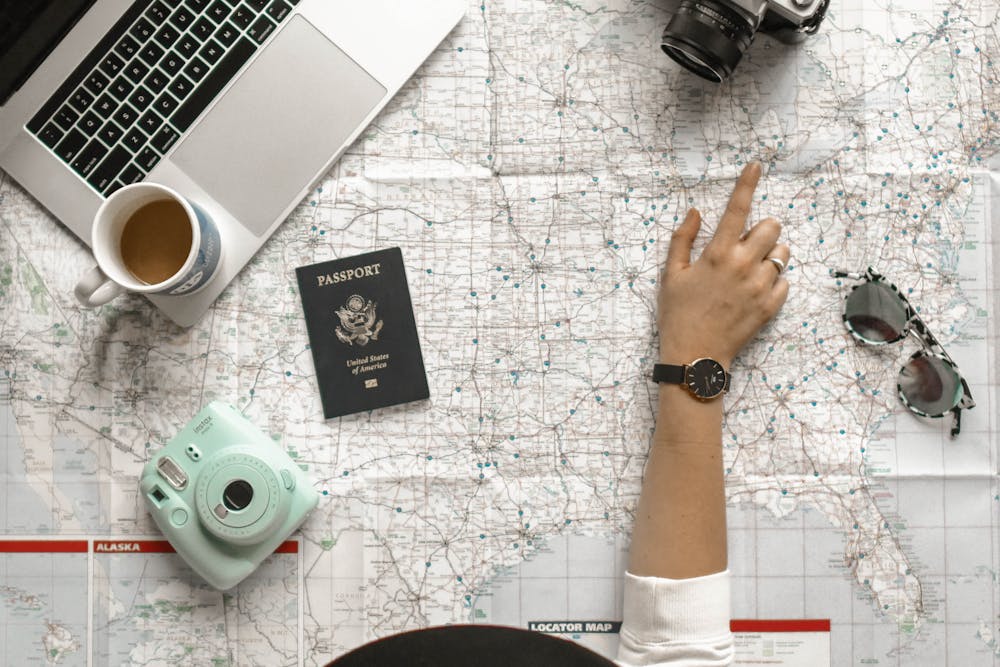
1. Documents — passport, ID card, boarding pass, printed ESTA, and printed travel insurance policy. I kept printed copies of everything rather than relying on digital versions, which made the border control process at US ports significantly smoother. Our ESTA was checked twice during the voyage — once when we first approached US jurisdiction and once at formal border control.
Make sure your passport is valid for at least six months after your return date, not just your departure date — it’s the first item on our pre-cruise preparation checklist for a reason.
2. Money — I had about $200 in cash for excursions and small purchases in the Caribbean ports, where some local vendors and guides only accept cash. For everything else I used my Revolut card, which gives a good exchange rate and works at ATMs without the fees most regular bank cards charge abroad. My approach: carry enough cash for a day ashore, pay by card wherever it’s accepted, and top up at ATMs only if needed.
Health and wellbeing
3. Travel insurance — non-negotiable, especially on a cruise that ends in the United States where medical costs are extraordinary. I buy travel insurance for every trip, but for a US-bound sailing it felt particularly important. Make sure your policy covers medical evacuation at sea — standard travel policies sometimes exclude this, and it’s the scenario where costs can be genuinely ruinous without coverage.
4. Medications — I packed a proper travel medicine kit: prescription medications, cough medicine, throat spray, nasal spray, plasters, muscle pain ointment, and diarrhea medicine. The ship’s air conditioning is aggressive and genuinely cold — catching a cold mid-voyage is common, and having medicine on hand meant I didn’t need to visit the ship’s medical centre (which charges for consultations).
One practical tip that worked for me: when my throat started to hurt, I rinsed with strong salt water made in the ship’s kitchen. It helped more than I expected.

Clothing
5. Warm-weather clothing — for a warm-climate cruise I brought mainly dresses, shorts, and thin trousers. One thing worth knowing: the ship’s interior is heavily air-conditioned. Watching the evening theater show in just a thin summer dress, I was cold. Pack at least one light layer — a cardigan or thin jacket — for indoor evenings regardless of the outdoor temperature.
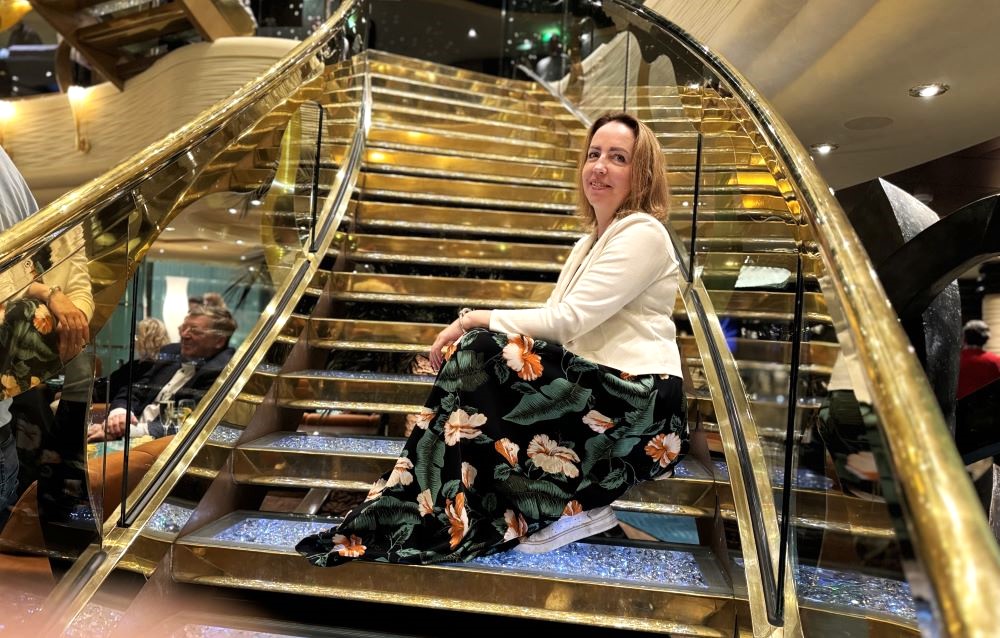
6. Formal and themed evening outfits — our cruise had three special evenings: a formal gala night, a white evening where everyone dresses in white, and a flower evening with floral prints. You’re not required to participate, but the atmosphere when the whole ship makes the effort is genuinely special — we’ve covered what people actually wear on formal and themed evenings separately. I packed one cocktail dress that covered all three formal nights, which was enough.
7. Swimwear — I brought two swimsuits (one one-piece, one two-piece) and it wasn’t enough. Between the pools, the water park, and sunbathing, swimsuits need to dry between uses — two means you’re always waiting for the other one. Three or four is the right number for a longer warm-weather sailing.
8. Sportswear — shorts, a t-shirt, and trainers for the gym. The ship’s fitness centre is fully equipped and free to use; having proper gym clothes meant I actually used it rather than finding excuses not to.
9. Footwear — comfortable walking shoes for port excursions (cobblestones in Barcelona, San Juan, and Genoa will punish anything new or narrow), sandals for warm deck days, and beach shoes for the pool and water park areas.
Sun and beach
10. Sunscreen — essential for warm-climate sailings. The Caribbean sun is more intense than most northern Europeans expect, and a full day on deck or on a shore excursion without proper protection is a genuine mistake. Bring more than you think you need — sunscreen is expensive in port shops.
11. Hat and sunglasses — a wide-brimmed hat for deck sunbathing and shore excursions, sunglasses for everything. Both earn their place in the bag every single day.
12. Beach bag and fanny pack — a beach bag for pool days (towel, sunscreen, water bottle), and a fanny pack for ports. The cabin key card on most cruise ships also functions as your onboard payment card — keeping it in a fanny pack means it’s always accessible and never left behind.

Practical gear
13. Hygiene products — the cabin provides shower gel, soap, shampoo, and towels. I brought my own conditioner, toothbrush, toothpaste, and a few preferred products. One advantage over flying: no 100ml liquid restrictions on cruise ships. You can bring full-size bottles of everything, which makes a long voyage considerably more comfortable.
14. Electronics and charger — phone and charger were my essentials. The ship’s cabin has European, British, and US outlets, so most devices charge without an adapter onboard. Since we were staying in the US for a few days after disembarkation, we bought a universal travel adapter in port — worth getting before you leave rather than hunting for one ashore.
15. Water bottle and thermos — a refillable water bottle for excursions and the gym; a thermos for carrying coffee or tea to the deck in the morning. Both saved money (bottled water in port adds up) and were used every day.
16. Towel clips / pegs for the sun lounger — this is the one I didn’t know about before sailing and only learned from watching experienced cruisers on deck. The wind on the upper deck can be strong, particularly at sea, and a towel left unclipped will end up somewhere else within minutes. Every veteran cruiser I saw had a set of pegs for exactly this purpose. I’d put this on the list before anything else next time.
What I Forgot — And What I’d Add Next Time
I forgot to pack a book. For a 17-day crossing with ten sea days and stretches of open Atlantic with no Wi-Fi, a book turned out to be exactly what I wanted. I bought one in Tenerife — our first port stop — which solved the problem but cost more than bringing one from home would have. If you’re on a longer sailing or a transatlantic crossing with significant sea time, pack something to read. You’ll use it more than you expect.
The other thing I’d add for a longer voyage: more swimsuits. Two wasn’t enough. Pack at least three for anything over seven days.

Cruise Packing List: Quick Reference
| Item | Why it matters | Easy to forget? |
|---|---|---|
| Passport + printed ESTA/insurance | Checked multiple times at US ports | — |
| Cash ($150–200) + Revolut card | Some port vendors cash only | — |
| Travel insurance (with evacuation cover) | Essential for US-bound cruises | — |
| Medicine kit | A/C makes colds common onboard | Often underestimated |
| Light indoor layer (cardigan/jacket) | Ship interiors are cold even in tropics | ⚠️ Yes |
| Formal / themed evening outfit | Gala nights, white evening, flower night | — |
| 3+ swimsuits | Need time to dry between uses | ⚠️ Yes — pack more than you think |
| Sunscreen (plenty) | Expensive in port shops | — |
| Comfortable walking shoes | Cobblestones in most Mediterranean ports | — |
| Fanny pack | Cabin key card always accessible | — |
| Water bottle + thermos | Saves money on excursions | — |
| Towel pegs / clips | Wind on deck is stronger than it looks | ⚠️ Yes — most first-timers miss this |
| Book or e-reader | Sea days without Wi-Fi need entertainment | ⚠️ Yes — I forgot this one |
Frequently Asked Questions
Can you bring full-size toiletries on a cruise?
Yes — unlike flying, there are no 100ml liquid restrictions when boarding a cruise ship. You can bring full-size bottles of shampoo, conditioner, sunscreen, and anything else without any limits. This is one of the genuine practical advantages of cruise travel over flying, particularly for longer voyages where running out of a favourite product mid-trip is annoying.
Do cruise ship cabins have electrical outlets?
Yes — most modern cruise ship cabins have European, British, and US outlets, so travellers from most countries can charge devices without an adapter onboard. If you’re continuing to other countries after the cruise, a universal travel adapter is worth buying before you leave rather than hunting for one in a port shop.
How much cash should you bring on a cruise?
I brought $200 in cash and found it was enough — mainly for excursions and small purchases in Caribbean ports where some vendors only accept cash. For most onboard spending and larger purchases ashore, a card with good international rates (like Revolut) is more practical. Start with $150–200 and top up at ATMs in port if needed.
What do you wear to a cruise formal night?
A cocktail dress for women or a dark suit for men covers most formal nights comfortably. Floor-length gowns and tuxedos are worn by some passengers and look wonderful, but they’re not required. I wore one cocktail dress to all three formal evenings on our sailing without any issue. The important thing is making some effort — the atmosphere when the whole ship dresses up is genuinely special.
What do experienced cruisers always pack that first-timers forget?
Towel pegs or clips for the sun lounger — without question. The wind on the upper deck can be strong, particularly at sea, and an unclipped towel disappears quickly. Every experienced cruiser I watched on deck had a set. I also forgot to bring a book and had to buy one in Tenerife, which cost more than bringing one from home would have.
Do you need travel insurance for a cruise?
Yes — and make sure it specifically covers medical evacuation at sea. Standard travel insurance policies sometimes exclude maritime evacuation, which is the scenario where costs can be catastrophic without coverage. For cruises ending in or passing through the United States, comprehensive medical cover is especially important given the cost of healthcare there.

Final Thoughts on Cruise Packing
After seventeen days at sea, the things I used every single day were simpler than I expected: sunscreen, the water bottle, the fanny pack, the light jacket for evenings. The things I was glad I’d packed were the medicine kit (used it) and the cash (needed it in port). The thing I wished I’d packed was a book — bought one in Tenerife, which solved the problem but made me feel like a cautionary tale.
The towel pegs are the one piece of advice I’d pass on to anyone on their first cruise. Nobody tells you about them, every experienced cruiser has them, and you’ll understand exactly why the moment you watch your towel blow across the deck on a windy sea day.
Pack the basics, bring more swimsuits than you think you need, and don’t forget something to read. The rest you learn the way we learned most of our first-cruise lessons — by getting it slightly wrong the first time.