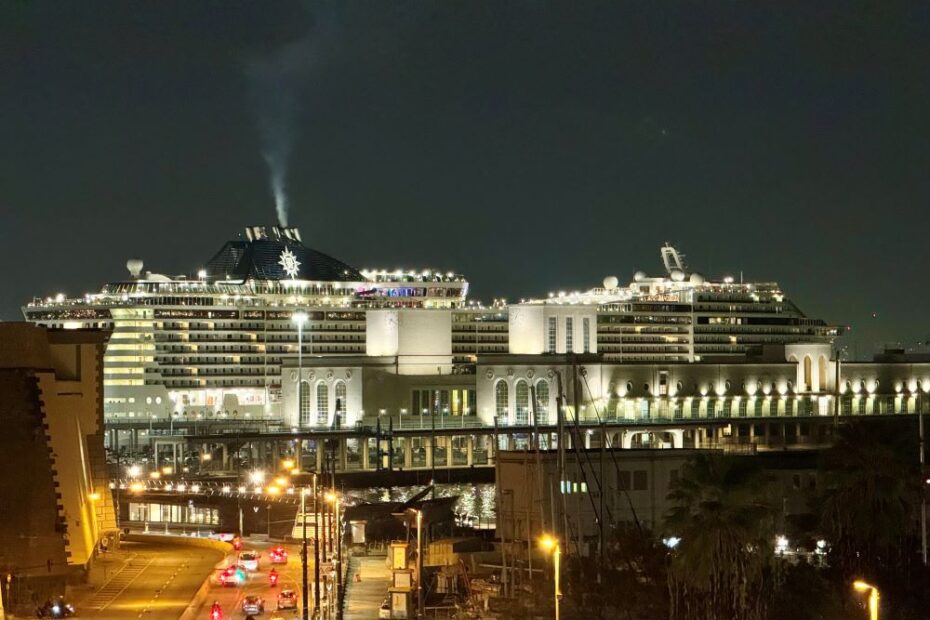
We booked the MSC Fantasia’s Mediterranean itinerary in October 2024 as a joint family trip — the two of us with our 18-year-old daughter, plus close friends travelling with their two children aged 9 and 10. Eight days, six ports, Rome to Naples — with the full cost breakdown from Riga covered separately. It was our first Mediterranean cruise and the first time we’d tested a ship this size with a mixed group of adults and kids.
What we found was a cruise that handles family travel well without feeling like it’s exclusively designed for families — which matters when you’re travelling with a mix of adults and children who want different things from the same sailing. This is our honest account of what worked, what didn’t, and whether MSC Fantasia delivers on its Mediterranean promise.
MSC Fantasia — Quick Facts
- Route: Rome (Civitavecchia) → Genoa → Marseille → Valencia → Tarragona → sea day → Genoa → Naples
- Duration: 8 days
- Ship built: 2008, renovated 2023
- Capacity: around 4,300 passengers at full capacity, 18 decks
- Our cabin: Balcony cabin
- Travel month: October
- Who we are: Two families — 7 people: 4 adults, our 18-year-old daughter, and children aged 9 and 10
- Price paid: €1,888 for three adults — the two of us + our 18-year-old daughter in one balcony cabin
The MSC Fantasia Mediterranean Itinerary
The 8-day route covers six ports across Italy, France, and Spain — which is a lot of ground for a short sailing. The itinerary runs:
- Day 1: Rome — embarkation at Civitavecchia port
- Day 2: Genoa, Italy
- Day 3: Marseille, France
- Day 4: Valencia, Spain
- Day 5: Tarragona, Spain
- Day 6: Sea day
- Day 7: Genoa, Italy (second stop)
- Day 8: Naples, Italy — disembarkation
Six ports in eight days means port days dominate the itinerary, with only one sea day mid-voyage. For us this was a positive — we wanted to see as much of the Mediterranean as possible — but it also means the pace is brisk. You don’t have long in each port, and in a couple of cases (Marseille especially) we wished for more time. If you’re the type of cruiser who prefers relaxed sea days over packed port schedules, this itinerary might feel rushed.
MSC Fantasia Ship Overview
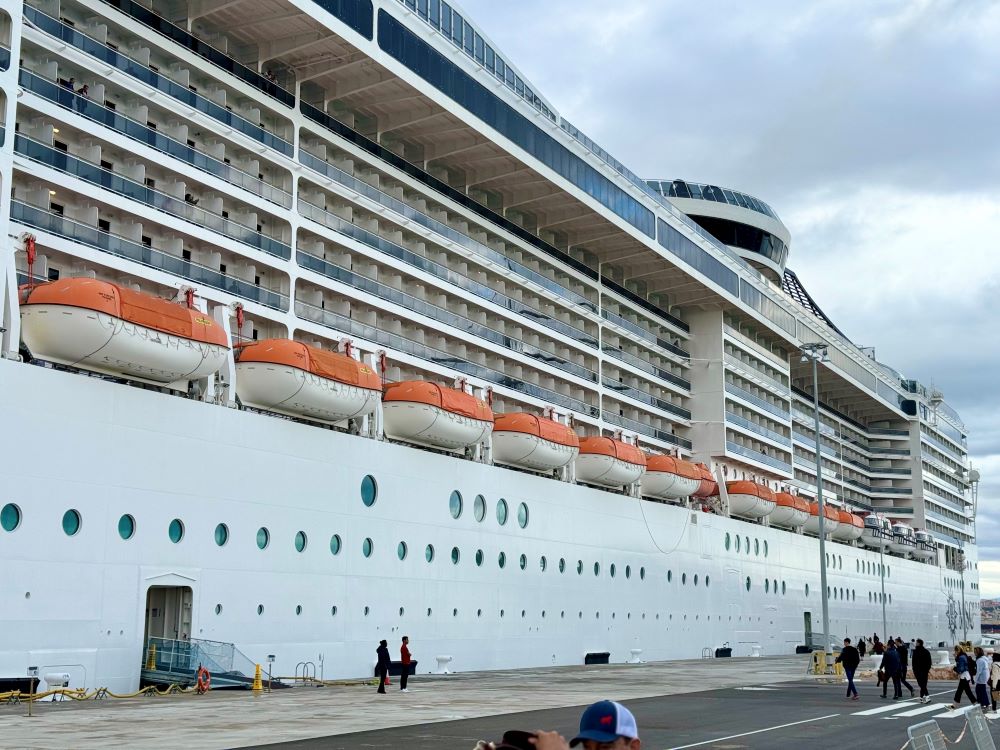
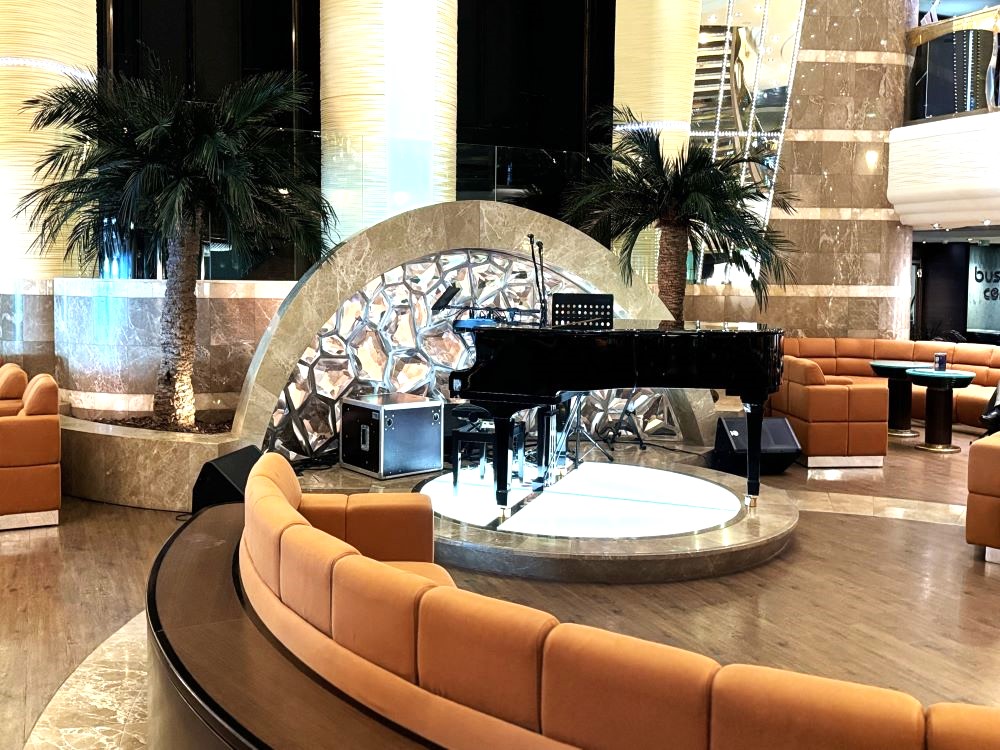
Built in 2008 and renovated in 2023, the MSC Fantasia is a large but not enormous ship by modern standards — around 4,300 passengers across 18 decks. It shows its age in places despite the renovation: some areas feel more dated than newer vessels we’ve sailed on, and the design doesn’t have the dramatic architectural showpieces of ships like the MSC Seashore.
We compared the Fantasia directly against the Seashore and Sinfonia in our new vs old cruise ship comparison – and the Sinfonia, the oldest ship in the fleet, was a clear step down in cabins and buffet.
For a family sailing in October, the timing worked well. The ship felt noticeably quieter than a summer sailing would — fewer children overall, which meant the pool areas and kids’ facilities were more accessible for the younger members of our group.
Balcony Cabin Review: Is It Worth the Upgrade?
We booked a balcony cabin and it was the right call — one we’d make again without hesitation on a Mediterranean itinerary. The cabin itself is 18 square metres with an additional 4-square-metre private balcony, which sounds modest but feels comfortable for two people over eight nights.
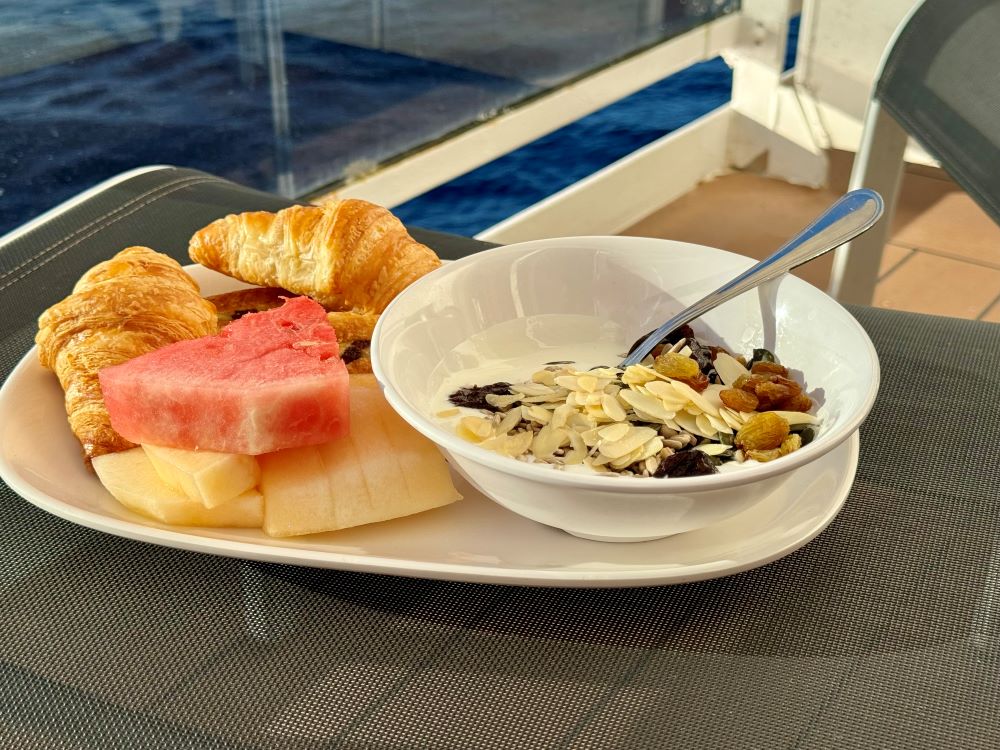
The balcony earned its keep every single day. Morning coffee watching the ship arrive into port, breakfast from the buffet eaten outside, an evening drink before dinner with the lights of the coastline visible in the distance. On a Mediterranean sailing where the scenery is genuinely beautiful and the weather in October is still mild, a balcony adds daily value in a way that’s harder to justify on an ocean crossing where conditions are less predictable.
The cabin amenities are complete: air conditioning, private bathroom with shower, hairdryer, wardrobe, television, safe, minibar, and a small workspace. Storage is well thought out — large suitcases slide under the bed, which matters when you’re a family group with significant luggage.
For families travelling with children, the cabin configuration also accommodates up to three guests with a double bed and pull-out sofa — useful for groups travelling with younger children who want to stay together.
Dining: The Buffet, the Main Restaurant, and What to Expect
The buffet
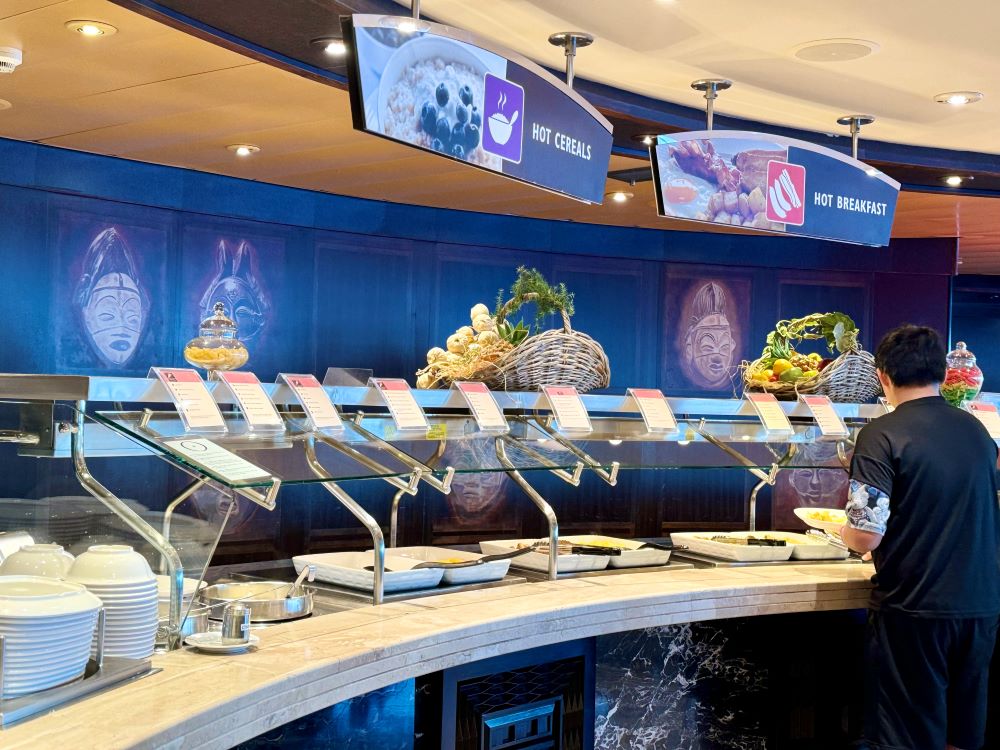
We used the buffet for breakfast every morning and for quick lunches on port days when we wanted to eat and leave quickly. The range is genuinely broad — hot dishes, Mediterranean and international options, a dedicated vegetarian section, and a dessert spread that the younger members of our group investigated thoroughly. Tea, coffee, and water are available around the clock at no extra charge.
The honest caveat: lunchtime between roughly 1:30 and 2:30 PM is genuinely busy. Finding a table during peak lunch hours requires patience, and the popular window seats disappear fast. Our practical solution was to eat lunch earlier — around 12:30 — or wait until after 2:30 when the crowds thinned. It’s a minor inconvenience, but worth knowing before you arrive hungry at 2 PM expecting to sit straight down.
For the kids in our group, the buffet was straightforwardly excellent. Burgers, pizza, and chips are always available alongside the main offerings, which meant no negotiations over what to eat and no child going hungry at any point in the voyage.
The main restaurant
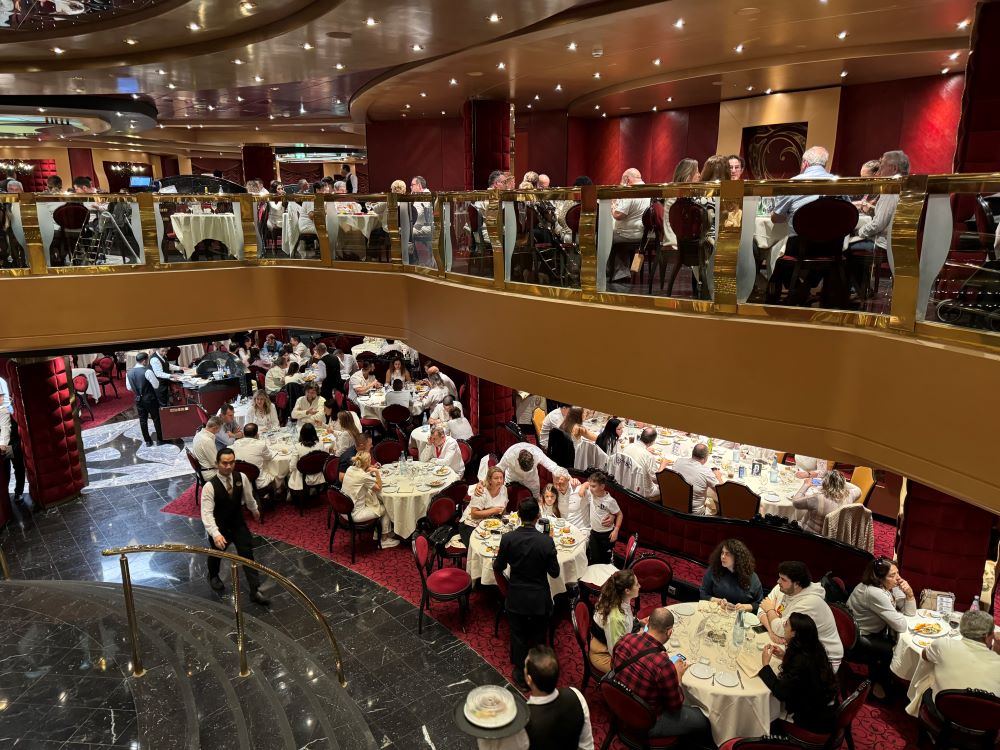
Dinner in the main restaurant was our favourite part of the day. MSC Cruises is an Italian company and the menu reflects that — each evening features dishes inspired by a different Italian region, with the menu rotating nightly. In practice this meant we never had the same dinner twice, which keeps eight evenings in the same dining room feeling fresh.
The quality is consistently good — proper multi-course meals with starters, mains, and desserts. Tiramisu and Panna Cotta made regular appearances and were reliably well-executed. Portions are on the smaller side (a recurring MSC observation), but ordering two starters when a main looks light is entirely accepted and solves the problem. Wine and alcoholic drinks are charged separately; the rest is included.
Dining times are assigned at booking — MSC’s fixed-seating system means you keep the same table and waiter for the entire voyage.
By day three our waiter knew our preferences without being asked, which is one of those small cruise details that makes a real difference over a week.
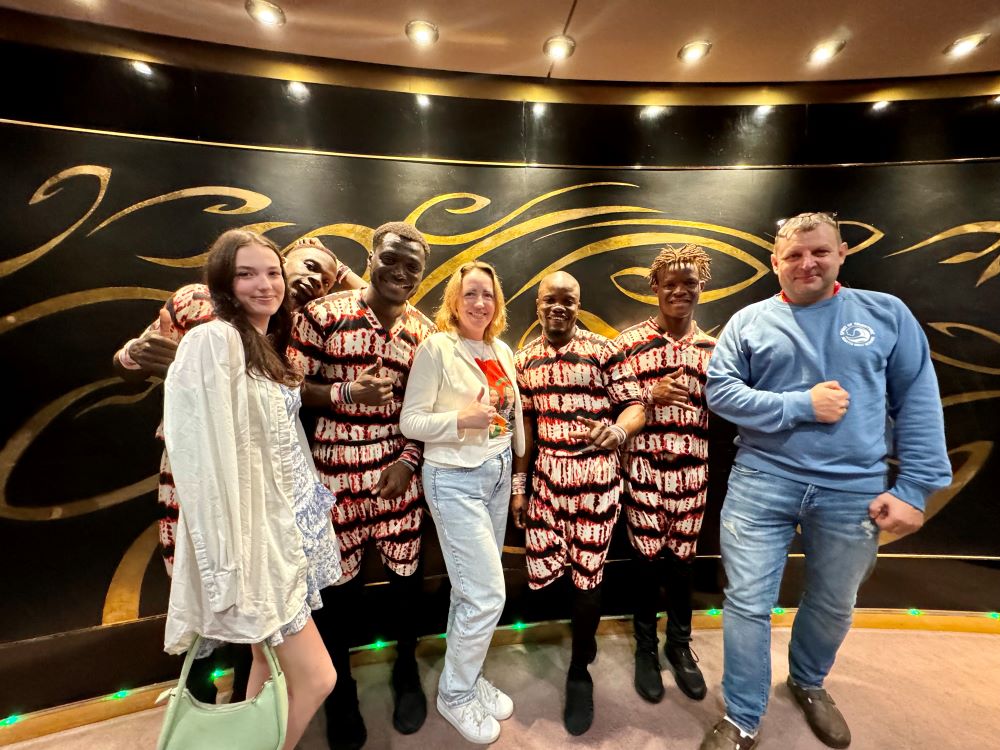
Entertainment: Shows, Evening Life, and the Honest Caveat
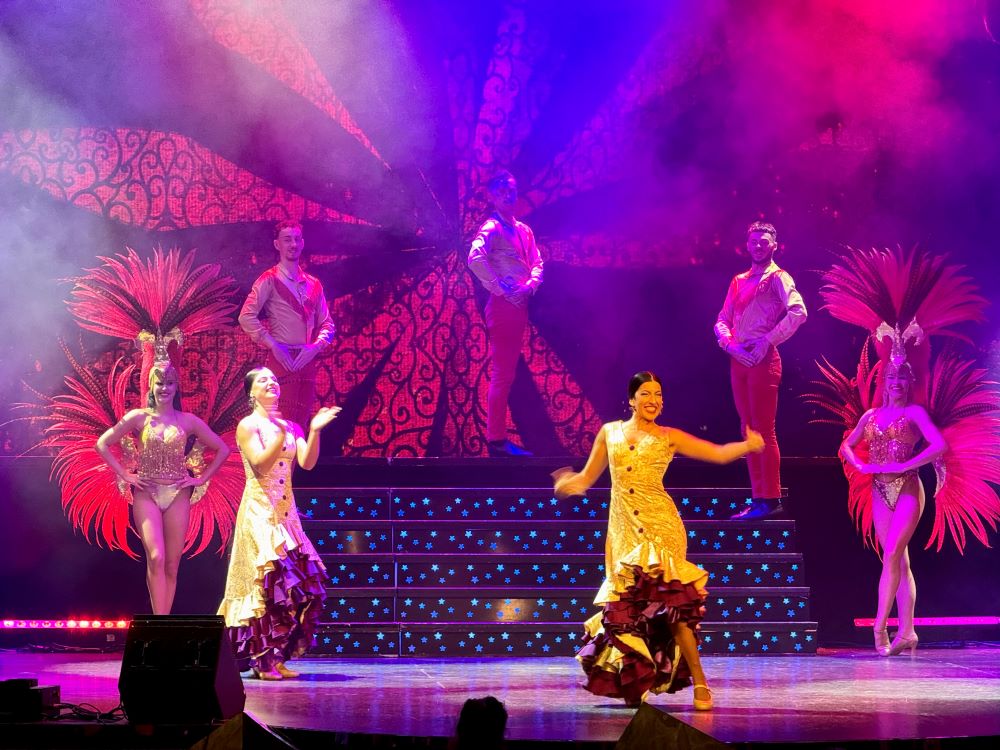
The evening shows in the MSC Fantasia theater were a consistent highlight — professionally staged productions with strong performers, good production values, and a theater large enough that we never struggled to find good seats even arriving close to showtime. Our daughter and the younger children both enjoyed them — including the formal and themed evenings, which on a family sailing is a meaningful test.
The honest caveat, and one that’s worth knowing before an 8-night sailing: the performer repertoire repeats. By the end of the week we’d seen the same acts in different configurations. On a 7–8 night cruise this becomes noticeable in the final days; on a shorter sailing it wouldn’t register. It’s not a dealbreaker — the shows are genuinely good — but if you’re expecting entirely new entertainment every evening, that’s not what you’ll get.
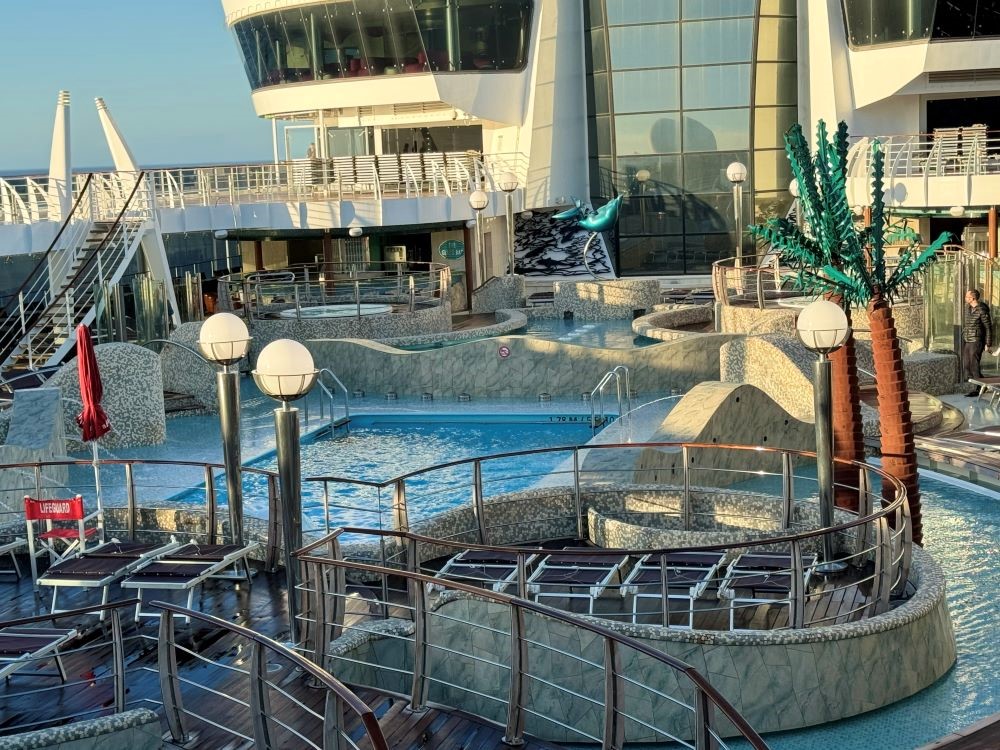
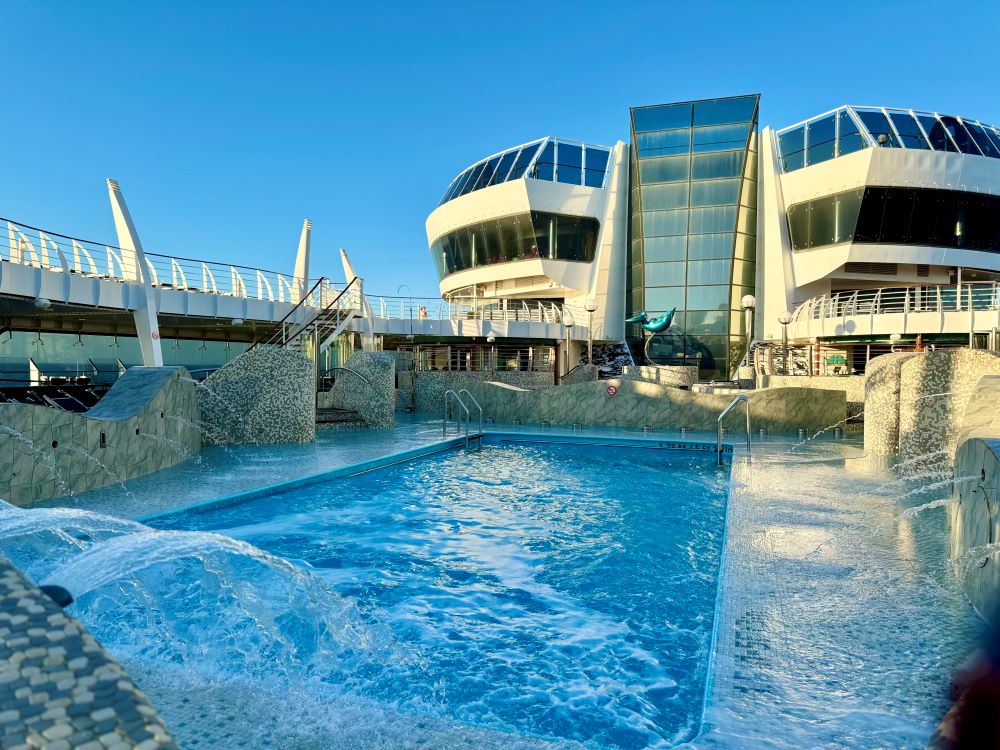
Beyond the theater, the ship runs a full daily activity schedule — live music across various bars and lounges, deck games, trivia, and events throughout the day. The sea day mid-voyage was particularly well-programmed, and the pool areas were at their most enjoyable with the October crowds noticeably thinner than summer sailings.
The Port Stops: What We Did and What We’d Recommend
Rome / Civitavecchia (embarkation)
Civitavecchia is about an hour from Rome — one of the European ports that need a real transfer — which makes arriving a day early the obvious move.
We’d strongly recommend it — boarding day itself is logistically smooth (the pre-registration system takes about 15 minutes at the port), but Rome deserves more than a rushed morning before check-in.
Genoa
Genoa appears twice on the itinerary — days 2 and 7 — which gives you two separate opportunities to explore. The old town is walkable straight from the port — as is every other stop on this itinerary. The caruggi — the medieval alleyways of the historic centre — are atmospheric and easy to explore independently without a guide.
Marseille — our favourite port
Marseille was the standout port of the entire sailing, and also the one where we felt the time constraint most acutely. There’s a particular French coastal energy to the city — the Vieux-Port, the Notre-Dame de la Garde basilica with its views across the city and sea, the fish market along the harbour — that felt unlike anywhere else on the itinerary. We could have spent two full days there easily. Instead we had a few hours. If the itinerary ever offered a longer Marseille stop we’d book it without hesitation.
Valencia and Tarragona
Valencia and Tarragona on consecutive days makes for a full two days of Spanish exploration. Valencia is a large, navigable city — the old town, the City of Arts and Sciences, the Central Market — with enough to fill a day comfortably. Tarragona is smaller and quieter, with well-preserved Roman ruins that the history-inclined members of our group found genuinely interesting. Both are easily managed independently without ship excursions.
Naples (disembarkation)
Naples is the final port and disembarkation point. The system is organised by deck-based time slots — large bags left outside the cabin the night before are collected by the crew and waiting at the terminal. We were clear of the port within two hours of our assigned slot. If you’re continuing to explore southern Italy after the cruise, Naples itself rewards an extra day or two.
MSC Fantasia Cost Breakdown
Here’s what to realistically budget for an 8-day Mediterranean sailing, based on our October trip:
| Cost item | Included / Extra | Our cost / typical range |
|---|---|---|
| Balcony cabin (7 nights, 3 adults) | Base fare | €1,888 (October) |
| All meals (buffet + main dining) | Included | — |
| Entertainment, pools, shows | Included | — |
| Gratuities | Extra — auto-added | ~€200–250 (3 adults, 7 nights) |
| Wi-Fi | Extra | €40–80 per device |
| Beverages (alcohol, sodas) | Extra | Package €35–50/day or per drink |
| Shore excursions (6 ports) | Extra | €0 if independent; €70–120/person if ship |
| Travel insurance | Extra — essential | €80–150 per person (pre-trip) |
| Total extras budget (3 adults) | — | € 600–1,200 above fare |
At €1,888 for a balcony cabin in October, the per-night rate works out to €79 per person — including all meals, shows, pools, and daily housekeeping. For a Mediterranean trip covering six countries and six ports, that’s strong value. October is one of the better months to book: the Mediterranean weather is still pleasant, the ship runs quieter than summer, and fares are noticeably lower than July or August sailings.
MSC Fantasia: Pros and Cons
| What worked well | What to know before you book |
|---|---|
| Balcony cabin — worth the upgrade on Mediterranean routes | Ship shows its age in some areas despite 2023 renovation |
| Italian regional dinner menus — varied and good quality | Buffet lunch hours (1:30–2:30 PM) get very busy |
| Evening shows — professionally staged, good for all ages | Show repertoire repeats — noticeable by day 6–7 |
| 6 ports in 8 days — excellent destination variety | Time in each port is limited — Marseille especially felt short |
| Works well for mixed groups with children and adults | Main restaurant portions on the smaller side |
| October sailing — quieter ship, good weather, lower fares | Pool deck gets crowded on the sea day |
Our Tips for MSC Fantasia First-Timers
Book the balcony if the budget allows
On a Mediterranean itinerary specifically, the balcony earns its cost every day. The difference between an interior cabin and a balcony on this route is the difference between watching the Mediterranean through a corridor window and having your own private outdoor space to sit in with a coffee as the ship arrives into port. Worth it.
Eat lunch before 12:30 or after 2:30
The buffet between 1:30 and 2:30 PM is the one consistently crowded period on the ship. If you’re flexible with timing — and on a cruise you usually are — eating slightly outside peak hours eliminates the only real friction point we encountered.
All six ports are manageable independently
Every port on this itinerary — Genoa, Marseille, Valencia, Tarragona, Naples — is well-connected, walkable from the dock or easily reached by local transport, and doesn’t require a ship-organised excursion to navigate. We explored all six independently and saved significantly compared to ship tour prices. Allow generous time to return to the ship, particularly in larger ports where transport can be unpredictable.
For Marseille — go straight to the Vieux-Port
Time in Marseille is limited and the city has more to offer than a half-day allows. Our recommendation: head directly to the Vieux-Port from the dock, walk up to Notre-Dame de la Garde for the views, then back down through the harbour area. It covers the best of the city in the time available. Don’t attempt the full city — you’ll feel rushed. Do the Vieux-Port well instead.
Travelling with younger children — use the early dinner seating
The early dining seating works significantly better for families with children under 12. The later 8:30 PM seating is fine for adults and teenagers but runs too late for younger kids to enjoy properly. Book the early seating at the time of reservation.
Frequently Asked Questions
Is MSC Fantasia worth booking?
Yes, with realistic expectations. It’s not the newest or most spectacular ship in the MSC fleet, and the renovation shows its limits in places. But the itinerary is excellent, the dining is genuinely good, and the value at October prices is hard to beat. If you’re comparing MSC Fantasia against a newer vessel at a similar price point, the newer ship wins on facilities. If you’re comparing it against a land-based Mediterranean holiday covering six destinations in eight days, the cruise offers far better value.
Is MSC Fantasia good for families with children?
Yes — it handles mixed groups of adults and children well. The buffet keeps kids fed without any fuss, the evening shows work for all ages, and the kids’ club provides structured activities for younger children. Our friends’ 9 and 10-year-olds were consistently occupied and happy throughout the sailing. October is a particularly good month for families — the ship is quieter and the facilities are less contested.
Is a balcony cabin worth the extra cost on MSC Fantasia?
On a Mediterranean itinerary, yes. The scenery — coastal Italy, southern France, Spain — makes a private outdoor space genuinely valuable in a way it isn’t on every route. We paid €1,888 for three adults in a balcony cabin in October and considered it good value. Interior cabins are available at lower prices and are perfectly comfortable, but if the budget stretches to a balcony on this particular route, we’d take it.
How old is MSC Fantasia and does it feel dated?
The ship was built in 2008 and renovated in 2023. In some areas — particularly compared to newer MSC vessels like the Seashore — the renovation’s limitations show. Public spaces feel less dramatic than modern ships, and some finishes look their age. It’s not run-down, and nothing felt neglected; it simply doesn’t have the wow-factor of a ship built in the last five years. For most passengers, this matters less than the itinerary and the onboard experience, both of which hold up well.
Does MSC Fantasia have a kids’ club?
Yes — the ship runs a kids’ club with structured, age-grouped activities throughout the day. The 9 and 10-year-olds in our group used it alongside the pools and evening shows, and were consistently occupied and happy throughout the sailing. On an October cruise the facilities were noticeably less crowded than they would be in summer.
What dining times does MSC Fantasia offer?
The main restaurant runs two fixed dinner seatings — 6:00 PM and 8:30 PM — assigned when you book, and you keep the same table and waiter for the whole voyage. For families with children under 12 we’d recommend the early seating; the 8:30 PM one runs too late for younger kids to enjoy properly.
MSC Fantasia Mediterranean Cruise: Is It Worth Booking?
After eight days and six ports, our verdict is genuinely positive — particularly for families and mixed groups. The MSC Fantasia is not the most modern ship at sea, and the show repertoire repeating by day six is a real limitation on a 7–8 night sailing. But the itinerary is excellent, the Italian dining in the main restaurant is a consistent pleasure, the balcony cabin earns its cost on every Mediterranean day, and the value at October prices is difficult to argue with.
The port we wished we’d had more time in was Marseille — a city that deserves two days and gets half of one. If MSC ever extends the Marseille stop on this route, the itinerary becomes close to perfect. As it stands, it’s a very good Mediterranean sailing that works especially well for families, first-time cruisers, and anyone who wants to cover a lot of the Mediterranean coastline without the logistics of moving between hotels.
We’d book it again — in October, balcony cabin, late dinner seating.