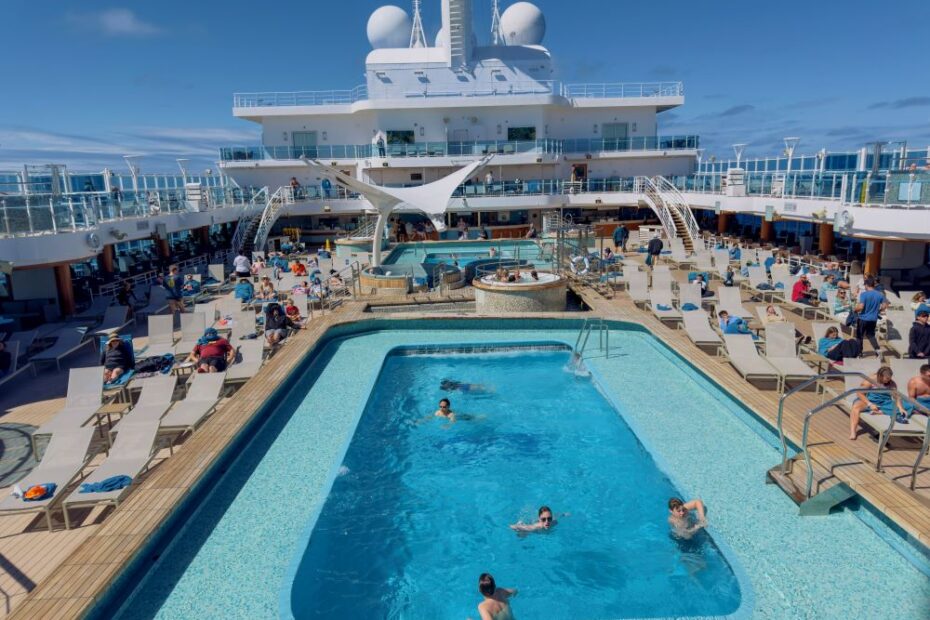
Before our first cruise, we assumed the fare covered the basics — a bed, some food, and transport between ports. What we didn’t expect was to step onboard and realise that most of what we’d normally pay for separately on a land holiday was already included. Entertainment, three meals a day, a spotlessly cleaned cabin, pools, gym, activities — all of it, covered.
What do cruises include?
Most mainstream cruise fares cover: cabin accommodation for the full voyage, all main meals in the buffet and dining room, evening entertainment (theater shows, live music, deck events), pools, gym, and daily cabin housekeeping. Gratuities, alcohol, Wi-Fi, shore excursions, and specialty restaurants are almost always charged separately — the full list of extras is its own article.
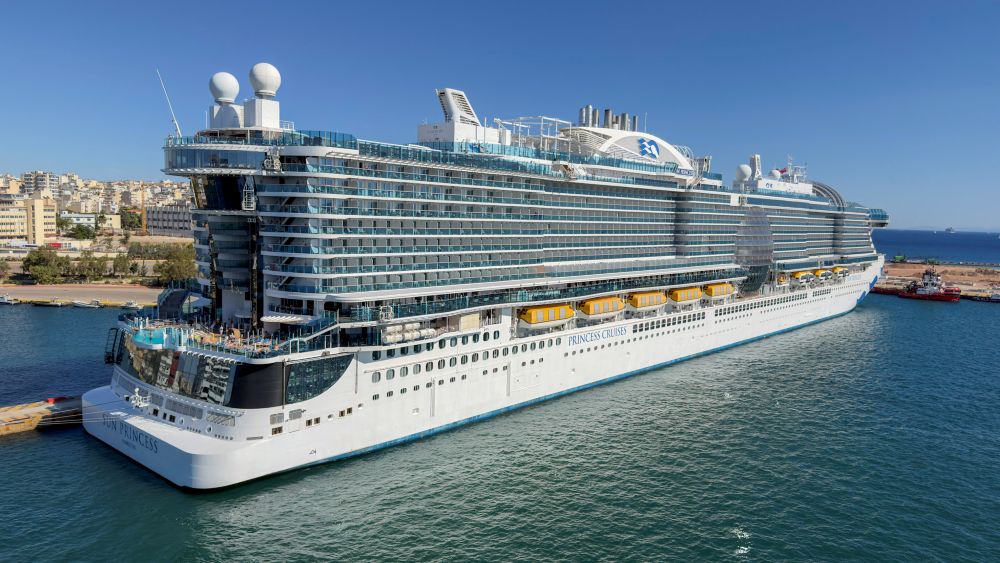
Over five cruises — a transatlantic crossing on MSC Seashore, the Mediterranean on MSC Fantasia, the Greek Islands twice (MSC Sinfonia and Celestyal Journey), and the Mexican Riviera on Discovery Princess — we’ve learned exactly where cruise fares deliver real value.
What’s Always Included in a Cruise Fare
Across all mainstream cruise lines, these are the inclusions you can count on:
- Cabin accommodation for the full voyage
- All main meals — dining room and buffet, three times a day
- Onboard entertainment — theater shows, live music, deck events
- Pools, hot tubs, and sun deck areas
- Gym and standard fitness facilities
- Daily cabin housekeeping (typically twice daily)
- Luggage handling on embarkation and disembarkation
- Water, coffee, tea and juice at breakfast
What varies by ship: room service fees, laundry, specialty coffee, and kids’ programming. On the Discovery Princess, laundry and ironing were complimentary — something we hadn’t expected and which made a real difference on a longer sailing. Always check your specific ship’s amenity list rather than assuming the cruise line standard applies across the whole fleet.
1. Your Cabin
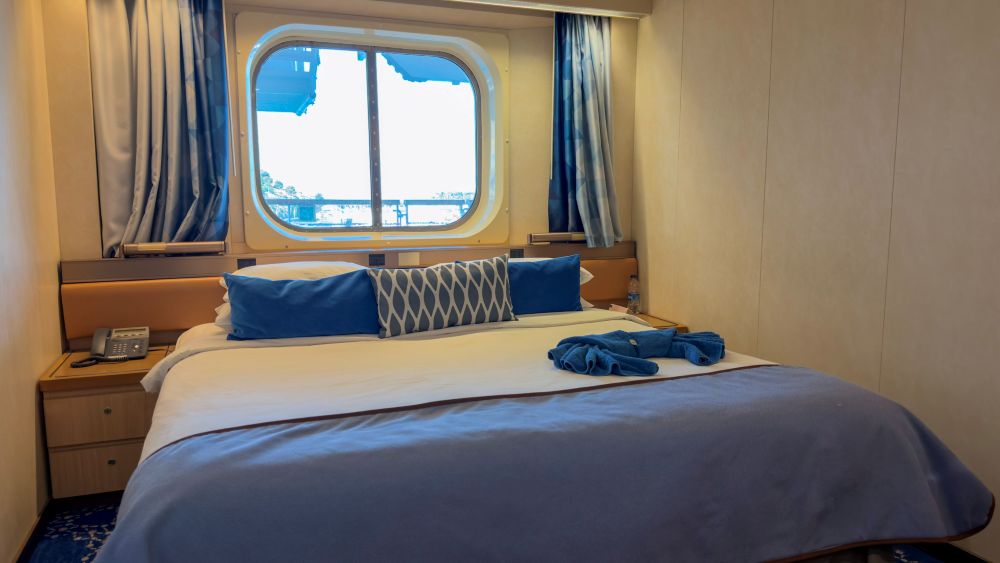
Your cabin is included for the entire voyage. Across our five cruises we’ve stayed in interior cabins, an obstructed view cabin, and balcony cabins — and regardless of type, the standard of daily service was consistently impressive. The cabin was cleaned and refreshed twice daily, towels replaced, and everything kept spotless throughout. That level of housekeeping is something you simply don’t get at most hotels, and it’s fully included in the fare.
Interior cabins
On our transatlantic crossing on MSC Seashore, we booked an interior cabin — no window, no natural light. It sounds limiting, but in practice we barely spent time in the cabin outside of sleeping and getting ready. Interior cabins are significantly cheaper than balconies — often $500–900 less per person on the same sailing. We sailed one on our MSC Seashore transatlantic crossing — here’s exactly what 17 nights without a window is really like.
Balcony cabins
On the Discovery Princess, we upgraded to a balcony — and for a Mexican Riviera sailing with warm evenings and scenic coastline, it was worth it. Morning coffee outside, watching the ship arrive into port, sitting on the balcony after dinner — these are the moments that make the upgrade feel essential on the right itinerary.
Whether that trade-off suits you depends on the cabin type — we’ve compared them all.

2. All Main Meals — Three Times a Day
This is where cruise fares deliver some of their clearest value. The volume and variety of food available — all included — is unlike anything you experience at a regular holiday.
The main dining room
Formal dinner in the main dining room was one of our favourite parts of every cruise. The menu changes nightly and the service is attentive — the systems differ by line (MSC’s fixed seating, Princess’s anytime dining), but the quality held on every sailing.
The buffet
We used the buffet daily — breakfast without exception, and often for quick lunches on port days. The range is broad: fresh fruit, eggs cooked to order, international options, salads, hot mains, pastries. Standard buffet drinks (water, coffee, tea, juice at breakfast) are included. Soft drinks, alcohol, and specialty coffees are charged separately on most cruise lines.
Room service
Most cruise lines include basic room service, though some charge a small delivery fee ($3–8 per order). On the Discovery Princess, room service was available and we used it occasionally for breakfast on the balcony. If you’re in a balcony cabin, this combination — breakfast delivered, eaten outside while watching the ocean — is one of those simple cruise pleasures worth knowing about.

3. Entertainment
If we had to pick one area where cruise fares consistently exceed expectations, it’s the entertainment. We went in with modest hopes and came out genuinely impressed — the shows are only part of what fills a day onboard.
Theater shows
On every sailing we’ve taken, the onboard theater productions were a highlight. These aren’t amateur performances — professionally staged shows with full casts, live music, elaborate costumes, and production values that would be expensive to see on land. All included, no reservation required. Arriving 15–20 minutes early gets you good seats.
Live music and daily activities
Beyond the theater, ships run a continuous schedule of live music, deck parties, trivia nights, dance classes, cooking demonstrations, and themed events. On the Discovery Princess, a daytime cooking show by the ship’s chefs was one of the most enjoyable hours of the whole sailing. We typically picked two or three activities per day from the schedule — all included.
4. Pools, Gym, and Recreation
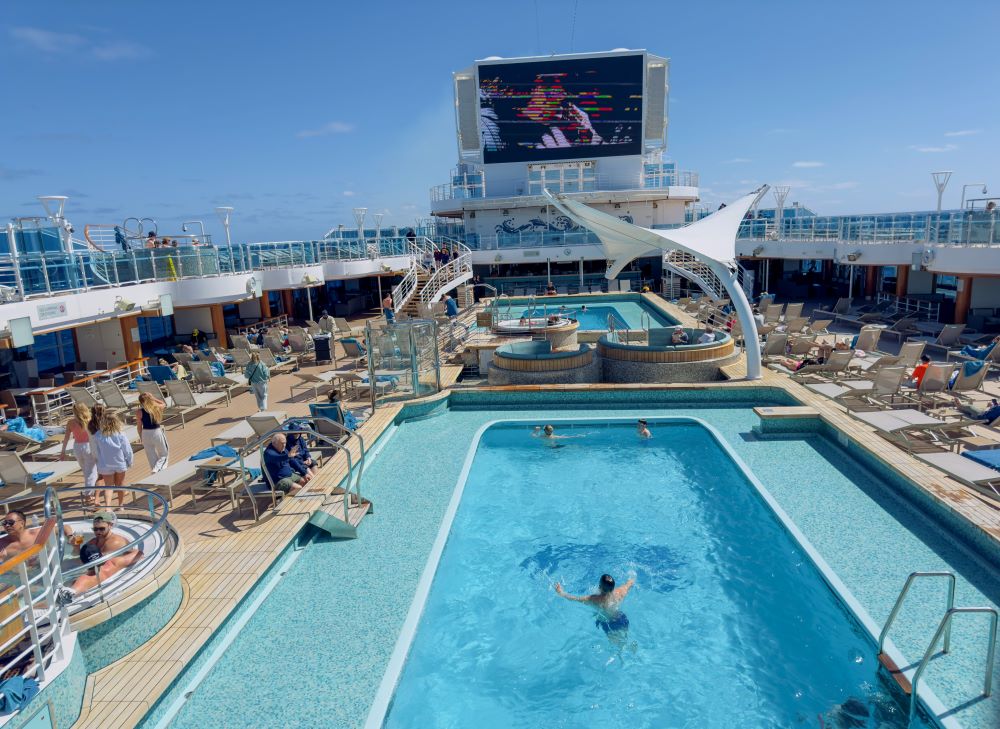
Access to the ship’s recreational facilities is fully included — and on modern ships, this covers quite a lot. Multiple swimming pools, hot tubs, and sun deck areas are all included. On Caribbean and Mexican Riviera sailings especially, the pool deck becomes a central part of the day.
The gym is fully equipped with cardio machines and weights, included at no extra charge. Standard group fitness classes, mini golf, deck sports, and shuffleboard are all typically included. What costs extra: spa treatments, personal training, premium fitness classes, and specialty activities like racing simulators.
5. Housekeeping and Onboard Services
Daily cabin housekeeping is fully included — and after five cruises, it remains one of the details that consistently impresses us. Coming back to a tidy cabin after a day in port is one of those small but meaningful comforts of cruise travel. Luggage handling is also included: porters take your bags from the check-in terminal directly to your cabin on embarkation day, and reverse on disembarkation.
Cruise Fare vs. Land Holiday: What You’re Actually Getting
To put the value in perspective, here’s a rough comparison of what’s bundled into a cruise fare versus what you’d pay for separately on a comparable land-based holiday:
| What’s included in cruise fare | Equivalent land cost (per person, per week) |
|---|---|
| Accommodation (7 nights) | $700–1,400 (hotel, mid-range) |
| All meals (3x daily) | $500–900 (restaurants + groceries) |
| Evening entertainment (7 shows) | $200–500 (theater / live shows) |
| Gym access (7 days) | $50–100 (day pass or hotel gym) |
| Daily housekeeping | Included in hotel — but not most vacation rentals |
| Ship transport between all ports — no flights or trains needed | $300–800 (flights or trains) |
| Approximate total value | $1,750–3,700 per person |
A 7-night cruise fare for a comparable itinerary often runs $800–1,500 per person depending on the line and cabin. The bundled value is real — provided you actually use what’s included.
How to Get the Most Out of What’s Included
Go to the theater productions. A surprising number of cruisers skip the evening shows. Based on our experience across five sailings, the productions are consistently the highest-value included activity on the ship.
Use the main dining room, not just the buffet. The main dining room delivers a noticeably higher quality experience — and it costs nothing extra. On formal nights especially, it’s worth the small effort of dressing up.
Plan sea days around included activities. There’s a full daily schedule — trivia, cooking demos, dance classes, live music, pool events — all free. Making a point of picking two or three things from the daily schedule makes a sea day feel like an experience rather than downtime.
Check what your specific ship includes before booking extras. Inclusions vary more than most people realise between ships on the same line. Always review your ship’s specific amenity list, not just the general cruise line overview.
FAQ: What’s Included in a Cruise
What’s included in a cruise fare?
Your cabin, all meals in the main dining room and buffet, entertainment (shows, live music, activities), pools, gym, and daily housekeeping are included in the base fare. Not included: alcoholic drinks, specialty dining, Wi-Fi, shore excursions, gratuities, and spa treatments — budget separately for these.
Is food really unlimited on a cruise?
Yes — the main dining room and buffet are open throughout the day with no extra charge and no limits. The only food that costs extra is specialty restaurants (Italian, steakhouse, etc.), which carry a cover charge of $40–80 per person.
Are drinks included in a cruise fare?
Basic non-alcoholic drinks — water, coffee, tea, and juice at breakfast — are included on most cruise lines. Alcoholic drinks, sodas, specialty coffees, and fresh juices typically cost extra. Most cruise lines sell beverage packages ($25–55 per person per day).
What entertainment is included on a cruise ship?
Theater productions, live music, deck parties, trivia nights, dance classes, cooking demonstrations, outdoor movies, and a full daily activity schedule are all included. Premium specialty experiences like escape rooms or VR attractions typically cost extra.
Is it worth paying extra for a balcony cabin?
It depends on the itinerary. On warm-weather routes — Caribbean, Mexican Riviera, Mediterranean — a balcony adds genuine daily value. On a transatlantic crossing we managed fine in an interior cabin and the savings were substantial, though by day 17 we missed natural light. We’d book based on the route.
Do all cruise ships include the same things?
The core inclusions (cabin, meals, main entertainment, pools, gym) are consistent across mainstream cruise lines. But details vary — some ships include laundry, some charge for it; some include specialty coffee, most don’t. Always check the specific ship’s amenity list rather than assuming the general cruise line standard applies universally.
Is cruising good value for families?
In our experience, yes. The buffet means no battles over restaurant choices, the entertainment schedule keeps kids occupied on sea days, and the all-in pricing makes it easier to control the budget. The included elements — meals, shows, pools, activities — cover the vast majority of what children enjoy most.