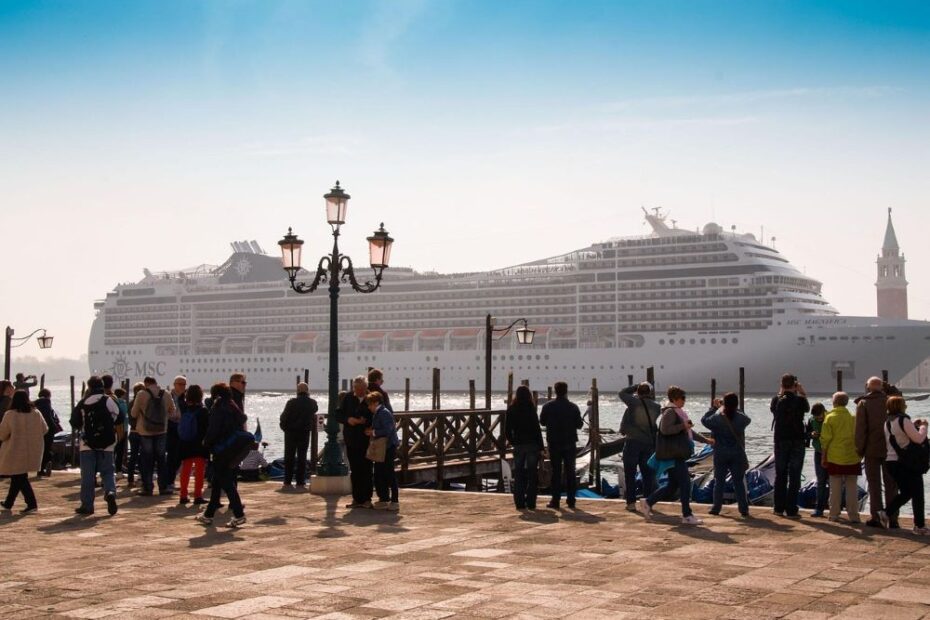
A cruise is a great way to explore Europe, but not all ports are located near the city center. In some places, you’ll need to use public transportation—such as a bus, subway, or train—to get to the main attractions.
Not Every Cruise Port Is Steps from the City
A cruise is one of the best ways to explore Europe — but here’s something the brochures don’t always mention: many ports are nowhere near the city center. Getting the transfer from cruise port to city right can make or break your day ashore. I’ve put together this guide after visiting all 17 of these ports myself, so you know exactly what to expect before you step off the ship.
In some places, a 15-minute walk is all it takes. In others, you’ll need a shuttle, the metro, or a train. Each port has its own quirks — and knowing them in advance means more time enjoying the city, less time figuring out how to get there.
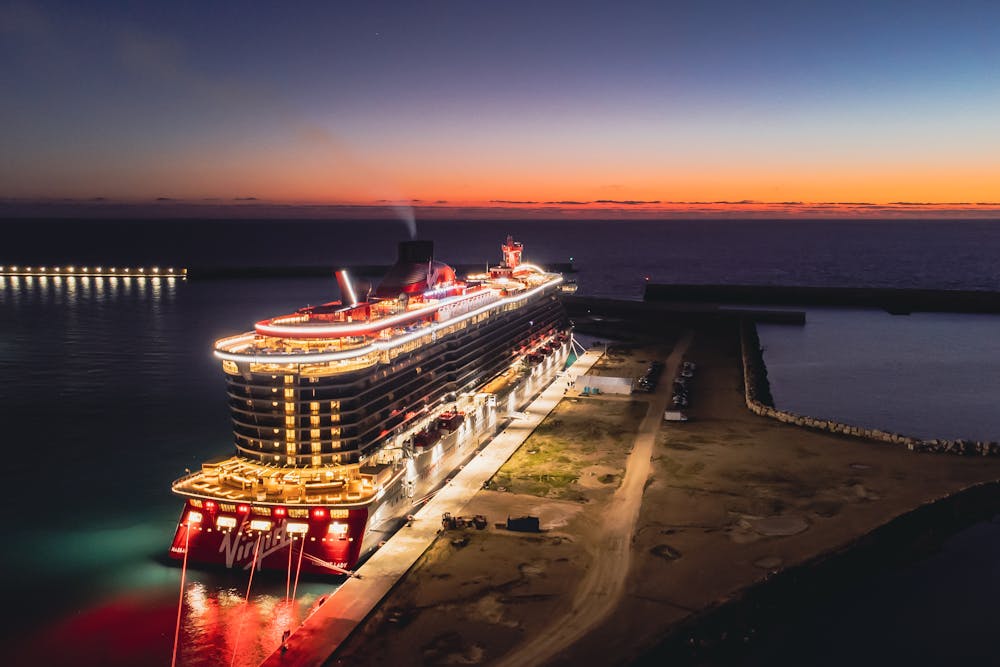
Italy
1. Civitavecchia, Rome
Distance to city center: Rome is 80 km away — about 1.5 hours by train or bus. The train from Civitavecchia to Roma Termini is the most practical option. It runs regularly and gets you into the heart of Rome without fighting the city’s legendary traffic.
What to see: The Colosseum, Vatican City, Trevi Fountain, and the Pantheon — though that barely scratches the surface. Rome isn’t just about the sights. It’s a feeling: monumental, intense, layered with centuries of history.
Tip: Don’t try to see everything. Pick 2–3 highlights and give yourself time to wander. Time flies in Rome.
2. Venice
Distance to city center: Depends on your terminal. San Basilio or Santa Marta = 20-minute walk. Marghera terminal = 30–40 minutes, transportation required.
Venice is dreamy, romantic, and slightly mysterious — as if time stopped somewhere in the 16th century. The narrow streets, quiet canals, and hidden bridges make every corner feel like a discovery.
What to see: St. Mark’s Square, the Doge’s Palace, the Rialto Bridge, and the Grand Canal.
Tip: Explore Cannaregio or Dorsoduro — these quieter districts show a more intimate side of Venice, away from the crowds.
3. Livorno
Distance to city center: ~25 minutes on foot; shuttle buses available.
Livorno doesn’t get the attention it deserves. No overwhelming tourist crowds — just a genuine Italian seaside town with canals, scents, and noise that feel completely authentic.
What to see: Fortezza Vecchia, Terrazza Mascagni with sea views, and Mercato Centrale.
Tip: If you’re not making the day trip to Florence or Pisa, Livorno is a lovely place to slow down — an espresso and a walk through the market is a perfect morning.
4. Bari
Distance to city center: ~30 minutes on foot to the Old Town; shuttle buses available.
Bari is quintessentially Southern Italian — warm, loud, full of life on the streets. The Old Town is a labyrinth of narrow alleys where every turn brings something unexpected.
What to see: Basilica di San Nicola, Castello Svevo, Bari Vecchia.
Tip: Day trips to Alberobello (trulli houses) or Matera (cave dwellings) are worth it if you have time — but plan ahead, as both require transport.
5. Palermo, Sicily (Palermo)
Distance to city center: ~25 minutes to the Old Town.
Palermo is intense, exotic, and full of contrasts — Arab, Norman, and Baroque influences woven together, with streets that smell of citrus and street food.
What to see: The Palatine Chapel, Quattro Canti, Ballarò Market.
Tip: The market is a must — but watch your belongings. Palermo is gorgeous, but it pays to stay alert.
France
6. Marseille
Distance to city center: ~8 km — about 20 minutes by taxi or shuttle bus.
Marseille is multicultural, a little rough around the edges, and completely alive. It’s not trying to impress you — it just is what it is. And that’s exactly what makes it interesting.
What to see: Vieux-Port (the Old Port) buzzing with fishing boats and cafés, Notre-Dame de la Garde with panoramic views, and the Le Panier district with its street art and narrow streets.
Tip: If you have more than six hours, consider a day trip to Aix-en-Provence — only 40 minutes away and well worth it.
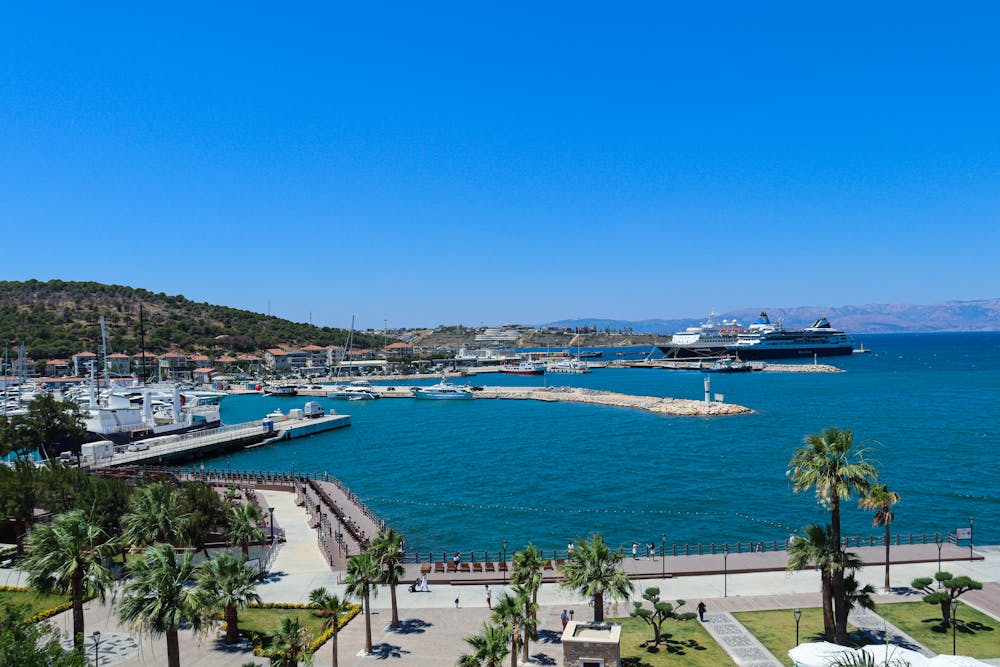
Greece
7. Piraeus, Athens
Distance to city center: ~30 minutes by metro to Monastiraki or Syntagma Square.
Piraeus is Greece’s largest port and the main cruise hub for Athens. The metro transfer from the cruise port is straightforward, inexpensive, and avoids Athens’ famous traffic entirely.
What to see: The Acropolis, the Plaka district with its tavernas and winding streets, and Syntagma Square with the changing of the guard.
Tip: If you don’t feel like making the trip to Athens, the Mikrolimano district in Piraeus itself is a lovely local gem — seaside restaurants, relaxed atmosphere, and far fewer tourists.
8. Santorini
Distance to city center: Ships anchor offshore. Tender boats bring you to the port, then it’s a 3 km journey with a 300-metre vertical climb to Fira.
You have three options for getting up to town:
On foot — about 600 steps, with spectacular views
Funicular — fast and convenient (5 minutes)
Donkey trail — slower but authentic
What to see: Fira and Oia with their iconic white houses and blue domes perched above the caldera. Santorini is like a painting — dramatic, elegant, and completely unforgettable.
Tip: Getting to Oia requires a bus or tour (about 30 minutes). Leave plenty of time for the return — the funicular queue can be very long in the evening.
Croatia
9. Dubrovnik
Distance to city center: Gruž Port is 3 km from the Old Town — 30–40 minutes on foot, or a short bus/shuttle ride.
Dubrovnik is majestic, historic, and cinematic. Walking the city walls feels like stepping into another era — or, if you’re a fan, another world entirely.
What to see: The UNESCO Old Town, the city walls, Stradun Street, and sweeping sea views.
Tip: Walking the walls is non-negotiable. Take the shuttle or bus to Pile Gate — it drops you right at the entrance.
Spain
10. Palma de Mallorca
Distance: 4–6 km to the cathedral — 45 minutes on foot or 10–15 minutes by taxi.
Mediterranean elegance at its finest. The Gothic cathedral reflected in the sea, the Old Town’s narrow streets, and Bellver Castle offering views across the island — Palma is genuinely beautiful.
What to see: Palma’s Gothic cathedral (La Seu) is one of the most impressive in Europe — best viewed from the seafront where it’s reflected in the water. The narrow streets of the Old Town lead up to Bellver Castle, a rare circular medieval fortress with panoramic views across the island. Worth a few hours easily.
Tip: The shuttle to Parc de la Mar is the easiest option. If you walk along the seafront, it’s scenic — but exposed to the sun and can get very hot in summer.
11. Ibiza
Distance to city center: ~3 km from Marina Botafoch to Ibiza Town (Dalt Vila) — about 35 minutes on foot.
By day, Ibiza is surprisingly peaceful and full of character. The Dalt Vila fortress towers above white houses, the beaches are beautiful, and the sunsets stay with you. By night, well — you probably know the rest.
What to see: The highlight is Dalt Vila — a UNESCO-listed fortified old town that towers above the harbour. Inside the walls you’ll find quiet streets, a cathedral, and sweeping views over the sea. The beaches closest to town (Talamanca, Figueretes) are easy to reach on foot or by bus.
Tip: The PortBus shuttle or a water taxi are both convenient options — especially if it’s a hot day. The walk is beautiful but very sunny.
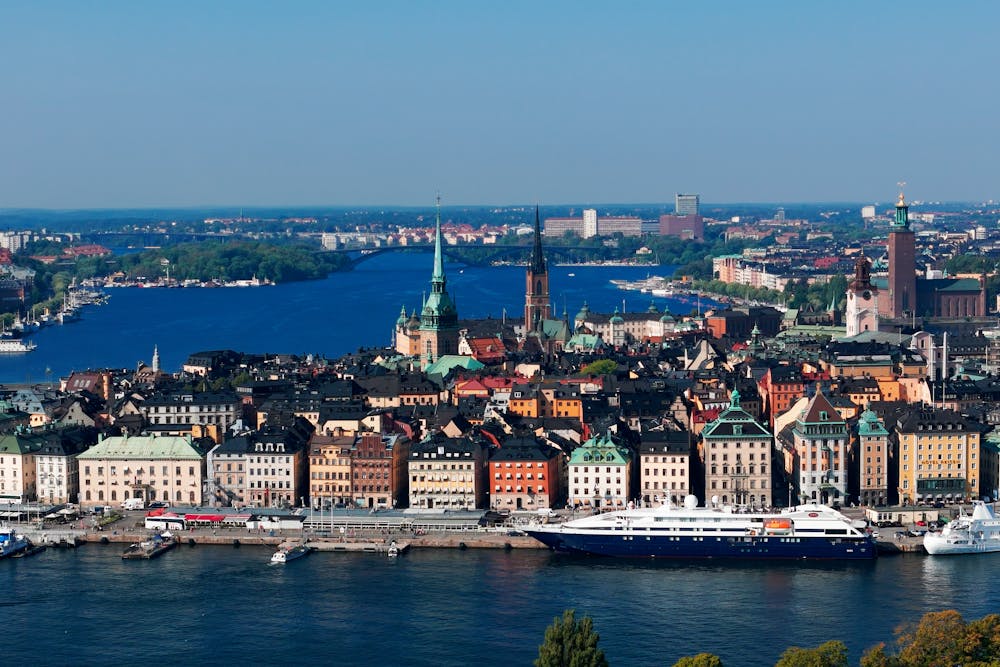
Northern Europe
Finland
12. Helsinki
Distance to city center: South Harbour Terminal = walkable to the center in minutes. Hernesaari Terminal = 3 km, about 20–30 minutes by public transport or taxi.
Helsinki has a calm, design-oriented energy unlike any other European capital. It’s peaceful, beautiful, and easy to navigate..
What to see: Senate Square, the Temppeliaukio Rock Church carved into solid granite, and the lively Market Square by the harbour.
Tip: If you dock at South Harbour, the walk into town is genuinely lovely — through beautiful parks and past striking architecture.
Sweden
13. Stockholm
Distance to city center: ~30 minutes on foot (2.4 km) from Stockholm’s port. Trams available.
Stockholm is spread across 14 islands connected by bridges — a city that’s as beautiful from the water as it is on foot.
What to see: The Vasa Museum with its remarkably preserved 17th-century warship, the ABBA Museum, the Royal Palace, and the medieval atmosphere of Gamla Stan (Old Town).
Tip: If docking at Stadsgården, you can walk. At Frihamnen, use public transport or a transfer to the center.
Denmark
14. Copenhagen
Distance to city center: Langelinie Terminal = 30-minute walk to Nyhavn along the waterfront. Ocean Quay = 6–7 km, public transport or shuttle recommended.
Copenhagen is charming, bike-friendly, and full of design. The Nyhavn canal with its colourful buildings is one of Europe’s most photogenic spots — and from Langelinie, you can walk there along the water, stopping by the Little Mermaid along the way.
What to see: Denmark’s capital with its historic castles, Nyhavn Harbor, and the Little Mermaid statue.
Tip: From Langelinie, walk — the route is beautiful. From Ocean Quay, plan transport to make the most of your time ashore.
15. Southampton, London
Distance to city center: 10–15 minutes on foot. London is 1 hour 20 minutes by direct train (Southampton Central to London Waterloo).
Southampton itself is historically rich and far more interesting than its reputation suggests. The SeaCity Museum tells the story of the Titanic, Tudor House brings centuries of history to life, and the medieval Bargate is a striking reminder of the city’s past.
What to see: The SeaCity Museum (Titanic history), Tudor House & Garden, the medieval Bargate, and Southampton Common for a relaxing walk.
Tip: If you have a full day and the energy for it, London by train is absolutely worth it. But if you’d prefer a quieter day with real British atmosphere, Southampton delivers — end with tea at a local café.
Germany
16. Hamburg
Distance to city center: Altona terminal = 30-minute walk to Landungsbrücken. Steinwerder terminal = 9 km, transportation required.
Hamburg blends Hanseatic history with serious modern culture. The Speicherstadt warehouse district (UNESCO listed), the Elbphilharmonie concert hall, and Miniatur Wunderland — the world’s largest model railway — make for a genuinely diverse day ashore.
What to see: Speicherstadt (UNESCO warehouse district), Elbphilharmonie concert hall, and Miniatur Wunderland — the world’s largest model railway.
Tip: From Altona, the walk along the Elbe promenade is scenic and worth taking slowly. From Steinwerder, use the ship transfer or public transport.
Netherlands
17. Rotterdam
Distance to city center: 20–30 minutes on foot to the Blaak district, or 10 minutes by metro.
Rotterdam is like nowhere else in Europe. Bombed flat in WWII and rebuilt from scratch, it became a living laboratory for bold architecture — the Erasmus Bridge, cube houses, and the spectacular Markthal market hall show what a city looks like when it stops playing it safe.
What to see: Erasmus Bridge, the iconic cube houses, and the stunning Markthal market hall — Rotterdam is unlike any other European city.
Tip: Walk across the Erasmus Bridge — it leads straight into the city center. The Wilhelminaplein metro station is right at the terminal if you prefer.
Practical Tips for Getting Around European Cruise Ports
Get back on time. Cruise ships do not wait. If you miss departure, getting to the next port is your problem — and it’s expensive. Always build buffer time into your return journey.
Cards over cash. Some European ports still use local currency (Danish kroner, for example). Bank cards and mobile payments are widely accepted, so carrying large amounts of cash isn’t necessary.
Internet on board is expensive. Within the EU, roaming is usually free on your home plan. Use mobile data or free WiFi in cafés and tourist centres rather than paying for ship internet.
Plan transfers in advance. For ports like Civitavecchia or Piraeus, knowing your train times before you dock saves you 20–30 minutes of confusion on the quayside.
The Best Cruise Days Are the Well-Planned Ones
Whether you’re chasing history in Rome, sunsets in Santorini, or architecture in Rotterdam — every one of these ports rewards a bit of preparation. Knowing how to get from the cruise port to the city center means you spend your day in the city, not at the terminal.
I hope this guide helps you make the most of every port day. If you’ve been to any of these ports and have tips of your own, I’d love to hear them in the comments.
Featured photo from Pixabay