Puerto Rico was one of the stops I was most looking forward to on our November 2023 [17-day MSC Seashore transatlantic crossing from Barcelona to Miami]— and it didn’t disappoint. The ship docked in the morning and wasn’t leaving until midnight, which gave us a rare full day ashore rather than the usual seven-hour sprint. We used every hour of it.
By the time we walked back up the gangway that night, we’d swum in a jungle river in El Yunque, eaten mofongo on a terrace overlooking the Atlantic, wandered the cobbled streets of Old San Juan, and had a Pina Colada at the restaurant where it was invented. One day in Puerto Rico turned out to be one of the best port days of the entire 17-day voyage.
Here’s exactly what we did, what it cost, and what I’d recommend to anyone with a cruise stop in Puerto Rico.
Puerto Rico cruise stop — quick facts
- Our ship: MSC Seashore (transatlantic crossing, Barcelona to Miami)
- Time ashore: Full day — ship departed at midnight
- Port: Old San Juan — the ship docks directly in the historic district
- US jurisdiction: Passport control on arrival — photos and fingerprints required
- Our excursion cost: $80 per person (El Yunque rainforest tour with Roy Tour)
- Recommended guide: Roy Tour — rainforest tours, hikes, island excursions
- Also on this route: [Saint Martin cruise port — one day on a two-country island].
- And [British Virgin Islands cruise port — the most beautiful beach on the crossing].
Arriving in Puerto Rico: First Stop, US Soil
Puerto Rico is the first port on the transatlantic route that falls under US jurisdiction, which means passport control before you step ashore — photos taken, fingerprints, a few straightforward questions from customs officials. The process is organised and moves quickly; it added maybe 20 minutes to our morning but wasn’t a hassle.
Stepping off the ship into Old San Juan feels immediately different from other Caribbean ports. There’s a weight to the place — centuries of colonial history visible in the fortifications, the cobblestones, the architecture — combined with a very alive, very Latin energy that makes it feel nothing like a museum. We were standing on the dock with a full day ahead of us, and I already knew this was going to be a good port stop.
Since I’d researched what I wanted to see before boarding, our first move was finding a local guide outside the port. We went with Roy Tour — a local guide who organises rainforest tours, hikes, and excursions across the island. If you’re looking for someone knowledgeable and flexible in Puerto Rico, I’d recommend them without hesitation.
El Yunque Rainforest: The Best Part of the Day
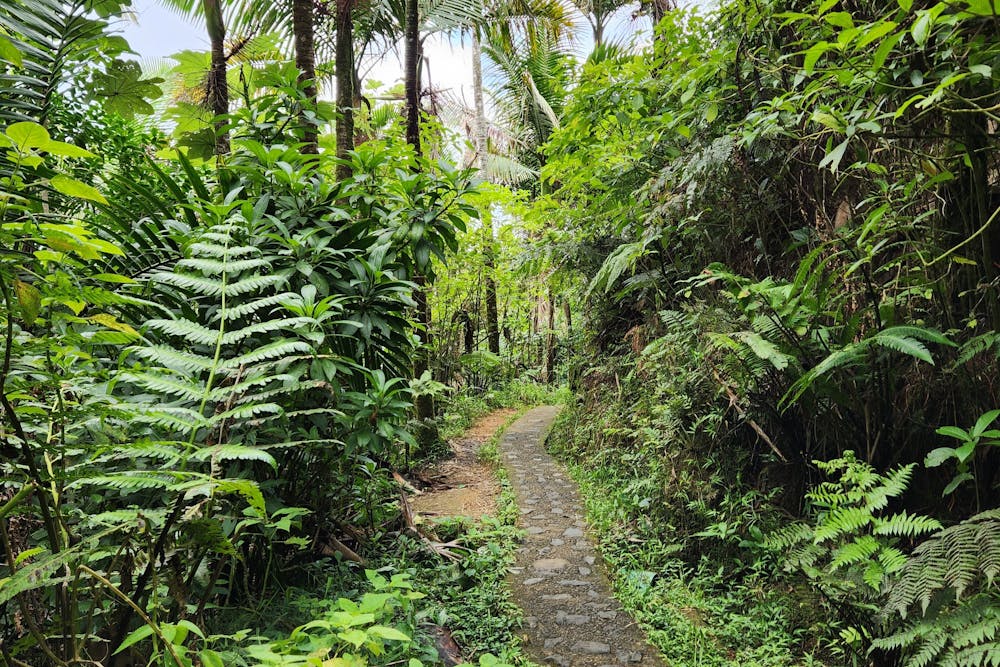
El Yunque is about 40 minutes from the port by car — entirely manageable as a half-day trip even on a shorter port stop. It’s the only tropical rainforest in the US National Forest System, and arriving there after a morning of cobblestones and city streets feels like stepping into a completely different world.
The forest is dense, genuinely lush, and noticeably cooler than San Juan — which makes early afternoon the ideal time to visit. When the city is at its hottest, El Yunque has refreshingly cool air moving through the trees. Our guide took us along trails through the forest, explaining the flora, the history of the Taíno people who inhabited the island before European arrival, and the ecological significance of the rainforest in Puerto Rico’s water system. It was the kind of context that makes a place make sense rather than just look impressive.
Swimming in the jungle river — the moment I remember most
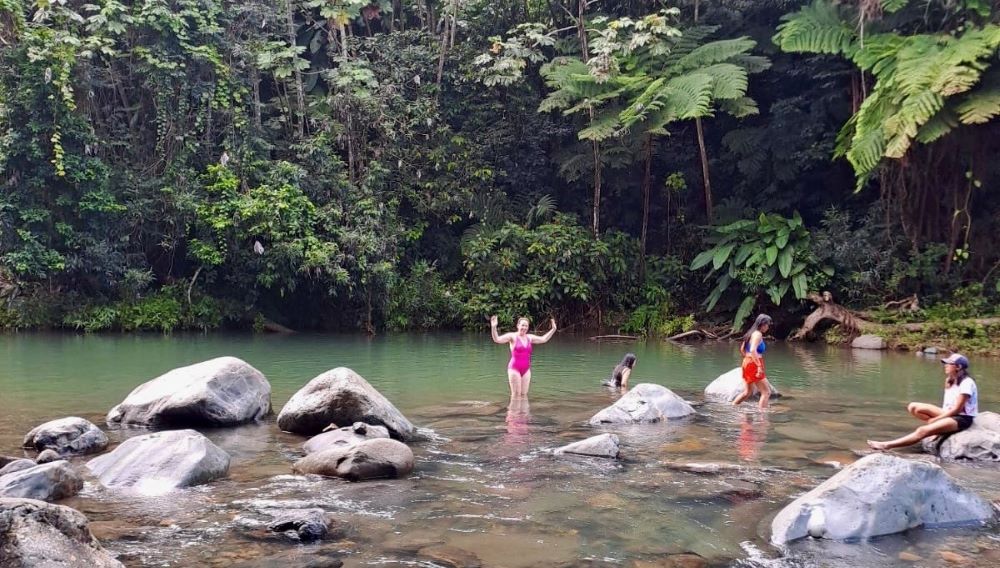
The highlight of El Yunque — and honestly one of the highlights of the entire transatlantic crossing — was swimming in the jungle river. The forest has natural pools fed by waterfalls and rivers that flow through the green landscape, and the water is cool, clear, and completely surrounded by forest. I’m not usually someone who goes wild swimming, but this was different. Floating in a river with rainforest canopy overhead and the sound of water everywhere — it’s the kind of experience you don’t forget.
The forest also has natural water slides formed over centuries by the river current — essentially smooth rock channels that drop you into the pools below. For anyone with a taste for mild adrenaline, they’re worth trying. For calmer souls, the swimming pools alone are more than enough reason to make the trip.
Lunch Overlooking the Atlantic
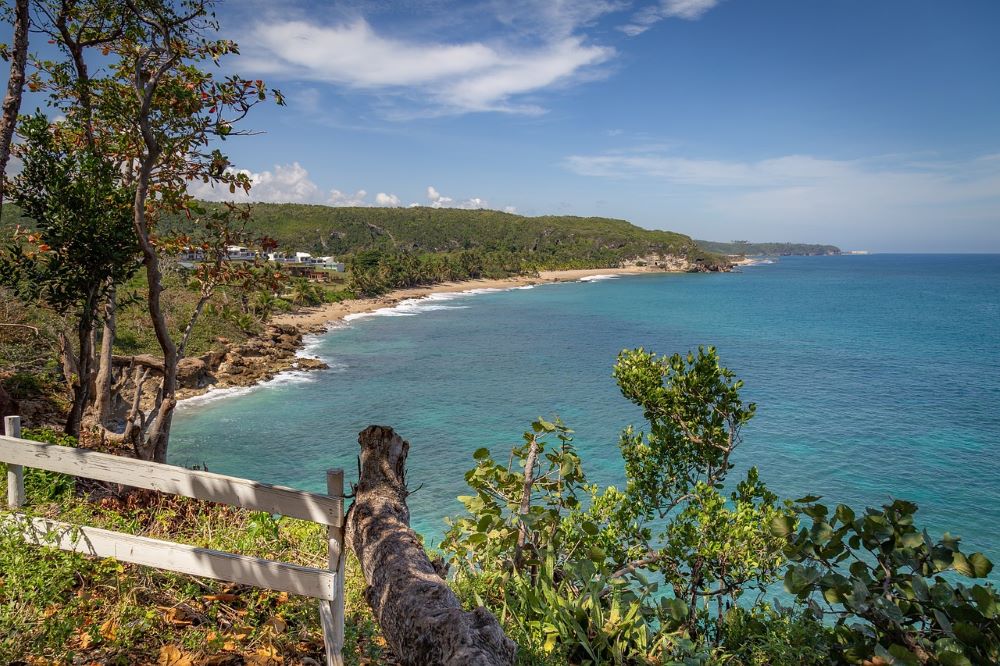
After El Yunque, our guide took us to a local restaurant with a terrace overlooking the ocean. After a morning in the forest, sitting down to a proper meal with an Atlantic view felt exactly right.
The dish to order in Puerto Rico is mofongo — fried plantains mashed with garlic, oil, and pork cracklings, then stuffed with your choice of seafood, chicken, or beef. It sounds unusual if you haven’t encountered it before, but it’s one of those dishes that immediately makes sense the moment you eat it. Rich, savoury, deeply satisfying. We paid $40 per person for mofongo and a beer, which for a restaurant with that view felt entirely reasonable.
Puerto Rico also has a film connection worth knowing: the island’s jungle landscapes and beaches have served as filming locations for Pirates of the Caribbean and other productions. El Yunque in particular has that quality — somewhere between spectacular and slightly unreal.
Old San Juan: History, Colour, and a Famous Cocktail
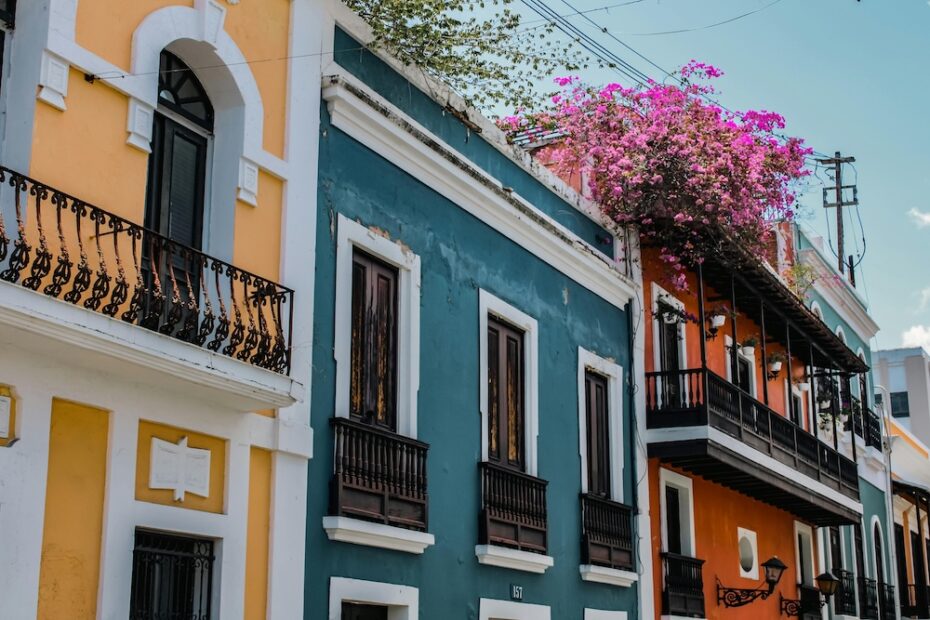
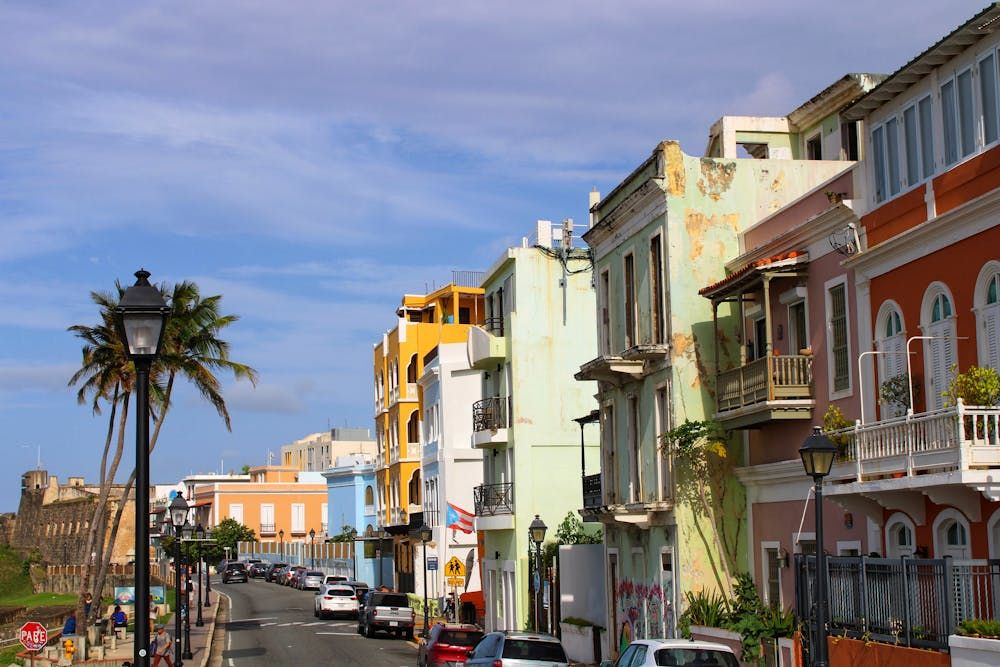
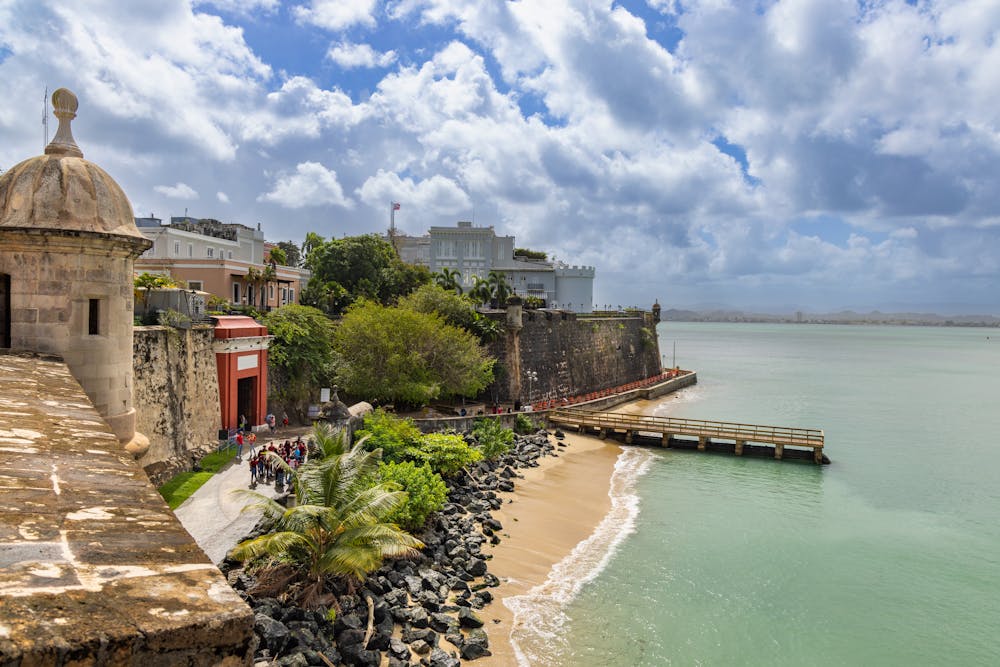
We arrived in San Juan’s old town in the late afternoon, when the sun had dropped enough to make walking comfortable. The old town is on the UNESCO World Heritage List and it earns it — the fortifications, the pastel-coloured buildings, the cobbled streets, the sense of layers of history sitting on top of each other. Walking through it feels genuinely different from other Caribbean colonial towns.
El Morro fortress
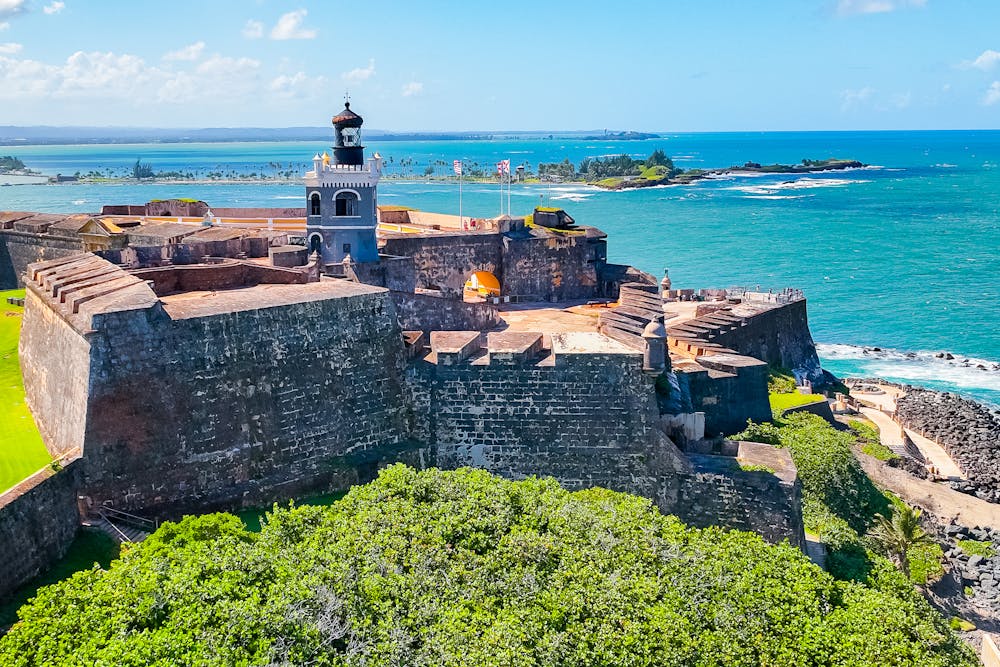
Castillo San Felipe del Morro — El Morro — dominates the northwestern tip of Old San Juan. Built in 1539 on the orders of King Charles I of Spain, it was designed to protect the city from sea attacks and is considered one of the most significant Spanish fortifications in the New World. The scale of it is striking even from a distance; up close, walking the ramparts with the Atlantic on three sides, it’s one of those historical sites that earns its reputation.
The original Pina Colada
Puerto Rico is the birthplace of the Pina Colada — and the place to drink the original is Barrachina restaurant in Old San Juan, where the cocktail was first created. At $8 per person, it’s not the cheapest drink on the island, but it’s one of those tourist experiences that’s actually worth doing rather than skipping. Coconut, pineapple, rum — sitting in Old San Juan with the evening coming in. A good end to a very full day.
Umbrella Street and the evening atmosphere
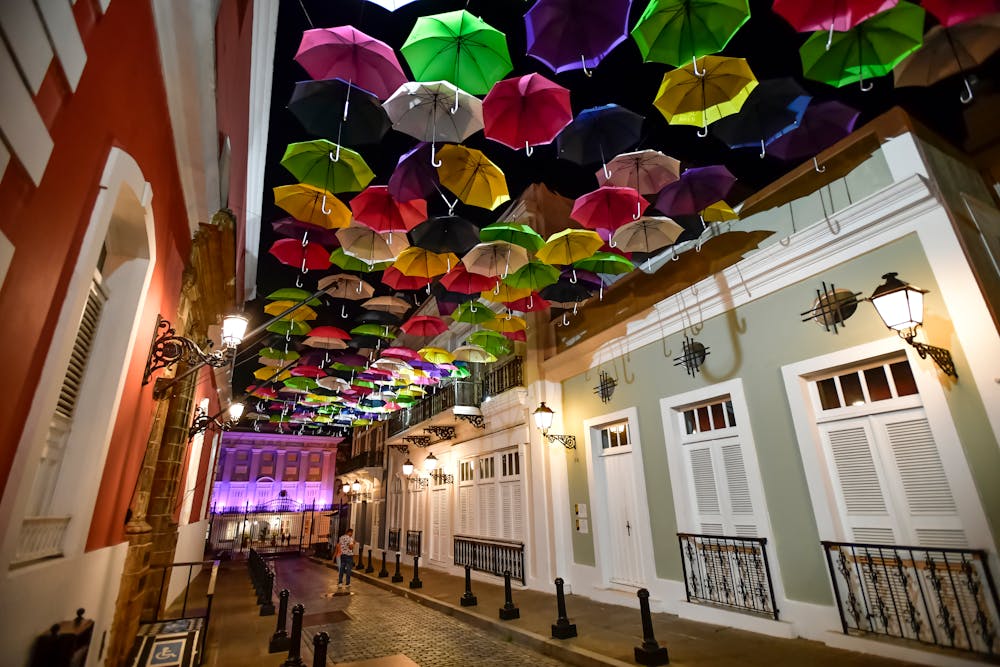
Old San Juan in the evening has a particular energy — music coming from open doors, people filling the streets, the whole place becoming livelier as the temperature drops. Because our ship wasn’t leaving until midnight, we had time to simply wander rather than watching the clock. That extra time in port made Puerto Rico feel like a proper visit rather than a rushed tick on a list.
Puerto Rico Cruise Stop: What We Paid
Our Puerto Rico stop was part of the MSC Seashore transatlantic crossing from Barcelona to Miami — a 17-day sailing that cost $2,349 for two people in total. The Puerto Rico day itself added:
| Item | Cost per person | Notes |
|---|---|---|
| El Yunque rainforest tour (Roy Tour) | $80 | Includes transport, guide, river swimming |
| Mofongo + beer at ocean-view restaurant | $40 | Included in Roy Tour day |
| Pina Colada at Barrachina | $8 | The original — worth it |
| El Morro fortress | $5 | US National Park Service entry fee |
| Old San Juan walking | Free | Ship docks directly in the historic district |
| Total for the day (per person) | ~$133 | El Yunque + lunch + evening in San Juan |
For context: the MSC Seashore also offered a ship-organised Puerto Vallarta-style excursion at $100 per person that covered similar ground. Going with a local guide like Roy Tour saved money and gave us more flexibility on timing — particularly useful since we had a full day rather than the standard seven hours.
For the full MSC Seashore experience across all 17 days, see our [MSC Seashore transatlantic review].
Tips for a Cruise Stop in Puerto Rico
Go to El Yunque in the early afternoon
The forest is refreshingly cool compared to San Juan’s midday heat — timing your rainforest visit for around noon to 2 PM means you’re in the coolest, most comfortable conditions while the city is at its hottest. Morning is better for Old San Juan when the light is good and the streets are quieter.
Book a local guide, not the ship excursion
Roy Tour charged $80 per person for a full day including El Yunque, the river swimming, lunch, and transport back to San Juan. The ship’s equivalent excursion runs $100+ for a shorter version. Local guides also adapt the day to your group — we spent longer at the river because everyone wanted to stay, which a ship tour schedule wouldn’t have allowed.
Check how long your ship is in port
Our MSC Seashore stop ran until midnight — unusually long and genuinely valuable. Standard cruise stops in Puerto Rico run 7–10 hours. If your stop is shorter, prioritise either El Yunque or Old San Juan rather than trying to do both at a rush. El Yunque for a shorter stop; Old San Juan if you have less time and want the city experience.
Bring a change of clothes for El Yunque
If you plan to swim in the river — and you should — pack a dry set of clothes in a day bag. The river swimming is worth it but you’ll be wet afterwards, and walking around Old San Juan in damp clothes for an evening is less enjoyable than it sounds.
Frequently Asked Questions
How long do cruise ships stop in Puerto Rico?
Most cruise ships stop in Puerto Rico for 7–10 hours. Some ships, including our MSC Seashore transatlantic stop, dock until midnight — giving passengers a rare full day and evening ashore. Check your specific itinerary, as the time allocation varies considerably between cruise lines and sailings.
Is El Yunque worth visiting on a cruise stop?
Yes — it’s one of the best cruise excursions in the Caribbean. The 40-minute drive from the port is entirely manageable, the forest is genuinely spectacular, and the river swimming is something you won’t find at most other cruise destinations. Even on a standard 7-hour port stop, a half-day at El Yunque leaves time for Old San Juan in the afternoon.
What is mofongo and should you try it in Puerto Rico?
Mofongo is Puerto Rico’s signature dish — fried plantains mashed with garlic, oil, and pork cracklings, then filled with seafood, chicken, or beef. It’s rich, filling, and completely unique to Puerto Rican cuisine. Yes, you should try it. Any local restaurant in San Juan will serve it; our guide took us to an ocean-view terrace where we paid $40 per person including a beer.
Do you need a passport to visit Puerto Rico on a cruise?
Puerto Rico is a US territory, which means US citizens do not need a passport — a government-issued photo ID is sufficient. Non-US citizens need a valid passport and may need to go through customs and immigration on arrival, which includes photos and fingerprints. The process is organised and straightforward; allow 20–30 minutes on arrival.
Where was the Pina Colada invented?
The Pina Colada was invented in Puerto Rico, and the most famous claim to the original recipe belongs to Barrachina restaurant in Old San Juan. At $8 per cocktail, it’s one of the more enjoyable tourist experiences in the city — the combination of the history, the location, and the drink itself makes it genuinely worth doing rather than skipping.
What is the best way to see Puerto Rico on a cruise?
The most efficient approach for a standard 7-hour stop: book a local guide for a morning El Yunque trip (around $80 per person), have lunch near the forest or back in San Juan, then spend the afternoon walking Old San Juan independently — El Morro, the cobbled streets, Umbrella Street, and a Pina Colada at Barrachina. Everything in Old San Juan is walkable from the cruise dock.
Would I Go Back to Puerto Rico?
Without question. Puerto Rico was the port stop on the entire transatlantic crossing that left me genuinely wanting more time — not because we didn’t cover enough, but because what we did was so good that more of it sounded appealing. The jungle river at El Yunque is the kind of experience that stays with you. Old San Juan at night, with the ship not leaving until midnight and no reason to rush, felt like a proper evening in a real city rather than a tourist tick.
There are places I didn’t get to that I’d go back for — Flamenco Beach on Culebra island, lesser-known hiking trails in El Yunque, snorkelling spots away from the main tourist areas. Puerto Rico is the rare Caribbean cruise stop that could sustain a dedicated trip rather than just a day visit.
If Puerto Rico is on your cruise itinerary, plan it properly. It’s worth every bit of preparation.
After Puerto Rico, our crossing ended in Miami — read our guide to [5 days in Miami after a cruise] for what to do once you’re ashore.
Featured photo from Taylen Lundequam