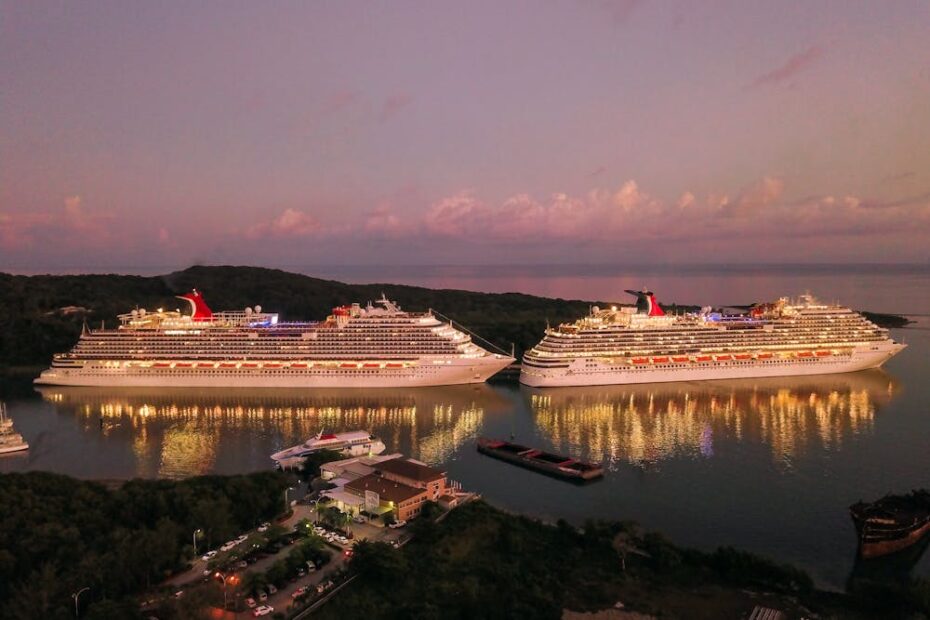
Before my first cruise, I had a vague picture of what it would be like: a big ship, a buffet, some deck chairs. What I didn’t expect was how much the experience would exceed those expectations — in three specific ways that I still think about when recommending cruises to friends.
We sailed on the MSC Seashore from Barcelona to Miami — a 17-day transatlantic crossing. By the end of it, I had a much clearer understanding of what makes cruising genuinely different from any other kind of travel. Here’s what surprised me most.
1. The Level of Service from the Crew
I knew cruise ships had staff. I didn’t expect to feel genuinely looked after for 17 consecutive days.
The MSC Seashore carries around 6,000 passengers and has a crew of 1,648 — roughly one crew member for every three passengers. That ratio isn’t accidental. It translates directly into attentive, unhurried service that’s hard to find anywhere on land at this price point.
The Cabin Steward
Each cabin has its own steward. Ours kept the cabin clean and tidy — serviced around three times a day, which felt almost excessive until we noticed how much we appreciated coming back to a neat room after a long port day. Fresh towels and clean bed linen were always there before we thought to ask.
How the Crew Treats Passengers
What surprised me most wasn’t the efficiency — it was the warmth. Waiters and other crew members were genuinely happy to talk: about where they were from, how they ended up working at sea, what life on board is really like. These were real conversations, not scripted pleasantries.
2. How Much Food Is Actually Included
I knew meals were included in the cruise fare. I didn’t realise quite how much that meant in practice.
The Buffet: Always Open, Always Good
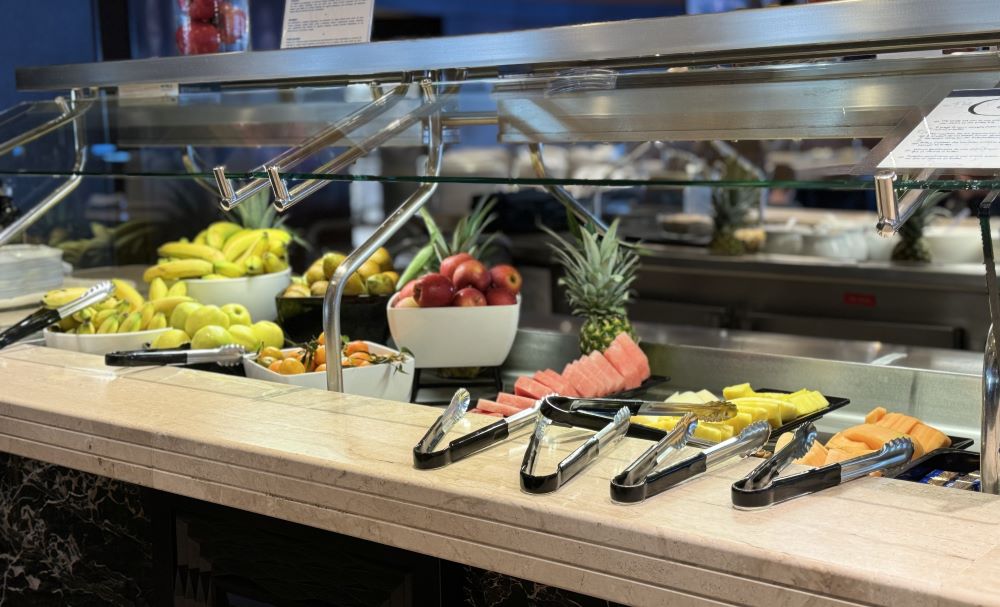
The buffet opens at 6:00 AM for breakfast and runs continuously through lunch and dinner. It doesn’t really close — as the breakfast selection winds down, lunch dishes start appearing, and the same happens in the afternoon into evening. Pizza is available until 1:00 AM. Coffee, tea, and water are there around the clock.
The quality isn’t just quantity. Breakfast covers eggs, bacon, fresh fruit, and pastries. Lunch and dinner bring dishes from across the world — Mediterranean dishes, Asian-inspired options, whatever the kitchen is serving that day. On our transatlantic crossing, the kitchen baked large celebration cakes and served them to passengers twice during the sailing. Nobody announced it was coming. It just appeared.
The Main Restaurant
For a sit-down experience, the main restaurant operates at set times for breakfast, lunch, and dinner. The menu changes daily, there are no prices, and you can order as much as you like — two starters, three desserts, whatever you want. A waiter looks after your table for the entire cruise, which means service gets more personal as the days go by.
Speciality Restaurants and Bars
Beyond the included options, there are several speciality restaurants — Italian, Japanese, Mexican, and others — which carry an additional cover charge. Bars and cafés throughout the ship serve fresh juices, coffee, and cocktails. These are billed separately, but the core food offering is genuinely comprehensive without spending anything extra.
Dietary requirements are well handled. Vegans, vegetarians, and passengers with food allergies or intolerances have dedicated menu options in both the buffet and the main restaurant.

3. The Quality of the Evening Shows
This was the biggest surprise. I expected some entertainment. I didn’t expect a different professional show every single evening.
The Main Theatre
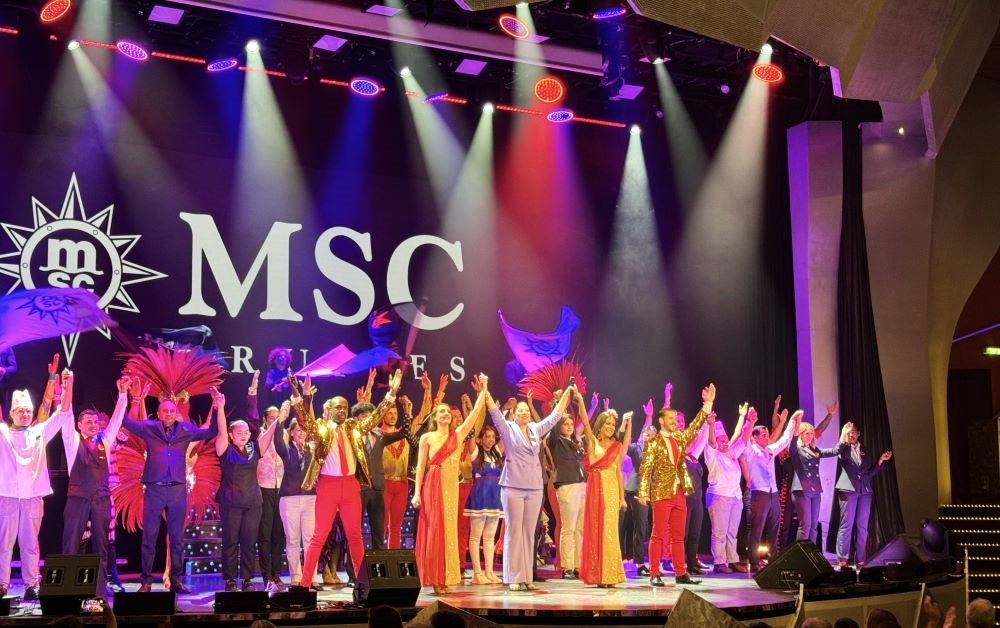
The theatre on the MSC Seashore is a proper venue — full stage technology, high-quality sound system, and lighting that would be impressive in any city theatre. The shows themselves cover a range of formats: musical performances, dance productions, comedy evenings, magic acts. The performers are professionals, and it shows.
What made this genuinely stand out was the variety. Over 17 nights, the programme never repeated. A different show each evening is something most land-based hotels or resorts can’t offer, and it became one of the things we looked forward to most each day.
Themed Evenings
Several evenings during the crossing had ship-wide themes — a Latin Night with salsa and rumba, an 80s Disco Night. On these evenings, the entertainment across the ship follows the same theme: the main show, the bars, the deck. The atmosphere shifts noticeably, and passengers dress to match.
Smaller Venues and Activities
Beyond the main theatre, there’s live music in the bars, karaoke, and occasional talent shows. These run alongside the main programme and give passengers the option of a quieter evening if the theatre isn’t appealing that night. For children and teenagers, dedicated programmes run in parallel — games, workshops, and sports competitions in separate spaces. Younger passengers have their own schedule, which works well for family groups
Quick Summary: The 3 Biggest Surprises
| What | Why It Surprised Us |
| The crew | Genuinely warm and attentive — not scripted. Cabin serviced 3x daily. |
| The food | Buffet runs almost 24 hours. Restaurant menu changes daily. No limits. |
| The shows | Professional performances every evening — different show each night. |
FAQ: First-Time Cruise Questions
Is food really included on a cruise?
Yes — the buffet and main restaurant are included in your cruise fare. Speciality restaurants, alcohol, and soft drinks are typically charged separately. The included food is more than enough for most passengers, and the variety is genuinely good across a longer sailing.
How good is the entertainment on MSC cruises?
Better than most first-timers expect. The MSC Seashore has a full theatre with professional shows every evening — different programme each night. Themed evenings, live music in bars, and smaller events run throughout the cruise as well.
What is the crew-to-passenger ratio on MSC Seashore?
The MSC Seashore carries approximately 6,000 passengers with a crew of 1,648 — roughly 1 crew member per 3 passengers. In practice, this means attentive service throughout the ship, particularly in the restaurant and for cabin housekeeping.
Is a cruise good for first-time travellers?
It’s one of the most manageable forms of travel, especially for first-timers. Accommodation, food, and entertainment are all in one place. You arrive at each port in the morning and return to the same cabin in the evening — no packing and unpacking, no navigating new cities with luggage. The logistics are handled; you focus on the experience.
What should I know before my first cruise?
A few things that would have been useful to know beforehand: drinks are not included and add up quickly, so consider a drinks package if you plan to have wine with dinner most evenings. The ship is larger than you expect — budget 10–15 minutes to find your way around on day one. And book any speciality restaurants or spa appointments early in the sailing, as popular slots fill up fast.
Would I Cruise Again?
Without hesitation. The three things that surprised me — the service, the food, and the entertainment — are also the three things I consistently recommend to friends who are considering their first cruise. None of them are obvious from the outside, which is exactly why they’re worth writing about.
If you’re on the fence about trying a cruise, the MSC Seashore is a strong starting point — large enough to have everything, well-run enough that the service shows. The transatlantic route from Barcelona to Miami is a particular experience that’s hard to replicate any other way.
Related: Cruise to the US: 17 Days from Barcelona to Miami
Featured photo from Pexels